Virtual production revolutionised filmmaking, replacing traditional methods with real-time rendering, LED volumes and virtual workflows that blurred the line between physical and digital production. A further shift is now emerging: artificial intelligence (AI).
Whilst AI has long supported human work across many sectors, in virtual production it is increasingly embedded within the pipeline itself, enabling tools to enhance and optimise other systems rather than simply automate tasks. As integration deepens, it is streamlining workflows, reducing technical friction and expanding what can be achieved in real time. From environment generation and motion capture to camera systems and visual effects, it is reshaping both efficiency and creative possibility.
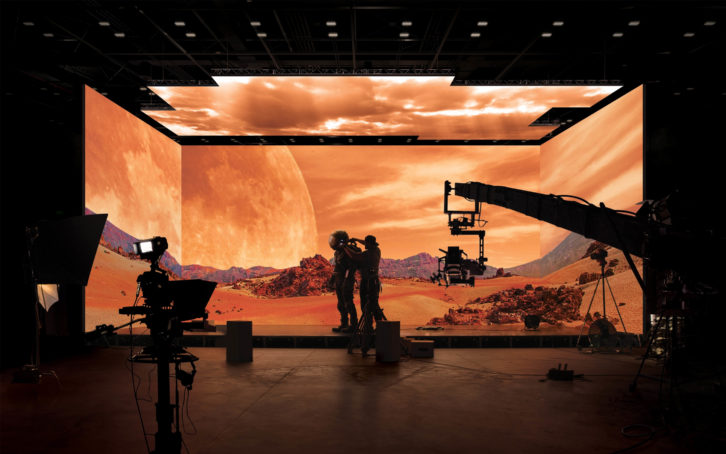
Quentin Jorquera, freelance director of photography and virtual production supervisor, says his first practical experience with AI in virtual production “was probably NVIDIA DLSS—especially when DLSS 3 arrived and AI frame generation started giving Unreal Engine projects a serious performance lift,” and making real-time work much smoother.
“That was not ‘generative AI’ in the current sense, but it was already AI directly affecting what was possible in real-time production,” he explains. “On the generative side, my use has been more selective and production-aware. I have not been treating AI as a magic one-click solution, because it is not one. Most of these tools are still early, inconsistent, and dangerous if you do not understand where they break. But I have been working heavily with AI workflows over the past year: previs, visual development, asset ideation, pipeline organisation, documentation, production systems, and private AI workflows through Perseus XR.”
Netflix has raised the stakes in recent months with its acquisition of actor Ben Affleck’s AI startup, InterPositive. Filmmakers now have access to AI tools trained on a film’s own dailies, enabling precise manipulation of footage while streamlining post production, reducing costs and speeding up editing and delivery.
“From the invention of the moving image to the transition to digital, from motion capture to virtual production, technology has evolved alongside the artists who use it,” the company said in a statement. “Our shared commitment to continuing this legacy makes joining together a natural next step, in addition to Netflix’s decades of experience applying and scaling technology responsibly.”
Jorquera describes the streamer’s purchase as “a very strong signal” in this space.
“The acquisition does not mean AI filmmaking tools are suddenly mature, or that anyone has solved the ethical and creative questions,” he says. “But it does make it much harder for the industry to dismiss AI as a fringe experiment. When a company like Netflix acquires a filmmaker-led AI technology company, it tells the rest of the market that these tools are becoming part of the production conversation at the highest level. Netflix acquiring InterPositive feels like the start of a more serious race: studios, streamers, VFX companies, virtual production team, and independent creators all trying to understand where AI genuinely helps, where it creates risk and who will control the new production pipelines.
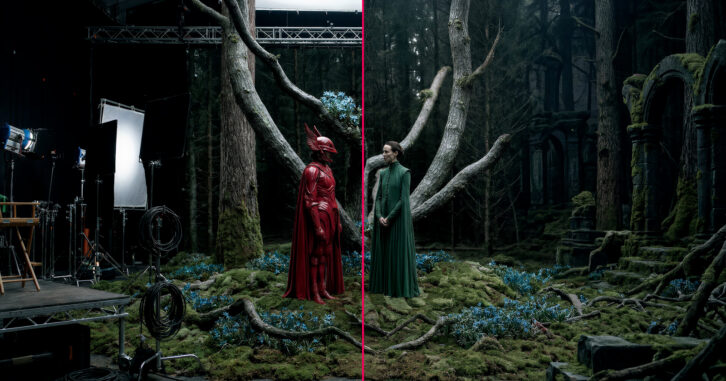
Carl Lyttle, chief digital officer for nmatic.ai, a hybrid AI creative production studio and technology company and AI technical lead for The Next Valley, a newly launched Hybrid AI VFX production studio, says that while “Ben Affleck has been very clever” in that he “spotted something the industry needed, built it quietly and brought it to Netflix at exactly the right moment,” it’s important to be precise about what the deal actually involves.
“InterPositive is a post production tool, trained on a production’s own dailies, doing continuity, relighting, VFX support,” he says. “That is not virtual production and the way the deal is structured, it feeds Netflix’s own pipeline rather than the wider virtual production industry. Netflix has said the tech will not be sold commercially, so what the deal really says is that Netflix sees AI as worth a serious internal investment on the post side. It does not move the needle on virtual production as a discipline, or for productions made outside Netflix. The more interesting question, what AI looks like upstream, on set, in the actual creation of scenes, is still wide open.”
Gary Adcock, consultant in AI and virtual production, sees both sides of the discussion. “People go, ‘Oh, Ben Affleck did an AI company, it can’t be any good,’ but it’s actually about very specific ideas and workflows,” he says. “AI is here whether we like it or not and there are ways to use it without interrupting workflow or restricting copyright. AI can simplify workflows in virtual production, especially when building elements in tools like Blender and Unreal, but it’s not a one-button world — you don’t just prompt something and get perfection. A lot of people still want a one-click solution, but that often causes problems like elements mixing together incorrectly, so working in a traditional animation-style workflow is often cleaner and faster, while also maintaining a human element for copyright reasons. In virtual production, especially background plates, that’s where AI will really accelerate workflows.”
It’s time to address the elephant in the room: the fear of replacement. It’s already playing out across other industries, so what does it mean for film and television—and more specifically, virtual production?
“The nervousness is real,” says Lyttle. “AI will change the shape of virtual production crews. Some roles will shrink, others will grow, and there will be jobs in three years that do not have a name yet. None of which is much comfort if your job is the one being squeezed right now. The responsibility sits with the people building these tools to bring crews with us in a streamlined more efficient workflow, rather than over them.
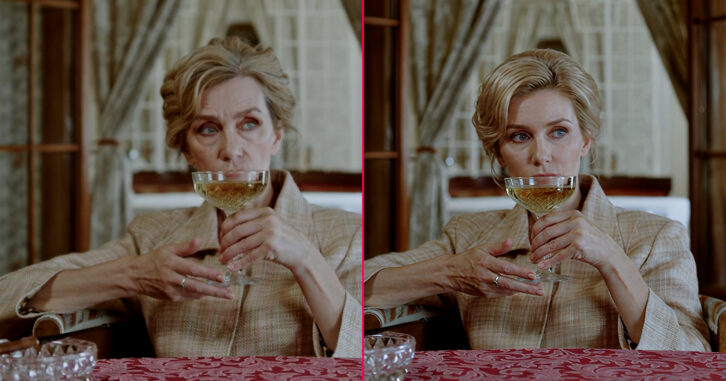
That tension sits alongside a growing sense that, regardless of the risks, adaptation is no longer optional.
“The future is uncertain, but one thing is not: the industry is moving,” says Jorquera. ”If you still have many years ahead of you in film, VFX, or virtual production, you have to learn how these tools work. Not because every tool is good. Not because every AI claim is true. But because staying relevant now means understanding the change clearly enough to use it, challenge it and not be replaced by people who only understand the surface.”
Adcock is very positive about the future and says he does not believe AI will ever replace humans.
“It can’t really emote or write poetry in the human sense — and I’m not afraid of AI taking my job; I use it to make myself more efficient,” he explains. “People already use AI every day in things like Siri, Alexa, maps and autocorrect and we’re moving from basic machine learning to more agentic AI that can learn and adapt. Tools will keep evolving whether we want them to or not. Virtual production is not new – it’s just an updated version of rear projection – and we’ve always reinvented old techniques with new tools. Even old lenses are popular again because people want character that film used to naturally have. It’s about being realistic with technology, but also understanding it will keep evolving and we keep reinventing the same ideas from film to digital and back again.”
The question now is not whether AI belongs in virtual production, but who gets to shape what it becomes.
This article was originally published in TVBEurope’s July/August issue, available to download and read for free here.