During pre-publicity for the second season of The Traitors, host Claudia Winkleman admitted she tried to persuade the producers that one season was enough. First broadcast on BBC One in November/December 2022 the show gained a healthy following via word of mouth, before going on to win a BAFTA Award for Reality and Constructed Factual. “I originally said ‘Let’s just leave it as this magical thing that happened’. Then the head of BBC took my temperature,” Winkleman told Heat.
She needn’t have worried. Season two, broadcast three nights a week on BBC One during January 2024, turned out to be a phenomenon. Viewers flocked to the show with ratings for the final episode double that of season one. Fans took to social media to share their opinions, with Jazatha Christie and ‘Ar Di’ trending nightly. The show even made the BBC’s Six O’Clock News during its final week.
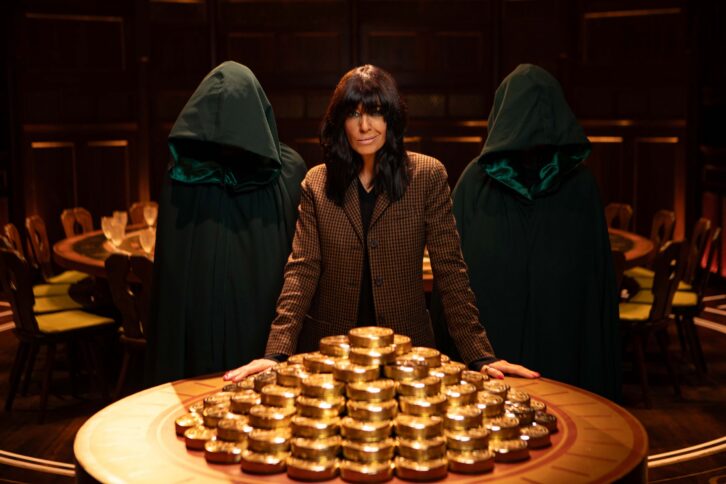
The setup of The Traitors is pretty simple. Send 22 contestants to a remote Scottish castle, turn some into Traitors who can ‘murder’ their fellow contestants, and include a nightly banishment where the Faithfuls aim to unmask their opposite numbers. All while completing missions for a possible prize pot of £120,000.
With such a huge cast on set from the outset, there’s a massive amount of footage to be captured and edited into 12 one-hour-long episodes. For season two, producers Studio Lambert Scotland called on the expertise of ENVY to not only work on set but also mix the show’s sound and provide colour grading.
ENVY Capture, established three years ago, was on set in Scotland to record 1,641 hours of media. After starting on some smaller jobs as they built their workflow, the team has now progressed to working on some of the biggest entertainment shows on TV. “We’re working on some of the most popular reality shows in the UK and the world, which is kind of mind-blowing,” says Toby Weller, solutions architect at ENVY Capture. “Every new show is a challenge and we go to some amazing, wonderful places and work with some great people.”
For The Traitors, the team provided the rig record, which involves a great deal of storage and up to 100 different ISOs fed to them from the OB company. “We can record those for 24 hours a day, seven days a week for sometimes months at a time,” explains Weller. “The content is recorded into a native and a proxy. The proxy is sent straight back to ENVY for the start of the edit, depending on when that needs to start, which could be the next day or at the end of production. The native will always go back at the end of the show ready for the online grading and audio process:”
The team also provide on-set DIT, which involves ensuring that all of the camera media is fully checksummed and there is a 100 per cent certainty of no errors in the copy. “That’s backed up multiple times and then it’s securely sent back to ENVY again to be edited,” Weller adds. “That process has a lot of technical steps but also has some human steps to double-check things just to make sure that there isn’t anything odd going on.”
All of those checks are done in the background using technology from Hedge Video which gives the ENVY team readable outputs so that the human side can verify that all the checksums match. “We use certain other types of software to generate very rich PSC reports so that as soon as the camera card is ingested, the producers can see what was shot on that card,” says Weller.
“The producers can see thumbnails, they can see formats, times, and make sure everything is there exactly as they would expect it. At the end of each day, an even richer report is created which means they can look through all of the camera cards from the whole day in a web page arrangement and make sure they’ve got everything they need and that will allow them to plan for the near future if they need to reshoot.”
ENVY uses Signiant’s Media Shuttle to send the data back to London via the cloud if the edit is due to start quickly. But if it’s not due to begin for a few weeks, then encrypted hard drives are employed instead. “We make sure that the media is fully secure end to end and fully verified as soon as it arrives at the destination so that we know if there’s anything wrong,” states Weller.
“For The Traitors we received multiple cards a day,” adds Dominika Tomosvary, location supervisor, Envy Capture, “which we were backing up. Because editing started a few days after the shoot began, we were sending everything online so that the content was ready as soon as possible.”
Weller continues: “At any one time, we had two native arrays running which each had 60 drives working concurrently and then we’d have a couple of Nexus chassis running which had 12 in each. But because we send everything over the internet, we didn’t really use any transport hard drives, we just had the ones that we took to organise media on set.”
Less than 12 hours after the footage was shot, the ENVY team would start the upload and send back an entire day’s worth of high-quality proxy footage in just two or three hours.
One of the biggest changes to the capture team’s typical workflow was that they came onto The Traitors having not been involved with the show’s first series. “A lot of the shows that we’ve worked on since Capture was established, most were series ones, so everything’s fresh. Everyone’s getting their bearings and understanding what the vision of the show is and how to best achieve it,” explains Weller.
“The great thing about The Traitors is that the production team had a vision, they knew exactly what they wanted to achieve, and they knew how to achieve it. They’d done all the figuring out in series one and they could focus on making season two the absolute best it could be. There wasn’t a single minute wasted on The Traitors, which was pretty amazing to watch, and it meant that they could focus on quality.
“It’s amazing how the show has managed to surprise the audience the second time around when they know what to expect,” he continues. “That to me is just a well-planned TV show. I wish everyone could see what we saw on the set because they had to get rid of so much great stuff. Having to squish it down to an hour for each episode must be so difficult.”
Creating the sound mix
Once season two had gone through the edit, other departments within ENVY got involved. Ben Ormerod, senior dubbing mixer, was tasked with mixing the sound of the show. Like the Capture team, he came to the show completely new. “We had a chat with the production company before we got going and they were able to brief us on how it needed to be,” he explains. “We were excited because it’s a big high-profile flagship show. That’s the sort of work you want to be doing,”
Ormerod describes his work on the show as a balancing act between the dialogue and the music that is used throughout. “The sound design was sort of stylised in season one so I felt like they wanted to carry that over into season two,” he continues. “There’s some great music in the show, and it was important to let the music sort of take over when it needs to.
“The dialogue mix was the bulk of my work. You start off with 20+ contestants, and they’re there for a couple of weeks and it all gets condensed down to 12 one-hour episodes, so it’s intensely edited and very heavily cut together. That necessitates quite a lot of work from me and our sound editing team in terms of levelling out the dialogue, trying to even out the lumps and bumps and just make it as smooth as possible.”
The ENVY sound team use Avid Pro Tools, as it’s the industry standard. “The pictures are cut on Avid Media Composer and so the file interchange is easier,” adds Ormerod. “We’re on the verge of being able to take Media Composer timeline straight into Pro Tools.”
Ormerod says he “throws the kitchen sink” at the mix, using lots of equalisation on the lavalier mics worn by the contestants at all times, both in the castle and outside. “The contestants are out in the rain and the wind and doing crazy things in lakes of water and stuff, so the microphones have to be concealed behind many layers of waterproofs or clothing. There’s a lot of trying to dig out the dialogue from the recordings, and that’s done using huge amounts of equalisation.
“We are blessed with some very creative tools in terms of how we can take noise back on dialogue and try and get rid of the rustle and crackling of the hidden microphones,” he continues. “We have lots of toys we can use, including iZotope RX suite, De-rustle, Dialogue Isolate, we’ve got Accentize dxRevive, and Waves Clarity. They’re plugins that arrived in the last couple of years and you wonder how you ever existed without them.”
However, as he explains, using lots of technology can create its own problems. “For example, if you’re winding in loads of top end into a scene that’s done in a windy environment, then you’re naturally exaggerating the background wind in the tracks as well. After the equalisation process, we do things like noise reduction on those equalised tracks to try and take back some of the artefacts that we may have introduced.”
With 20+ contestants at the start, the roundtables where the Faithfuls attempt to banish the Traitors can be particularly noisy, with everyone talking over one another. “We will try and cut around it to a certain extent,” says Ormerod. “Human voices within human voices with all the will in the world are very difficult to separate from each other once they’re on the same recorded track, so there is a certain amount of overlapping. The Traitors is not a perfect sonic world, so we deal with what we get given. Sometimes we try and take bleed out of the tracks, but often we’re still limited in what we can do.”
The key part of the job of working on The Traitors, says Ormerod, is to make the viewer enjoy what’s going on as much as the contestants. “We want to make it sound energetic and fun and try to transmit the buzz that they’re all clearly having on location when they complete the tasks.
“There’s a huge sense of camaraderie they all feel when it all goes nuts and they find a traitor and it’s bedlam. Our job is to translate that into the show so that it sounds like they’re having as much fun as it looks like they’re having.”
A golden hue
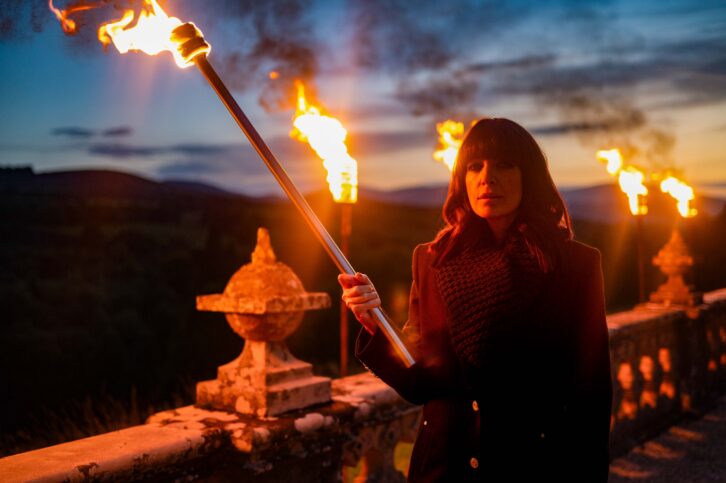
Gold features heavily in season two of The Traitors, and not just as part of the prize pot. Colourist Sonny Sheridan used gold throughout the colour grade to not only reflect the Scottish landscape but also help the audience warm to both the Traitors and the Faithful. It even appears, with an orange hue, on the show’s logo and graphics.
“The producers wanted season two to be bigger and better, and they wanted it to be a love letter to Scotland,” he explains. “They set the bar high and it was a labour of love in the sense that they knew what they wanted and they really pushed me to get the look of the show to that next level.”
Working alongside series producer Sarah Fay, it took Sheridan some time to deliver exactly what the producers wanted. “Sarah drove the fact that the audience needed to warm to the contestants,” he explains. “She’d say, they’re going to kill one another but the audience still needs to love them.
“It was difficult as a colourist. At first, I was going slightly edgier and cold and Sarah said she wanted the audience to form a trust and a bond with these people. It was about understanding that as daft as the show is, we need to love the contestants and warm to them.”
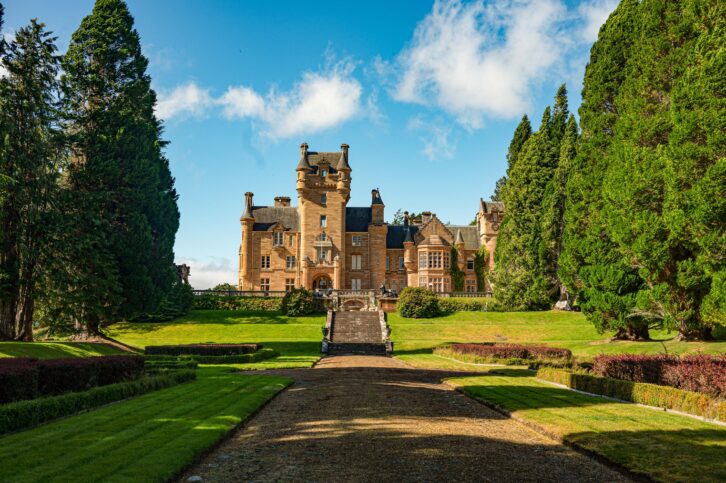
To create that warmth, Sheridan first worked on the exteriors, highlighting the amazing colours of the Scottish scenery, especially the lush greenery surrounding The Traitors’ castle. “I tried to make it feel like there was a golden glow. I wanted to bring out the magic hour, that golden end of the day, and bring in that beautiful golden light. That was something we found, it wasn’t designed. Once we found it we knew that’s what we wanted to do and we were going to stick with it.”
Dealing with the notorious Scottish weather also proved a challenge. During the contestants’ first mission, the weather changed from sunny to grey within minutes. ”You have to kind of accept that is real life, that’s Scotland and that is the beauty of Scotland,” says Sheridan. “It’s challenging but that’s the beauty and the essence and that’s what you’re trying to grab hold of. Rather than fight against it go with it.”
One mission in particular caught the audience’s attention. In episode seven, all of the contestants were invited to a funeral after the Traitors murdered one of the Faithful with a glass of fizzy rosé. “When they started the funeral mission the sun was beating down, so there was a golden touch to all of their skin tones, but in the shadows I added a bluey green, just to make the audience ask, what’s happening here?” explains Sheridan.
“As they started walking the weather began to change, and then it got darker and more sombre. So again, we enhanced what was there rather than balancing it out because it actually worked in our favour. It was a joy to go with it. Then we got to the coffins and the light was dropping, and it all just fell into place. Obviously, there are some enhancements there, but it wasn’t done by design, it was really done by nature.”
Sheridan even added blood red to the sky at the end of each episode to symbolise the Traitors murdering the Faithful. “It was about playing with those subtleties. That’s the joy of my job as a colourist, you bring those little subtle touches.”
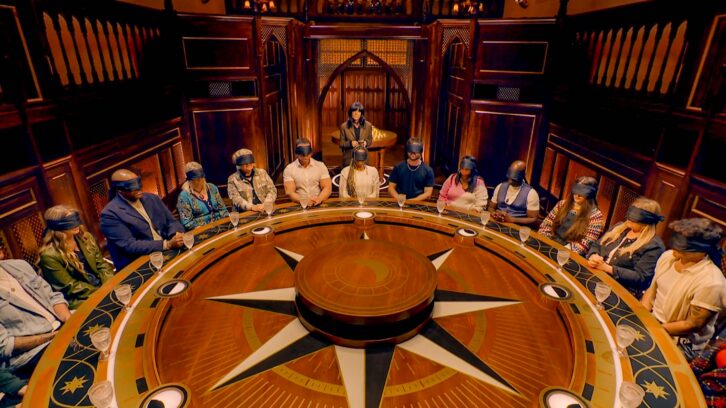
Once inside and during the banishments, colour was used to make the audience feel the intensity of the roundtable. “We wanted the audience to feel a heavy contrast and feel that pressure when the contestants were calling each other out and looking each other in the eye and lying,” explains Sheridan. “It was important to have this really heavy contrast, but not in a way where it was intimidating. The roundtable in the beginning had a warmth to it because the Traitors were looking the Faithful in the eyes and lying to them but we wanted the audience to love them still. It got darker and darker as the show went on.
“The banishment room is a beautiful set, and I took my lead from the lighting,” Sheridan continues. “For example, with the overhead shots, there’s grads on the side just to bring the environment in. I put shapes on the left and right and on the table itself in the middle just to bring the edges of the image in.”
Despite the producers’ best-laid plans, the weather had an impact on season two’s finale. In the show’s first season, the final five contestants had confronted one another outside, but the Scottish weather had other plans for season two forcing the location to change to the banishment room, complete with an open fire in the middle of the roundtable. “The producers said they wanted it moodier and darker, and for it to feel different from the other roundtables in that room,” explains Sheridan.
“They pushed me to dig that bit further and make the audience feel uncomfortable and moody and intense. I put a lot of different shapes in different areas. I don’t normally use vignettes but I heavily vignetted it,” he continues. “The audience knew that room so well, so the only way to make it feel different was by taking the edges that bit further. I felt uncomfortable watching it if I’m honest, but I think it did work. The smoke from the fire just added to the atmosphere a little bit more.”
All of the grade was done on Baselight, the first time Sheridan had used the system. “It’s an amazing tool,” he says. “It allows me to be honest and true. I feel that I’m in control of the contrast, and it allows me to adjust the light in a way that no other grading system would allow me to. I’ve got subtle control of the highlights and the mid-tones and where they sit and the brightness, which I’ve never had before.
“I have tools of balance and film grades, which just allow me to subtly manipulate the image. I can get into the shadows and just pull them up ever so slightly. I’m still learning it, so I’m finding things out as I go. But it’s given me flexibility and control which I’ve never had before, and I’m really enjoying using it.”
Despite not having used Baselight before, Sheridan says the biggest challenge of grading The Traitors was delivering what the show’s producers wanted. “I graded it once and the producers felt it wasn’t quite right. It took a long time for us to find a place where we felt we’d got it,” he explains.
“It was finding that extra 10 per cent, that was that was a challenge for me. But it was a joy. When I watch the show it brings a smile to my face. Working on the show has been incredible. I can’t believe how much people have loved it,” he continues. “I was in the pub just before the final, and a group of students were talking about it, and I was just amazed at how much they were all into it. I’ve been on the train and heard people talking about it. Everywhere you went, people were talking about The Traitors.”
The Celebrity Traitors begins tonight on BBC One and BBC iPlayer