Live production is going through fundamental changes thanks to the emergence of AI and automation, with robotic cameras playing a key role in the transformation.
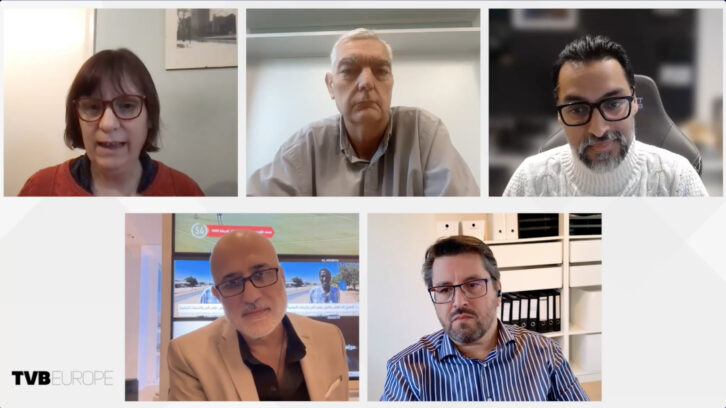
TVBEurope and Ross Video’s webinar on bringing robotics into a live production workflow explored the ‘rise of the robots’ and discussed the advantages and challenges of employing robotics in a live production environment.
The panel were keen to highlight how robotics can help production teams be more creative than ever before.
Broadcaster Al Arabiya brought robotics into its workflows during the build-out of a new studio for its news channel Al Hadath in Riyadh. The company opted for robotics to help deliver more movement to its productions.
“We like movement, we like action, and we like the opening shot, we like the closing shot and we like the precise shot,” explained Antoine Atyeh, camera manager–news resources, Al Arabiya.
Al Hadath employs a number of preset shots, he explained, with human operators not always able to remember every shot. “What’s beautiful about robotics is that it can combine all the shots in one piece of software. That means that for every programme, we can create different types of shots and save them, so anyone can come and use them, and it’s going to be exactly the precise shot every time.”
Atyeh added that humans remain involved in the production of Al Hadath’s programmes, as the broadcaster still needs camera operators if a shot needs fixing or the focus adjusting. Instead of the operators being on the show floor, they’re now either based in the gallery or are working on outside broadcasts.
Augmented reality is also a key area where Al Arabiya has found robotics to be particularly useful, particularly when it comes to weather. “The manoeuvre of the robotics with building a sequence to go around the graphic is just amazing because you can build a sequence, press one button and the robotic will do everything for you. It will zoom into the graphic or zoom out, and then maybe track the presenter. I mean, why not use robotics? That’s why we love it.”
Gin Rai, esports curriculum manager and course leader for BSc esports production, Nottingham School of Art & Design, Nottingham Trent University, is helping to teach the next generation of broadcast professionals.
Students use robotics as part of their studies, learning about positional, rotational, and zooming data, and how that can be applied in both planning and recording camera movements.
“Specifically for AR [we teach them how] to apply that data to content creation engines for previsualising all of their camera movements, or choreographing the opening ceremony of a show. This is used extensively in esports productions on stage and in sports broadcast productions.
“We encourage our students to really get themselves stuck in because this is what the industry needs and there’s no use teaching a dated methodology or thought process,” Rai continued. “We have to get them to think of the future. So, utilising tools such as the Unreal Engine coupled with the data that’s being outputted from our Ross hardware, and in doing so being able to completely visualise a 15 or 20 minute opening ceremony of an event without having to do it over and over again with all humans on stage, I think that is such a powerful tool.”
It’s not just Al Arabiya that is discovering how robotics can help its teams be more creative. Robert Vander Meulen, sales director at DigiNet, explained how his customer RTL Belgium is also employing the technology in news production. “They use it really on very artistic configurations,” he added. “For example, the opening shot of the news is always identically the same. The creative director is always happy with that shot. The cameramen are still present on the floor, they’re just much more creative and can be busy with specific shots instead of just zoom in, zoom out and focus.”
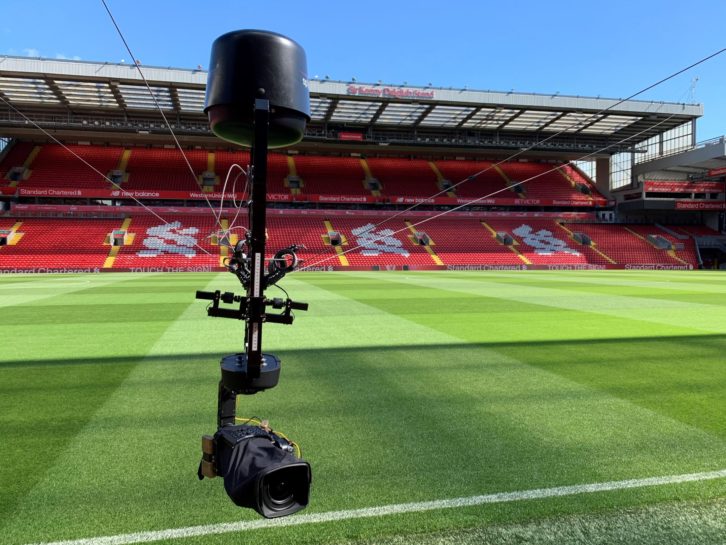
Miguel Declerk, senior business development manager, camera robotics at Ross Video, told the audience how the next generation of robotics is capable of delivering shots that are beyond humans.
“Spidercam can basically do any shot in a space in 3D, or you have rail systems which can do overhead rail shots. But even the classical robots, the way they can move smoothly on the floor, you can make more dynamic shots that are more creative. A robot will always do what the creative director wants. With a camera operator, it obviously depends on the level of experience.
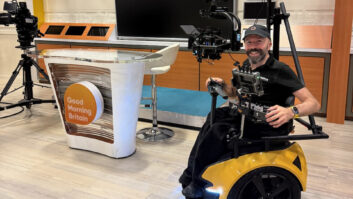
“While in the past you had maybe one operator per camera, with robotics, you can have one operator working on 3,4,5 cameras, and this could be a combination of a ceiling camera and a cable camera. They can be way more creative and it’s actually much more fun for the operator.”
The full webinar is available to watch on demand here.