Speaking at the annual RTS Convention in London today, Kelly Day, head of international at Prime Video, has set out how the company views AI in both the creative process and bringing content to viewers.
During her speech, Day said the company does not see AI as a threat, but as the most significant opportunity since the shift from broadcast to streaming.

“Television has always been a medium defined by change. New technologies, new platforms, new ways of watching,” she told the audience. “Each shift felt seismic at the time. But none of them killed great storytelling. They supercharged it. AI is the next shift. And I believe it’s the biggest yet.
“What excites me about it is how we are putting transformative tools directly into the hands of creators. Pre-visualisation, sound design and VFX workflows can now run in parallel, giving creators freedom to dream bigger on tighter budgets.”
Day told the audience that for Prime Video, AI helps to bring down the cost of production while “maintaining quality”.
“We’re not looking for an AI model to write the next Fleabag—and, by the way, I don’t think it could,” she added. “But AI might help the person who does spend less time on admin and more time on the creative vision that makes a show like that sing.”
She echoed the thoughts of many in the industry that AI needs guardrails, and Prime Video is taking the approach that those guardrails should be a “foundation” and not an afterthought.
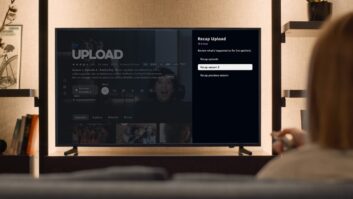
Day also detailed how the streamer is using AI in its viewing experience, with the aim of helping viewers spend more time watching what they want and less time searching for it. “We use it to personalise recommendations, simplify synopses, and create spoiler-free summaries tailored to exactly where you left off.
“It’s making streaming more accessible too: Dialogue Boost intelligently lifts speech above background noise, and we’re scaling audio descriptions and subtitles across our catalogue. And most recently, we introduced lip-sync technology on Maxton Hall, which synchronises actors’ lip movements with human-dubbed audio. So when you’re watching this German series in English, you’re not distracted by the fact you’re watching a dub. You’re just watching the show.”