Why did you want to recreate the Squid Game set for your interview with the cast?
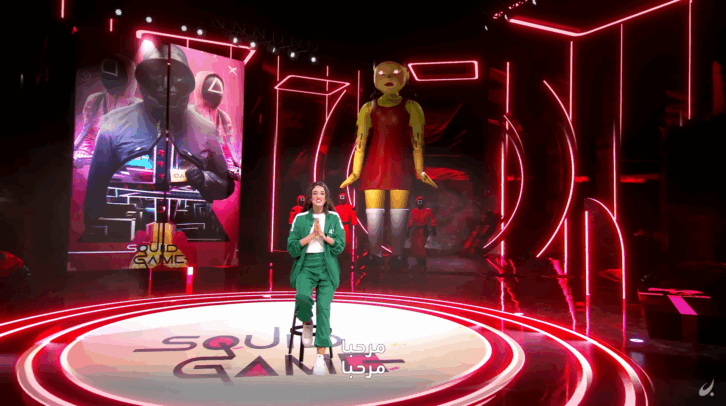
At Blinx, our mission is to push the boundaries of storytelling, and when it came to Squid Game, one of the most visually iconic series of our time, we saw a perfect opportunity to do just that. Recreating the set in XR wasn’t just about creating a visual spectacle, it was about placing our presenter inside the world they helped bring to life, creating a deeper connection with the audience and adding an emotional, immersive layer to the interview.
Did you have to get sign-off from Netflix to do it?
Yes, the collaboration was smooth and built on mutual respect for innovation and brand integrity.
Have you done this kind of thing for actor interviews before?
Yes, XR and virtual production have been an integral part of Blinx’s DNA since its launch. From day one, we’ve embraced virtual storytelling, powered by Vizrt and Unreal Engine, to reimagine how news and entertainment can be delivered. This interview was a natural evolution of our ongoing strategy, not a gimmick, but a continuation of the immersive experiences we’re known for. For example, Noora Fethi was on our XR stage a year back where we created a customised set for her as a Moroccan actress In Bollywood.
How big was the studio?
The physical XR studio was approximately 12 metres by 8 metres, fully optimised for 360-degree camera movement and seamless integration of real-time graphics. But more importantly, the virtual space was boundless, thanks to Vizrt’s XR solutions and Unreal Engine, enabling us to build a stunning replica of the Squid Game environment beyond the limitations of physical space.
Please talk us through the technology you used, and why you chose to use it (please be as detailed as possible)
The project was powered by the synergy between Vizrt’s XR Set technology and Unreal Engine. We utilised Viz Engine 5 for compositing and real-time rendering, seamlessly blending camera tracking, lighting, with high visual fidelity assets from Unreal. This hybrid pipeline allowed us to create photorealistic environments with broadcast precision, something we’ve fine-tuned over years of strategic collaboration with Vizrt. Our in-house creative team handled environment design, set logic, and editorial cues to ensure everything felt organic, interactive, and live.
How quickly were you able to create the virtual set?
From concept to final render, the virtual set was completed in just under two days, a testament to the maturity of our XR pipeline and the agility of the Blinx creative tech team. The groundwork laid over years of partnership with Vizrt meant we didn’t need to start from scratch; we simply built on a well-tested foundation.
How much testing was done prior to the interview?
We conducted two hours of technical rehearsals, followed by a dry run with stand-ins for final lighting, camera calibration, and interaction cues. Our XR team, having delivered numerous projects using the same setup, knew exactly where to stress-test performance, particularly in shadows, reflections, and actor interaction with virtual props.

What was the reaction of the actors when they saw the finished studio?
They were genuinely surprised and impressed, the set was a big wow factor that got an immediate reaction. One of the actors even asked where we got this “toy” from! But the reactions weren’t just about the high visual fidelity, it was about how the virtual environment elevated the tone and emotional weight of the conversation. It turned a typical press junket into something unforgettable.
What was the biggest challenge on this project?
Balancing the high visual fidelity with performance in real time was a challenge, especially under tight timelines. Reproducing a set as iconic as Squid Game’s meant expectations were high. We also had to ensure lighting, shadows, and presenter positioning were precisely matched across real and virtual space, but thanks to our deep expertise with Vizrt technology, we navigated those complexities efficiently.
Do you intend to do this kind of project again in the future?
Absolutely. This is just the beginning. XR is not a one-off at Blinx, it’s a strategic pillar. With Vizrt as a long-standing technology partner, and Unreal Engine as our creative engine, we’re building a future where immersive storytelling is the norm, not the exception. We’re already planning new environments, franchises, and interactive formats that go beyond what traditional media can offer.