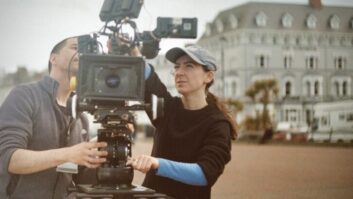
Released in UK cinemas on 27th February, The Testament of Ann Lee tells the story of the founding leader of the Shaker Movement.
Starring Amanda Seyfried in the lead role, the film depicts Lee’s founding of a utopian society and the Shakers’ worship through song and dance.
TVBEurope sat down with cinematographer William Rexer to discuss the decision to shoot on film, the visual inspirations drawn from Baroque masters like Caravaggio, and the challenges of lighting the film using candlelight, the sun and moon.
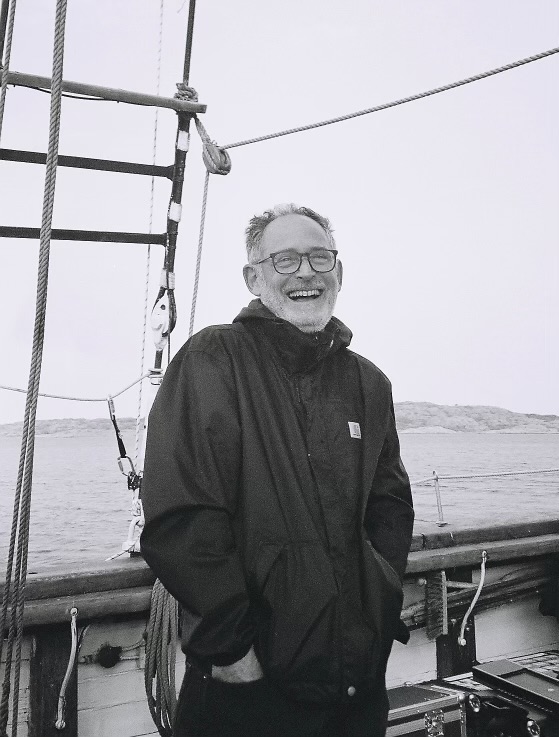
Tell us about how you got into filmmaking.
I grew up in New York with a father who was a theatrical producer and a mother who ran a children’s theatre programme. As a small child, I napped backstage, and by my early teens, I was building sets, hanging lights, and running spotlights. My father loved cinema and would bring home 16mm prints from the public library, including films by Chaplin and Keaton. He also took us to see foreign films, and one in particular made me want to become a filmmaker. In 1979, I saw The Tree of Wooden Clogs, a stunning neo-realist masterpiece, and I became obsessed with cinema.
How did you get involved with The Testament of Ann Lee?
The film’s director Mona Fastvold and I met while working on an Apple series. During that production, we discovered that we shared similar tastes and genuinely enjoyed creating together. Mona is a unique filmmaker, and after just a few days of working with her, I knew I wanted to take on a bigger project together.
How early did you start working on the film?
We began researching and developing ideas more than a year before filming. Mona and her partner, Brady Corbet, were in the midst of making The Brutalist, and we had already started planning a proof-of-concept shoot. Sam Bader, the designer, joined the project, and together we began building a book of references and took several trips to Shaker villages to gather insight and inspiration.
Where did your vision for the film’s look come from?
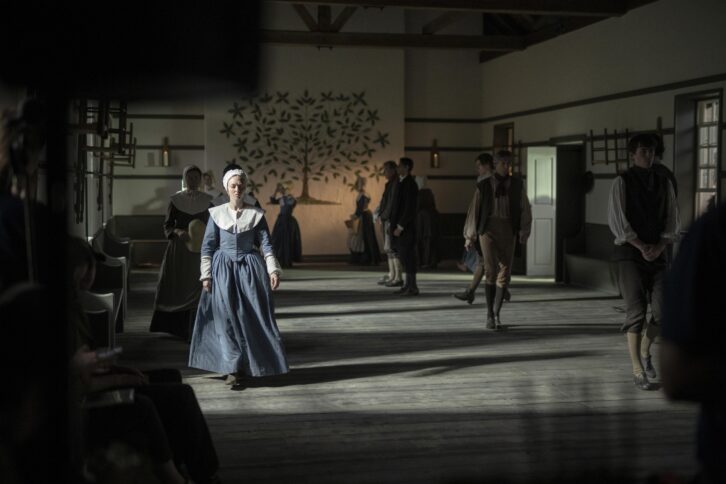
Mona and I knew that this story had to be shot on film. There is a beauty and complexity to celluloid that felt right for this project. The film is more of an opera than a musical, and we wanted to avoid the conventions of a typical period drama. We began with older film references, watching neo-realist films from the 1970s, but primarily we drew from non-film sources, including old masters like Caravaggio for lighting inspiration. Baroque paintings and modern Baroque photography, such as Bill Henson’s work from the 1970s, became our tonal guide.
Please tell us about the cameras and lenses used on the project and why they were selected.
I chose the Arricam LT and XT cameras for our main package and the Arri 435 for our second unit, shooting 3-perf 35mm. After watching the initial dance rehearsals in New York, we were convinced we needed to shoot in a widescreen aspect ratio to maximise the impact of the choreography. We landed on 2.40:1. We knew the film would be best experienced in theatres with large audiences, and we planned for a 70mm blow-up. One of our key considerations in choosing lenses was the amount of candlelight present in each scene and our desire for a consistent, pleasing bokeh. We compared more than eight sets of lenses and ultimately selected the Sigma Cine and Classic lenses. They had the right amount of character, were beautiful, and performed outstandingly.
Did you do any testing ahead of production?
Prior to our official production, we conducted two proof-of-concept test shoots in New York, followed by another round of lens and lab testing in Hungary. We tested camera moves, lighting, film stocks, push processing, lenses, and filtration. Mate Ternyik, our colour grader, Gyorgy Horvath, my Hungarian first assistant, Sam Ellison, my A-operator and second unit DP, Mona, and I did a deep dive into creating the look. We wanted the lenses, the film, the sets, and the lighting to do the work, without having to force it later. We ended up using many in-camera tricks, switching between coated and uncoated lenses, for instance, to create obfuscation when needed thematically. We also tested hand-painted mattes and experimented with combining glass plates on set with background shots. Some tests were successful, and others led to new ideas. Watching the results of the early tests together gave the team a common language, making our decisions on set both creative and efficient.
What can you tell us about the film’s lighting?
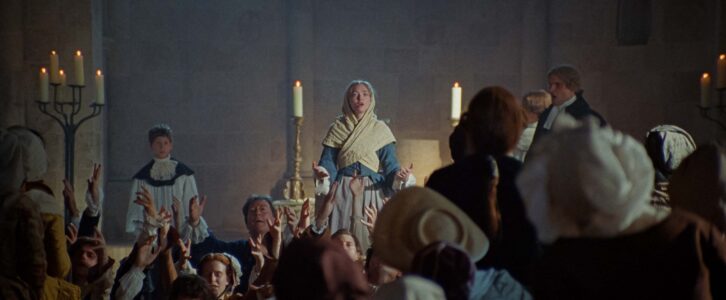
We lit environmentally, using candles and daylight as the justification for our sources. We were drawn to the Baroque period and honoured its use of darkness, letting the shadows truly fall off. We used 9K HMI bounces or an array of Arri SkyPanel X lights for our large soft sources, and mixed 5K and 10K Molebeams or 20K tungsten Fresnels as sun sources. We also used Dedo lights, 300-watt Fresnels, and plenty of small LED tricks. The versatility of the Arri SkyPanel X quickly became a favourite on set. My fantastic gaffers were Zoltan Kristoffy in Hungary, Jonas Elmqvist in Sweden, and Scott Ramsey in the United States. Limiting ourselves to three sources—candles, sun, and moon—created some fun challenges.
Did you have any involvement in colour grading the film?
I was very involved in the film’s grading, both the digital grade at Post Republic in London and the 70mm film grading at FotoKem with Lance Spindler in Los Angeles. Our digital colourist, Mate Ternyik, worked with us throughout the production in Hungary, evaluating footage every night using DaVinci Resolve. We spent a lot of time and care making very subtle adjustments, aiming not to over-correct the imperfections but to respect the negative. Leigh Took, our matte painter, created beautiful set extensions, models, and landscapes that we incorporated during the DI grading process. Mona and I also worked closely with the team at Automatic in Germany on our visual effects, ensuring the VFX felt organic.
The film has been called “elusive in tone and meaning”. What would you say were the biggest challenges you faced in working on such an unconventional project?
The film is elusive in tone, partly because it’s reinventing a genre, or perhaps because it doesn’t fit neatly into any single one. It’s not a period drama, nor is it a musical. The biggest challenge for me on a project like The Testament of Ann Lee was helping the production and post production teams understand its ambitious scope. Filmmaking is a collaborative art, and Mona Fastvold, Amanda Seyfried, and the rest of our cast were all in. I wanted the rest of the team to reach that same level of commitment. With Mona’s strong leadership, our specific references, and a well-boarded plan, the crew felt safe, included, and worked incredibly hard. I’m very thankful.
Was there anything you wish you could have done, but were prevented from doing?
I wish we’d had a few more days, particularly for the sequence with the fire at Shaddock Village, and the luxury to play a bit more.
Were there any shots that you were particularly pleased with?
The opening shot of the film in the woods is one I love. The prison sequence set to the song Hunger and Thirst is another moment I’m particularly proud of. The instinctual hand-held work by my operator, Sam Ellison, and the coordinated lighting cues came together beautifully. Another highlight is the dance sequence on the Mariah. We faced multiple weather conditions, including sun, rain, and snow, and limited space since we were on a boat. Fortunately, we had rehearsed and blocked the sequence in a New York dance studio, so we knew exactly what we wanted to capture. The team in Sweden was superb, and I think it all came together wonderfully.