Both 5G mobile networks and 5G Broadcast, built upon the 3GPP standard, can work side by side to make immersive fan experiences in sports a reality, delivering benefits across the entire broadcast production chain, from camera to screen.
On the contribution side, the deployment of private 5G networks is leading the 5G technology charge that is making the production of sporting events more flexible, according to Matt Stagg, in charge of strategy and partnerships at Neutral Wireless.
“The advantage of 5G mobile networks over traditional RF is that it’s bidirectional, so you can access not just remote cameras, but also reverse communications and return video,” he says. “The sports industry has the most well-defined use case for 5G slicing, which is complex to provide: you carve off some of the network purely for an application, and it can be configured for uplink to support incoming camera feeds, whereas a traditional mobile network is configured for downlink, because its main use is streaming.”
Olympic solutions
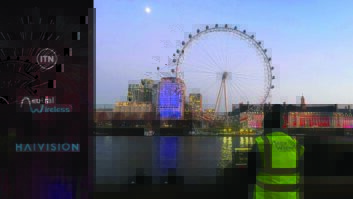
Successful coverage of the Coronation for the BBC, where Neutral Wireless deployed a seven-cell 5G private network outside Buckingham Palace to cover part of the procession route, supporting 60 devices from 20 different international media at a time when public networks were saturated, inspired the Olympic Broadcasting Service (OBS) to examine the use of private 5G networks for the opening ceremony of the Paris Olympics in 2024.

“They weren’t sure how to provide coverage over a 6km stretch of the river, with content coming off boats and feeds for each delegation,” explains Samuel Yoffe, senior system engineer at Neutral Wireless. “You can’t do 207 feeds with conventional RF. We deployed a 22-cell network that we put out for video production, but also to support mobile photographers with instant FTP upload of photos to their respective press agencies.”
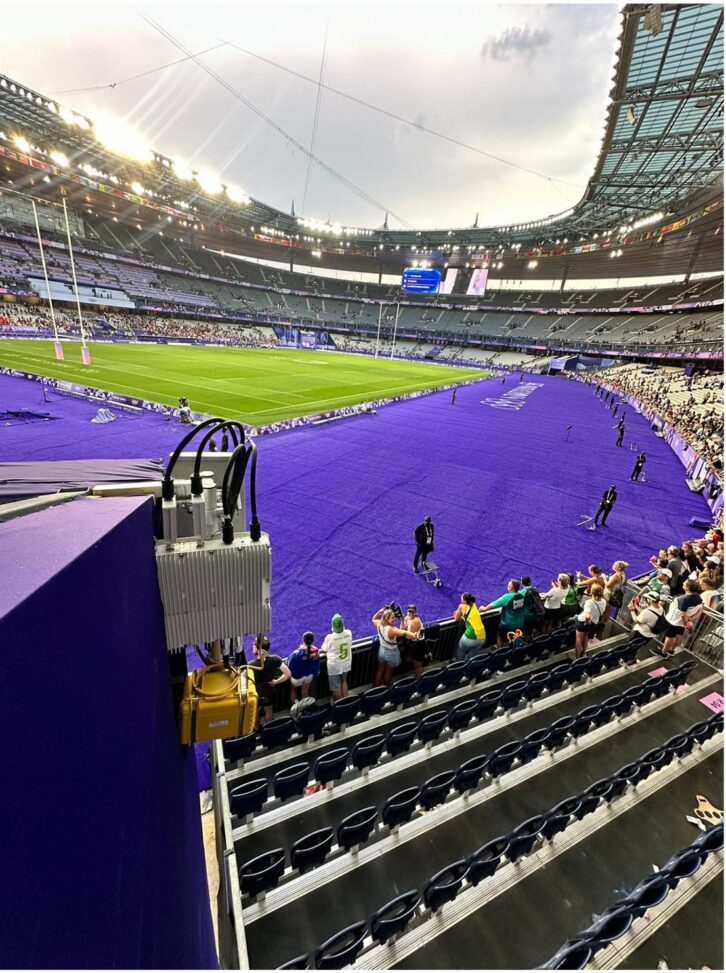
Private 5G networks were also deployed over three stadia: Stade de France, Bercy Arena and La Defense. The 5G equipment in Stade de France is still there, according to Yoffe, used weekly for rugby coverage to support cameras going onto the pitch.
Olympic sailing was a particular 5G highlight of the Paris Games in 2024. “The race areas in Marseille were up to six kilometres offshore, and trying to listen to a low power mobile phone uploading video from a land-based infrastructure was impossible,” explains Yoffe. “We built a three-cell network on catamaran boats that positioned themselves around the field of play, received those video signals from the race boats and transmitted them at much higher power back to shore.”
“The big revelation was not just the amazing footage, but the audio. The athletes had Bluetooth microphones, you could hear them shouting. It was just so engaging, it’s what made you feel like you are on board with them. 5G is allowing access to content that is just a lot more engaging than a long camera lens from a helicopter or a chase boat. It’s allowing you to take small form factor devices off the shelf and actually deliver content from those.”
5G broadcast
On the distribution side, the 5G broadcast standard works on a “one-to-many” format, with transmissions leveraging broadcast tower infrastructure to offer live, free-to-air delivery to smartphones and other devices. 5G broadcast can deliver the same content to unlimited numbers of users, without congesting mobile networks or consuming user data allowances.
This is especially relevant for demanding situations like coverage of major sports events, and for emergency alerts. Release 19 of the standards has reached maturity, according to EBU CTO and CIO Antonio Arcidiacono. “Towards the end of 2027, we will see the appearance of new mobile phones with embedded 5G broadcast functionality,” he says.
There is some skepticism out there around this development, however. Future upgrade requirements to 5G ready consumer devices and regulatory, technical, and commercial hurdles in assigning Ultra-High Frequency (UHF) spectrum are some of the bottlenecks to full 5G broadcast adoption.
“I feel like any technology that is trying to replace a highly capable IP streaming capacity with broadcast over IP, which requires new devices and chipsets, is a broadcast approach to stay relevant in world where broadcast is no longer necessary to distribute content,” comments Tom Morrod, research director and co-founder of Caretta Research.
“Making millions of consumers buy a new device is a pretty big barrier to adoption, and if your argument is that the internet’s not fast enough, then just wait for six months. Broadcasters make great content and should follow where consumers want that content to be, not try to change the way that consumers are accessing content.”
Momentum keeps on building around 5G broadcast, however, which was once again successfully tested by Italian public service broadcaster Rai and the European Broadcasting Union (EBU) during trials at the Milano Cortina 2026 Olympics last month. “Technically, it worked as we were expecting, now we are waiting for feedback on the content side, because any new technology should not be only a substitute of the technical way of transmitting bits and bytes, but an innovation in terms of creativity and formats,” says Arcidiacono. “Broadcasters are looking into the real value proposition.”
Arcidiacono adds that 5G broadcast can deliver a “phy-gital” experience to fans, who will both be enjoying an in-person sports experience in a specific location while also watching digital content on their personal screen, a process also known as “venue-casting”.
“In a stadium like San Siro in Milan, holding 90,000 people, 5G could enhance each person’s experience by providing many different points of view, different angles and a look backstage. The fan becomes their own director, deciding what angle you want, or using an AI to select the best view. 5G broadcast will make that possible: with a single transmission in the stadium, you can distribute a lot of content, no matter how many users there are.”
Some of the arguments being made for 5G broadcast delivering fully immersive experiences include the technical simplicity of venue casting. “All you need is a core network and one low power transmitter is more than enough to cover 80k to 100k people,” states Graziano Casale, director of technical sales for broadcast distribution at Rohde & Schwarz. “We did trials in France at Roland Garros and in F1. The application is there, but in Europe I don’t see it as a priority for broadcasters, or a driver for adoption of 5G broadcast yet.
“We do however see increased interest worldwide for sporting events, in Latin America for football, and South East Asia. Major live sports events and venue casting are interconnected in this broadcast conversation, to avoid unicast network congestion in a stadium with 50,000 people trying to stream on their mobile.”
5G broadcast also addresses the need for higher quality of service when it comes to signal drop or quality reduction, low latency and ‘the spoiler problem’. “Super Bowl analysis showed that Over-the-Air (OTA) TV has a low delay of roughly 11 seconds, while streaming lags by up to 60 seconds,” says Casale. “In live sports, using OTA gives you a 45+ second advantage over streaming, which is a major advantage for avoiding spoilers during tailgating or parties.”
Arcidiacono believes that 5G broadcast deployed massively for content distribution will inspire more people to invent new, creative ways of using it. “The cellular network is complementary to 5G broadcast,” he concludes. “I’m in favour of this idea of using the law of physics where they work best. The cellular network is best for one-to-one connections, 5G broadcast is best for one to many, which is typical of live events.”
This article originally appeared in the April issue of TVBEurope, available to download here.