PTZ cameras have traditionally been used in pro AV. How do you see them making a mark in broadcast? Which genres do you think they could have the biggest impact on?
The lines between broadcast and pro AV have become blurred, if not entirely removed. Cameras and lenses (and their remote-control systems) are some of the more obvious areas impacted by this shift through the expansion of improved PTZ systems.
Advances in sensor technology and optics have allowed PTZ cameras to transition from the periphery into genuine broadcast tools. Image quality and performance have improved significantly to the point where major broadcasters, legislatures, and global corporations are now successfully integrating these heads into their broadcast-quality production environments. Any genre that prioritises flexibility, scalability and efficient operation and can benefit from additional camera positions without additional crew members is a candidate for a PTZ workflow, and these can include news, sports, parliamentary coverage, Houses of Worship, education, esports and studio talk shows.
That said, PTZs aren’t replacing conventional cameras. They’re expanding the creative toolkit and increasing options, enabling shots and production models that weren’t previously practical. Until recently, however, these implementations suffered from a lack of sophisticated, scalable control systems to be successfully integrated into sophisticated operations.
How has the rise in popularity of PTZ cameras impacted traditional robotic pan/tilt heads and pedestals, or are they complementary tools for multi-camera coverage?
We see them as highly complementary technologies rather than competing ones. Every production has different creative and operational requirements, and broadcasters increasingly deploy a mix of systems to achieve the best outcome.
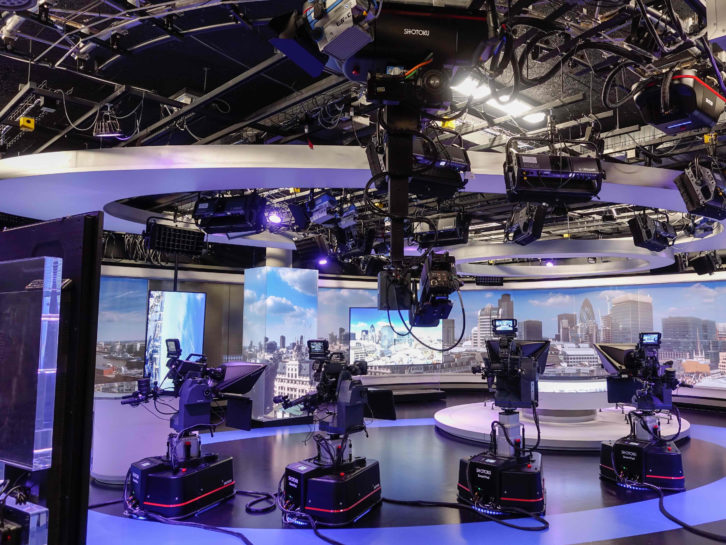
Traditional robotic heads and pedestals deliver unmatched payload capacity, precise lens control and the smooth, cinematic movement expected for studio productions using full-size broadcast cameras. PTZ cameras, meanwhile, excel where space is limited, additional camera angles are needed, or remote operation is a priority. The strongest multi-camera setups we see today mix both, using each where its strengths matter most, and operators increasingly want both systems to behave consistently.
PTZ cameras can sometimes be criticised for robotic camera movements. How can an end-user ensure more natural-looking moves when controlling PTZ hardware?
The perception that PTZ cameras produce “robotic” movements usually has less to do with the camera itself and more to do with the controller. Natural camera movement comes from smooth acceleration and consistent velocity. The control system should support operators accustomed to traditional robotic heads bringing that instinct to controlling PTZ cameras. Adjustable motion curves, accurate joystick control and repeatable movement profiles all contribute to producing shots that feel organic rather than mechanical.
Audiences shouldn’t be thinking about whether a shot came from a PTZ camera at all—they should simply see engaging programming.
How have recent major events (sports or news) impacted the development of PTZ workflows?
Major live events have accelerated the need to produce more content from more locations, with greater operational flexibility and zero tolerance for failure. Whether covering global sporting tournaments, elections or breaking news, remote production has become an established part of the broadcast landscape rather than an exception.
PTZ cameras are a natural fit because they can be installed quickly, operated remotely and deployed in locations where conventional camera positions would be difficult or expensive. At the same time, expectations for production quality have continued to rise—operators expect precise, reliable control and movements that match the quality of traditional broadcast robotics.
PTZ workflows make it realistic to add camera positions where traditional cameras can’t go. The result is greater focus on scalable control platforms that can integrate multiple PTZ cameras into a cohesive workflow. As broadcasters continue balancing operational efficiency with creative ambition, sophisticated control is becoming just as important as the cameras themselves.
With the launch of your Aura suite, how has Shotoku altered its engineering strategy to bring traditional broadcast-grade precision and reliability to PTZ workflows?
Shotoku developed Aura to bring broadcast-grade control to PTZ workflows. PTZ cameras had improved to the point where image quality was no longer the limiting factor but still suffered from the lack of sophisticated control—most PTZ control systems were built for simplicity, not the scalable, sophisticated orchestration broadcast productions rely on. So, we applied decades of broadcast robotics expertise to fill the gap with Aura.

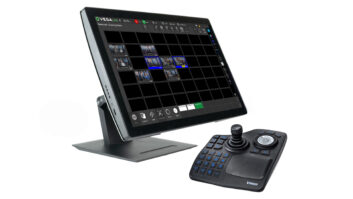
The Aura TR-XPTZ platform, launched at NAB, was purpose-built for professional PTZ productions with that gap in mind, bringing broadcast-grade precision, repeatability and scalability to PTZ operation. It reflects a shift in how we see our role—less about camera specs, more about being the control layer broadcasters can trust.
Aura was designed from the outset as a broadcast platform, bringing together the precision, responsiveness and operational consistency that customers already associate with Shotoku. Products such as Aura TR-XPTZ and the Aura P2 PTZ Prompter Panner demonstrate that philosophy in different ways—whether through intuitive, high-performance PTZ control or by solving practical production challenges like combining a PTZ camera with a full teleprompter while maintaining unrestricted pan movement.
Aura is a platform, not a single product—the beginning of a new Shotoku ecosystem. As PTZ workflows continue to evolve, broadcasters are looking for scalable systems that can grow alongside changing production requirements, and that’s very much the direction our engineering team is focused on. Stay tuned for announcements about the next member of the Aura family.
When mounting a lightweight PTZ camera with a heavy teleprompter, motor dynamics can be negatively impacted. What are the practical engineering challenges and realities of adding a teleprompter without introducing control lag?
In traditional PTZ/prompter setups, pan movement is limited to prevent the prompter hood from entering the frame—this is not only a real mechanical problem, but it also restricts creative flexibility.
A teleprompter adds significant weight and mass, changing the dynamics of the system. You’re no longer moving only the relatively light PTZ camera—so the motor has to work harder to start, stop and hold position.
The engineering challenge is to overcome these issues and get the prompter and PTZ camera to pan together as a unified system rather than individual accessories attached to the front of the camera. Considerations include mechanical design, motor selection, and the ability to achieve precise control.
We tackled this from the ground up with the Aura P2 Prompter Panner. Engineered to support larger PTZ and prompter payloads than earlier solutions, the P2’s novel design mounts the prompter on a precision-controlled rotating platform. The prompter and PTZ camera pan together as one balanced system—full unrestricted movement, no frame intrusion, and no motor conflict, delivering smooth, broadcast-quality on-air movement and opening creative possibilities for presenter-led productions. When combined with the TR-XPTZ, prompter rotation and PTZ axes are combined in one camera channel control, enabling operators to adjust, store, and recall shots with ease manually or via automation, eliminating the need for manual intervention.
Is the long-term future of PTZ workflows rooted in the camera hardware itself, or in the centralised control surfaces that orchestrate them?
Camera hardware will keep improving, but image quality will no longer be the differentiator; successful systems will be defined by how multiple cameras are coordinated within a production workflow.
Professional broadcasts rarely rely on a single camera. Broadcasters want the freedom to deploy different camera types while maintaining familiar control, predictable behaviour and scalable workflows. PTZ cameras have already proved themselves suitable for broadcast use. The real differentiator going forward is how intelligently and reliably those cameras can be orchestrated—how well a control system scales across dozens of camera positions, integrates with the rest of the production chain, and gives operators precise, natural control rather than a basic pan/tilt/zoom interface.
So, while camera hardware will keep improving, I’d argue that the future lies in intelligent control and orchestration. That’s the more interesting engineering problem—and the one that will define the next generation of PTZ workflows. And that’s the part of the system that determines whether PTZ feels like a compromise or performs as a genuinely broadcast-grade tool.