For colourist Jean-Clément ‘JC’ Soret, working on Danny Boyle’s 28 Years Later offered the chance to rekindle a relationship with a director who isn’t afraid to experiment, as well as work once again with cinematographer Anthony Dod Mantle. The sequel was shot primarily using iPhone 15s and mid-tier drones, an unusual choice for a film released in 2.76:1 aspect ratio. Soret explains how and why this was done.
Using a range of different lens mounts, including some specially created to enable up to 20 iPhones to be used simultaneously, Mantle complemented the iPhone imagery with special effects created through a variety of unconventional optics.
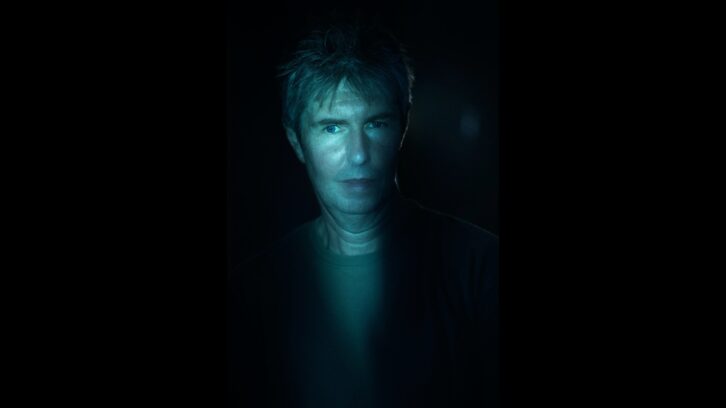
Describing the imagery, Soret says, “It has some softness and its own limitation, but it gave the film its own look of almost fragility.”
The film’s aesthetic required a radically different approach from the colourist, who would normally work to remove imperfections and smooth the imagery. “We had clipped highlights sometimes, and when you hit the low end of the exposure, it got a bit noisy, but there’s a beauty to that look, and we embraced it,” he explains, revealing how the limitations of dynamic range, camera stability, focus and artifacts contributed to the overall look and feel to such an extent that some were added even when not present in the original material. “Everything in the image is intentional and the result of an artistic choice; the main challenge was to adopt a different way of thinking. I am used to making things beautiful, but this time, it was about making images feel raw and rough.”
The robustness of the imagery allowed a significant amount of creative freedom to take place. “We did a lot with the red of blood,” says Sorét, “and with skin tones, highlighting certain details to augment their impact further.”
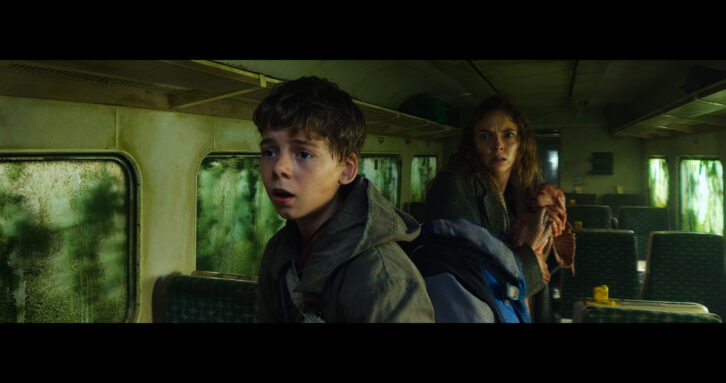
“Sometimes, the iPhone sensor, combined with the unusual lenses, could be a bit jarring. So, we worked a lot in the grade on various textures — sharpening, using defocus, and adding digital noise. Hopefully, the audience will never know what was added and what was in the original material.”
Developments since Soret worked on the grading for 28 Days Later in 2003 also presented new options. “We did a lot of reframing, adding camera shake, stabilising shots, sharpening or defocusing shots to add even more dynamic elements to the images that they wished they had been able to do on the shoot. It was all about whatever works for the narrative.”
“JC is the ‘final lens’ on a film,” says Boyle. “The finisher! But he doesn’t just polish – he perfects. On this one, our particular challenge to him was: a world of many colours, but all of them are green.”
Working on 28 Years Later was, for Soret, a reminder of his first collaboration with Boyle and Mantle and an opportunity to demonstrate his creative mastery. “Most of the time as a colourist, you’re being asked for technical perfection, you’re expected to ‘improve’ things, and on this film, it wasn’t at all about making things pretty or sharp or even consistent. It’s about helping create this sense of chaos, and that meant rethinking the way I work.”