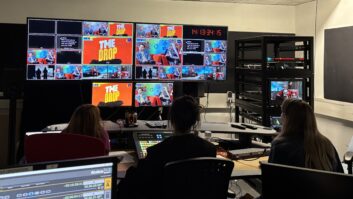
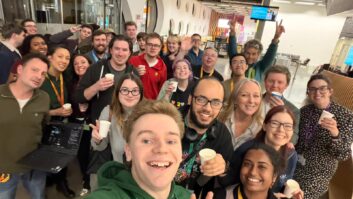
Last week’s On Air global student broadcast was one of the first real-world uses of both Time-Addressable Data (TADS) and the Media eXchange Layer (MXL).
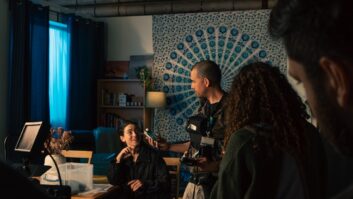
The live 24-hour global broadcast had five different channels, including a Film channel, where Appear’s X5 processing platform supported the camera feeds, which travelled via Appear’s VX platform into Norsk’s remote gallery switcher using MXL.
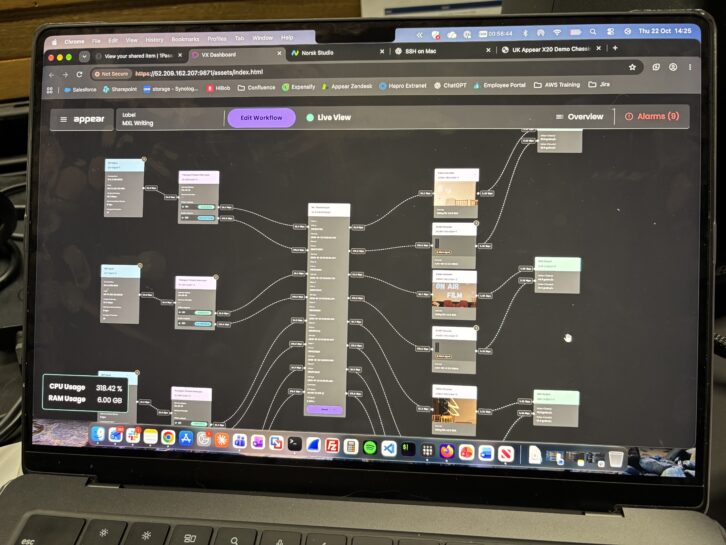
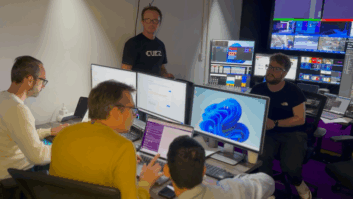
“This is one of the first real-world examples of MXL,” Appear’s VP of technology and innovation Ian Wagdin told TVBEurope. “Norsk built a simple switcher that lets the students select what camera they want. We’re landing the signals in the cloud, and then we’re encoding those as MXL. That’s giving us a very low latency handover to Norsk, which previously we’d have done via SRT, and we’d have had a lot more processing going on if we’d handed over traditionally.”
“For us, it’s a chance to try MXL with another third party and make sure that it works,” added Wagdin. “It’s been quite painless, really. Both Norsk and Appear are obviously involved in the MXL Working Groups, so we’ve been able to work with them on that.”
Post production
On Air 2025 marked the first instance in which Time Addressable Media Store (TAMS) was used in a real-world scenario, and the same happened in 2026 with the Time Addressable Data Store (TADS), first unveiled by BBC R&D at IBC.
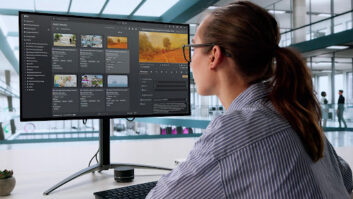
Both TAMS and TADS were used during On Air 2026 to store time-based metadata in a content logging system. “We’re recording all five channels into TAMS,” explained John Biltcliffe, senior solutions architect at Amazon Web Services (AWS). “The logging platform allows the loggers to see the live feeds as they’re coming in, log the data, and all the metadata that we create there is being stored into TADS.”
According to Biltcliffe, since the development of TAMS, there’s been the question of what to do with time-based metadata. “We think TADS is the answer,” he said. “BBC R&D published the first draft version of TADS at IBC. AWS built an implementation that we’re using for On Air, and all the logging metadata that the users generate is going into that.
“I’ve also, in the background, got some AI running to use the TAMS media to pull out transcriptions and visual understanding of what’s going on and summarise it, and that then also feeds back into TADS.”
Biltcliffe continued: “We’re experimenting at the moment with search capabilities on top of TADS to allow users to search all that metadata to not just find clips, but ultimately the aim is to be able to search transcripts. The framework we’re kind of using here, we’ve built in a way that’s pluggable. We can put more engines in to do other things in the future. So we’re using it On Air as the kind of first go, but it’s very much trying to build something that is a generic, reusable platform.”
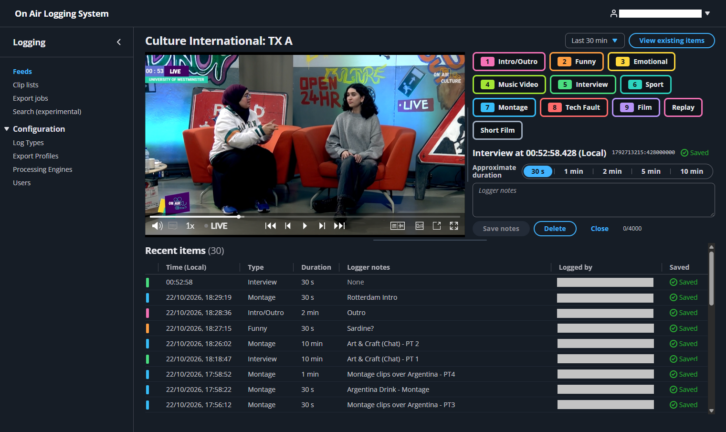
For the students using TADS and TAMS, Biltcliffe focused on producing a user interface that is simple to use: watch the feed, press the log button, add notes if needed. “They’re not worrying about TAMS and TADS and all of that; they’re just logging data. The editors and social media team can then go back, look at the clips, and export them to social media or for editing.”
On Air 2026 also employed AWS’ MediaConnect Router, enabling the team to dynamically route live video between sources and destinations in the AWS network. “All of the 25 live university feeds are inputs of the Router in their local region, and then we’re using the AWS backbone to bring those back,” added Biltcliffe. “The Router allows us to make it really easy; we can pick the source up and send it to whichever channel we want in one easy application. That makes it very easy to get the feeds in and to playout without having to go through extra hops along the way.”
AWS was also the backbone for the project’s MCR, playout and distribution enabling everyone to be spun up in the cloud. “If you tried to do this the traditional way, it just wouldn’t be possible,” said Biltcliffe. “We have five channels and all the corresponding contribution, distribution, recorded, everything else that goes around it. You couldn’t have done that with traditional tin on premise. It’s testament to where the technology in the industry has got to that we can now do these kind of things at a cost-effective, sensible point.”