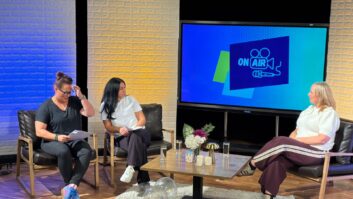
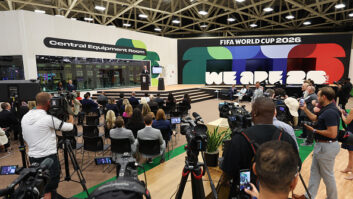
Over the last 24 hours, students around the world have been joining together for the second global On Air broadcast.
The event, the brainchild of Media Talent Manifesto CEO Carrie Wootten, is in its second year and has scaled up hugely over the past 12 months.
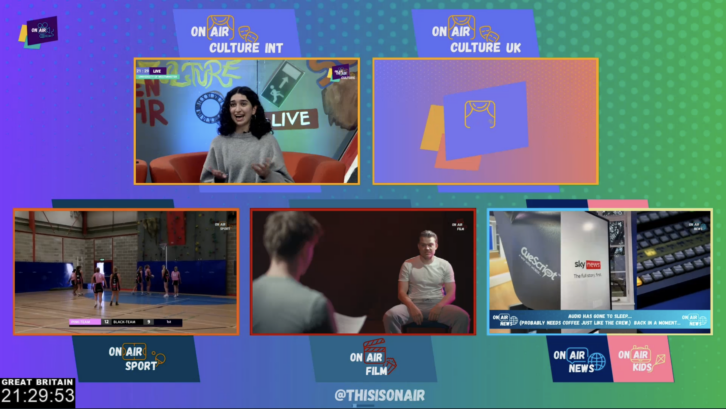
This year, over 2,500 students from 48 locations across six continents took part in the project, with the main hub based at Westminster University in London. They came together to deliver five channels covering Culture (with a separate Culture UK channel), Sport, News and Kids, and Film.
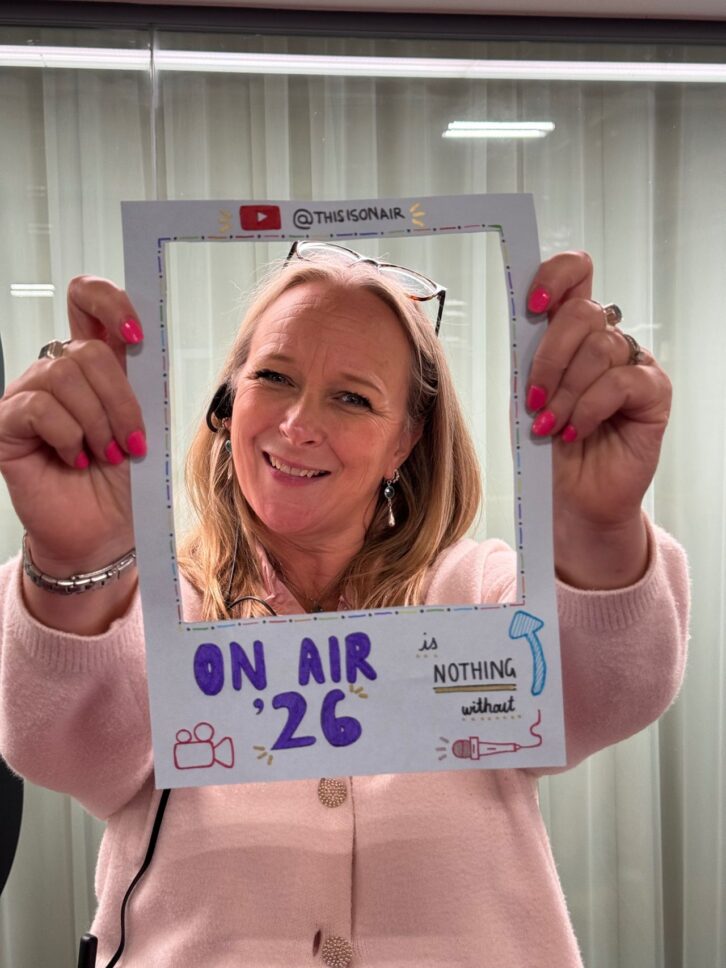
“We knew we could do more,” Wootten tells TVBEurope about how the team went about planning On Air 2026. “We knew and hoped that interest from other universities would grow, and therefore we needed to look at a different way of being able to include everyone. I don’t want to be exclusive; I want to be inclusive to all universities.”
Growing the number of channels meant that more students could be involved, with those studying film able to work on the film channel, for example. “It was a way of expanding the reach of the students that we could showcase through the project,” says Wootten.
Adding more complexity meant more challenges. First, the complexities of scheduling a matrix of channels with different time zones and different programme lengths. “Pulling all of that together was extremely challenging for the scheduling team. I did make their lives really difficult this year,” she adds.
“The other is the additional complexities of the workflow that we put in. We wanted a MAM system, and we chose Mimir from Fonn Group, so there was the process of making that work. Normally there are huge teams that manage a MAM, and we have a team of one. We had to manage the workflow that goes with that, the AWS S3 bucket and playout and just making that workflow work. That is all impacted by scheduling as well. So the complexities of that have been one of our biggest challenges, definitely.”
Key to making the project work was partnering with a university that could match Wootten’s ambition. She first began talking to Doug Specht, head of the School of Media and Communication at the University of Westminster in December last year. “Carrie came to us and after reading a couple of emails, I thought that it looked like quite a good idea, and we arranged to meet,” he explains. “Carrie said she would bring a couple of people from her team, and I thought, I’m going to show her we’re quite serious, and brought 14 or 15 people from our team.”
Sitting across the table from such a large team showed Wootten that Specht and his team were engaged and wanted to get involved. “That’s what we needed because we were scaling in a significant way. We needed a partner that was going to embrace that challenge, and Doug and his amazing team have done that, from security, the cleaners, the estate team, to all of the tutors.”
“We weren’t trying to intimidate; we were trying to reassure,” stresses Specht. “I was sat next to our head technician Aidan Delaney, and I leaned over to him and said, ‘Can we do it?’ And he said, ‘Yeah, I reckon we can’. And we pretty much said yes in that moment. That was in December, and we haven’t looked back.”
With Westminster on board, work began on creating the team that would be based in London, handling playout as well as five different studio productions. “We put out a press release in January because we didn’t want Carrie to run away, and we started drip-feeding that this was coming to students,” continues Specht. “We started thinking about some of the roles they could do and where they could start to partner up with the industry. Of course, it really ramped up in the last couple of months, and especially in the last couple of weeks, but it was a long drip feed of building relationships, working with industry. Some students were off doing workshops months and months beforehand. Sometimes I’d find out about them by spotting them on LinkedIn!”
Opening the project to students not studying TV production meant that some faced a steep learning curve. “For the first hour and a half, some of them were like, what is going on,” says Wootten. “They’ve done amazingly considering probably quite a lot of them wouldn’t have known what an OB truck looks like or wouldn’t have done vision mixing before.
“There are some core TV students that have led our Culture channel and done an amazing job. But this is a big university, so some of the students didn’t know each other, and all of a sudden they’re working in teams and working out dynamics and problem-solving and communication skills. That all goes alongside the actual technical skills that they’re learning. Hopefully those skills will last them a very long time.”
Despite some feeling a little like a rabbit in the headlights, confidence grew throughout the day. The team also included secondary school children who appeared on screen. “The teacher said to us that two years ago one of the students who was presenting today wouldn’t speak and couldn’t read, and all of a sudden they’re now in front of the camera talking, reading an autocue,” reveals Wootten.
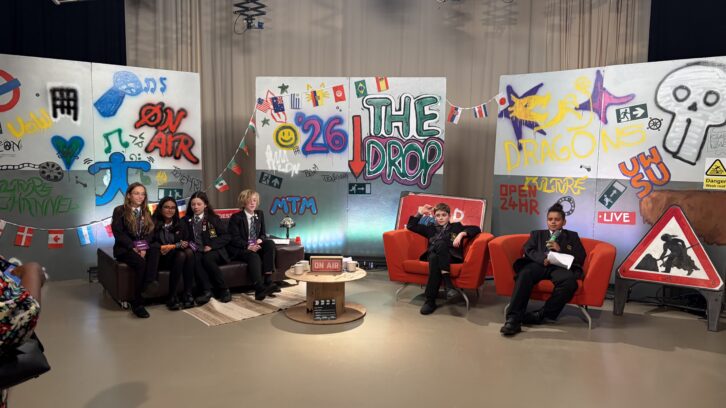
“That’s what this is about. It’s about opportunity, access, inspiration, networking, understanding. We won’t change the diversity of our industry if we don’t provide the opportunities. I bang on about it all the time, but it is true. The teacher’s feedback just encapsulates that completely.”
As well as the students working both in front and behind the cameras, On Air 2026 had around 100 industry supporters, and numerous tech companies who provided technology needed for the different livestreams. “The workflow has meant more partners, and it’s been phenomenal. Everybody has been incredible, really,” says Wootten.
“The industry is not just turning up and working with the students next to them. Half of them have turned into teachers in the last fortnight,” adds Specht. “The students are seeing a model of really good ways of working, that doesn’t mean everything’s gone perfectly, but everyone remains collegial, everyone’s looking after each other, working to solve problems together, and that’s what we hope the students will now go and do when they’re in our studios, and when they’re in the workplace.
“It’s not just being shown where to push a button; it’s being shown how to behave when the wrong button gets pushed by someone else.”
Broaching the subject of On Air 2027, Wootten says she does have some ideas of how it could be even bigger and bolder than this year: “There are several different options that we could look at. I don’t think we’d ever change the length of it because we’re so heavily reliant on industry volunteers and stretching the timeframe, I just think, is impractical. More channels is an option. Different locations for playout is an option. They’re probably the two most obvious at the moment. But my ambition is to include more and more universities.”