Identifying the issues that really matter instead of drowning in alarms is just one of the key benefits of bringing minimum status reporting to multi-vendor, IP-based infrastructures. It’s an area that was fully explored at IBC2026 recently during joint demonstrations by the European Broadcasting Union (EBU) and Advanced Media Workflow Association (AMWA), devised to showcase the potential of the NMOS BCP-008 Minimum Status Reporting specification.
Under the banner of ‘Open Collaboration, Real-World Results’, the demonstrations brought together some of the biggest and most innovative companies in the business, namely: Arkona, DirectOut, EVS, Leader, Nevion, Pebble, Providius, Riedel, Simplexity, Sony and SRF. Collectively, they spent months collaborating on interoperable demonstrations of BCP-008, before gathering at EVS’ facilities in Belgium for a final phase of validation.
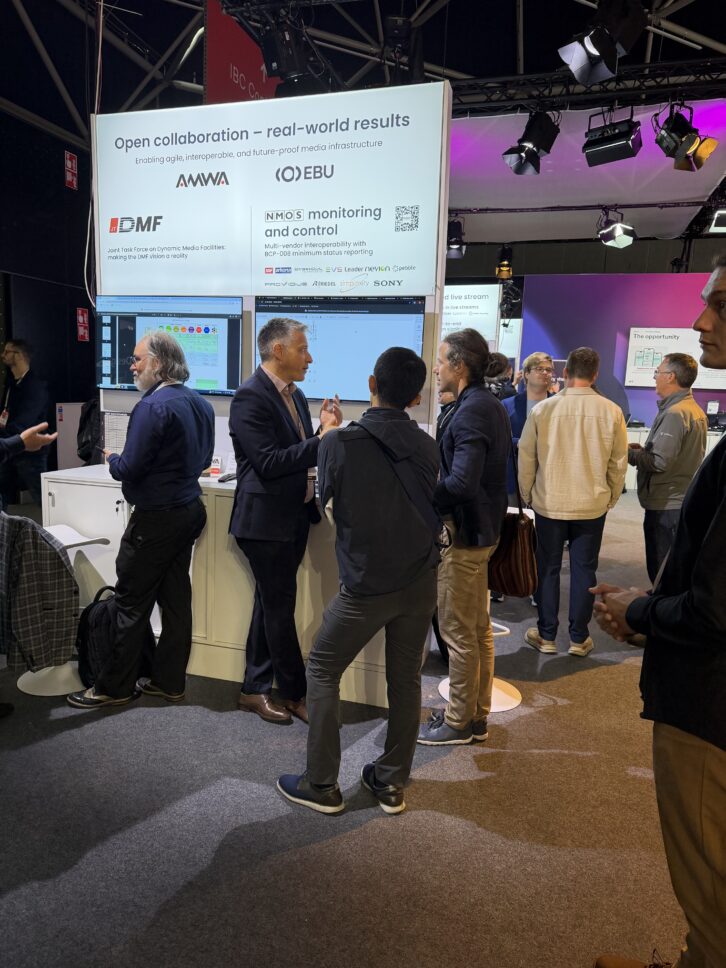
According to Stefan Ledergerber, CEO of Simplexity and NMOS Control project lead, the demos showcased that “multi-vendor interoperability is real, practical, and ready for deployment. To have products from each of these participating companies implementing BCP-008 at once is the largest commitment to NMOS since the introduction of IS-04 and OS-05, and it shows the necessity of status reporting within our industry.”
All of which begs the question: what were the kind of realisations that led to the development of BCP-008, and how exactly does it fulfil the need for minimum status reporting?
Optimise warnings
Above all, BCP-008 aims to resolve the kind of headache-inducing over-reporting that can easily occur with IP networks. Illustrating the point, Ledergerber recalls a not atypical conversation in which he asked a customer: “What’s the biggest problem you have on your network? He opened up a screen and said he had 60 or 70 devices on a specific set-up online, 50 per cent of which were reporting warnings and another 20 per cent critical alarms. And none of them actually represented a problem.”
Over time, it became increasingly evident that there was a need to “tame the beast… All of these devices can report many things, but reducing them to a minimum so you actually know when there is something that has to be taken care of immediately is a real challenge.” A seed had been sown—one that ultimately resulted in the development by AMWA of NMOS BCP-008.
Developed with a keen eye on broadcast operation teams in the midst of transitioning to IP-based networks, BCP-008 provides a standardised approach to status reporting across equipment from different manufacturers. It only reports issues when they actually matter since the end device knows best when things appear to not work correctly, allowing operators to quickly identify and resolve issues in multi-vendor environments.
The specification readily acknowledges the increasing demand for status monitoring as engineering teams become responsible for maintaining and keeping IP deployments operational on a 24/7 basis. Significantly, BCP-008’s models also define a baseline standardised level while allowing vendors to add further details and reporting features as required. All of this is achieved without compromising the interoperability ecosystem; for instance, a controller is able to work with the baseline models, but can also consume any vendor-specific functionality identified using the built-in discovery mechanisms.
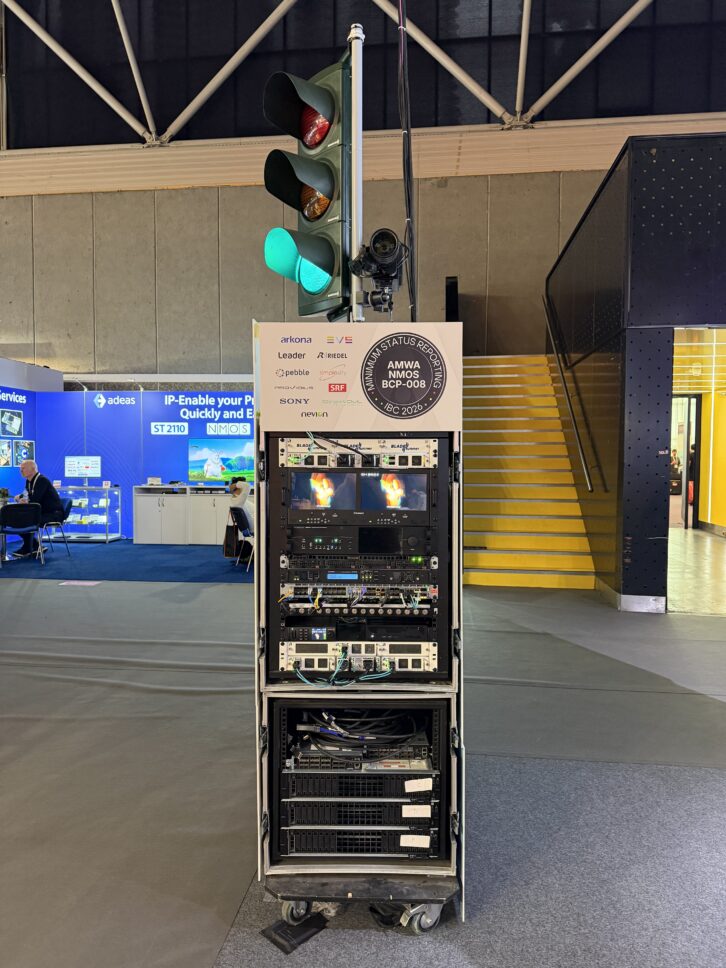
Pebble technical lead Cristian Recoseanu, who has had a long-term involvement in the development of the NMOS specifications, says that these definitions are referred to as “minimum models. They are effectively the things we think we need for 90 per cent of the full finding scenarios, but then vendors can expand them quite easily with more domains, states and detail into their reporting – without breaking the interoperability layer. So it’s really a multi-layered approach that allows vendors to add their own capabilities—their own ‘flavours’—on top.”
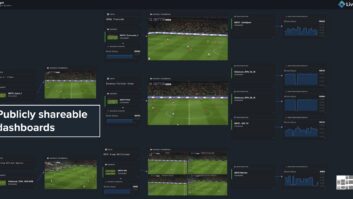
Considerable thought has also gone into the experience of using solutions implementing BCP-008, not least with regard to the monitoring dashboards that reflect the basic states of compliant devices. These have been kept impressively simple and streamlined, ensuring that end-users can easily achieve a complete hierarchical view of where a fault or potential issue has occurred.
“Just by harvesting the raw states straight from the devices you can get a very detailed picture, which means the barrier to entry is pretty low for those systems that aren’t too complex,” says Recoseanu. “At the same time, complicated monitoring systems can still harvest information in a standardised way, making it easier for vendors to have their own ‘secret sauce’ that they offer to customers.”
Reduce complexity
As VP of control and orchestration at EVS, with a focus on developments including IP, Dieter Backx is well-placed to identify why now is the time for a standardised approach to minimum status reporting. “As IP facilities are inherently multi-vendor, having a standard way to monitor and troubleshoot infrastructure helps reduce project-specific customisation and accelerates deployments,” he says. “It reduces integration complexity and speeds up fault isolation, especially in large-scale systems. At the same time, we recognise that the industry is in a transition phase, so for devices that do not yet support BCP-008 we will continue to leverage complementary technologies such as SNMP [Simple Network Management Protocol] and vendor-specific APIs where appropriate.”
BCP-008 constitutes a strong solution to the challenge, says Backx, because it “focuses on the operational status information engineers need most, including connectivity, synchronisation and stream validation. It provides a common, vendor-neutral framework for status reporting across devices from different manufacturers. [Moreover] as it’s built on NMOS IS-12, it also establishes a foundation for broader standardised control and monitoring capabilities in the future.”
The enthusiastic reception to BCP-008, and the recent demos at IBC2026, also underline another enduring truth of the broadcast industry—that progress is always most rapid when different stakeholders agree to collaborate. As Brad Gilmer, executive director of AMWA, remarks: “These demonstrations show what’s possible when vendors, end-users and integrators come together around open specifications to solve real operational challenges. BCP-008 gives broadcasters a practical, standardised way to understand what’s happening across multi-vendor IP facilities, helping them operate those facilities with greater confidence. Leading manufacturers demonstrating interoperable implementations together at IBC was an important milestone for our industry.”
For more information and developer resources, related to NMOS BCP-008, please visit: https://www.amwa.tv/post/developer-resources-nmos-bcp-008-minimum-status-reporting