Talk us through an average day in your role
My typical day starts with an agenda built entirely around the customer. In my role, the customer always comes first, so I begin by prioritising what we’re doing with each of them. Every single customer is important in my mind, regardless of their size or requirement. I want to ensure they receive high-quality service and support, and ultimately deliver a positive experience.
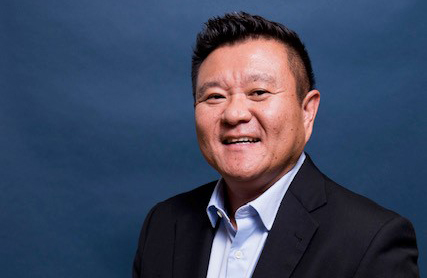
Alongside our business customers, I have my internal customers: my sales, pre-sales, and marketing teams. These are the folks directly interacting with our customers, and my priority is to remove obstacles and support them, so they can focus on doing their job. I think that’s one of the most important things a leader can do.
How did you get started in the media industry?
I’ve always wanted to be in the entertainment industry, and I tell this story to my kids all the time. I actually majored in economics and minored in Japanese and thought I was going to end up working in investment banking! That was until I got a job in college working at a commercial radio station as the promotions guy. I was the kid who drove the van, took the DJs to their concerts, and worked all the club nights. Being so close to the Hollywood studios was an advantage. Right out of college, I drove to every studio, checked the job boards outside their HR departments, and went home to type and mail out resumes on my typewriter.
Breaking into this industry is tough; you can’t get a job without experience, and you can’t get experience without a job. Through networking, a college friend at Pioneer Electronics helped me land my first role putting movies on those giant LaserDiscs. From there, I leveraged Pioneer’s relationship with Paramount Pictures and eventually got into their marketing department as the most junior person on the team. At Paramount, I pushed hard to work on a little movie called Forrest Gump. At the time, no one knew what the film would become. When it blew up, I became known as “the Forrest Gump guy,” which opened a lot of doors for me. I then moved over to MGM to work on the James Bond franchise, then to DreamWorks, where I worked on films like Shrek. Eventually, Paramount recruited me back, and I returned as head of the department where I first started.
A few years later, I moved to Technicolor and was lucky enough to work on a skunkworks project nicknamed “Project Spectrum.” At that time, the industry was in a strange transitional moment: people were still using cable boxes and Blu-ray, but streaming was rapidly emerging. That skunkworks project eventually evolved into M-GO and was later acquired by Vudu and DreamWorks. That work ultimately became one of the early streaming services and showed just how quickly the business was shifting from hardware to software.
Why do you enjoy working in the industry?
For me, it’s all about the relationships. This industry is built on people, and I’ve been incredibly fortunate to have mentors, colleagues, and friends open doors for me throughout my career. I try to pay that forward by mentoring others. I love the energy, the creativity, and the collaboration that come with this business, and that’s why I’ve stayed in it for so long.
What piece of advice would you offer someone looking to explore a role similar to yours?
I have been a mentor for many years and guest speaker at the USC Marshall School of Business. The one piece of advice that I never deviate from is this: network, network, network. You never know who can help you. I’ve been so fortunate with my career, and I’m a use case and a product of that. Be kind to everybody, because you never know when that one person might become the president of a company where you are applying for a job. And pay it forward – help to nurture and bring new talent into our industry by supporting others.