If 2025 had a single defining word, it would be transformation. We have seen younger audiences in particular, leading the charge towards more personalised, on-demand, richer, and ultimately more immersive experiences. For the first time, streaming services have overtaken traditional TV as the preferred means of content consumption. I don’t have to look far to see this change happening, as I see it happening in real-time in my own home. And if the way we are consuming content is evolving, it can only mean that the way content is created must also change.

While video innovation has delivered stunning visuals and impressive graphics, the audio experience has arguably struggled to keep pace. This imbalance becomes more evident as audiences demand richer, more multi-sensory engagement. Now, audio is undergoing its own transformation, powered by breakthroughs in hardware and smarter workflows.
In 2025, Shure stepped forward to close the gap and launched the DCA901 Planar Array Microphone. From sports arenas and TV studios to live events, this breakthrough is reshaping workflows and elevating the quality of sound to match the sophistication of today’s visuals. Let’s do a summary of how this shift and other trends are redefining the industry.
Workflow simplification and the rise of REMI
Remote Integration (REMI) workflows have become a cornerstone of broadcast production, reducing on-site costs and overcoming physical limitations. Engineers can now manage complex setups from afar, delivering efficient productions without sacrificing quality. This evolution isn’t just about convenience—it’s about empowering engineers to focus on creativity rather than logistics or troubleshooting.
Audio capture for a front-row experience
Audio is such a key element to how we all experience the world around us, and I believe audio can play a more crucial role in broadcast in the years ahead. We all love to be entertained and feel like we are at the event itself, and microphone technology allows broadcasters to isolate and enhance the sounds that matter most—whether it’s the bounce of a ball, the roar of the crowd, the subtle exchange between players, or the behind-the-scenes chatter that brings viewers closer to the action. Smart software ensures precision and flexibility, creating an audio experience that feels as immersive as being there in person.
AI and software integration: the future is here
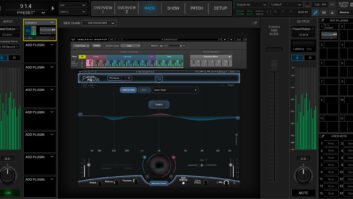
This year, we saw sophisticated platforms like Edge Sound Research’s Virtual Sound Engine automating the capture and isolation of sound as objects, massively improving and streamlining productions for live broadcasts, replays and post production. It’s also clear that artificial intelligence isn’t just a buzzword: it’s a game-changer for broadcast. Shure’s participation in the IBC Accelerator Programme showcased how agentic AI can optimise workflows, reduce manual tasks, and free engineers to focus on storytelling. The result? Engineers will be able to mix shows from anywhere with ultra-low latency, making high quality productions more accessible and cost-effective without sacrificing artistic control. And this is just the beginning on how AI will shape broadcast workflows.
Cloud integration and data-driven production
Cloud technology is now becoming more integral to broadcast operations, enabling seamless collaboration and real-time data analysis. Combined with AI, cloud integration minimises setup time and maximises creative potential. For broadcasters, this means less time troubleshooting and more time crafting compelling narratives that captivate audiences.
The broadcast industry is entering a new era, one where audio is no longer just supporting the story but is central to it. We stand at a crossroads where technology, creativity, audience demand and evolving infrastructure all converge. This moment presents a rare challenge but also an opportunity to innovate and evolve. We enjoyed 2025 and cannot wait to see what 2026 has in store and what changes shape our industry next.