Ted Lasso is one of those rare shows that can be identified from a single frame. Even when the coach himself is off-screen, the language is unmistakable: tight eyelines, a single-camera intimacy, a world that feels both naturalistic and quietly heightened. For the beginning of season four, that world steps out of Richmond and into Kansas City—or, as the joke goes, Missouri. Bella Gonzales was asked to bring an American sensibility to the opening chapter without losing the storybook quality audiences already know.
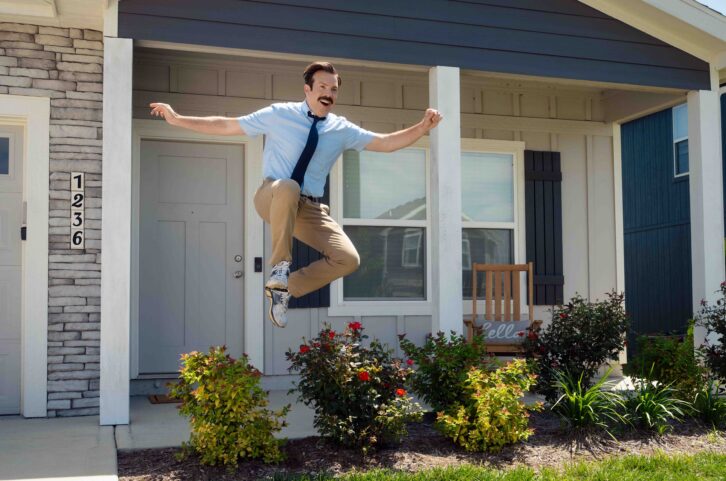
Director Declan Lowney, with whom Gonzales had worked on other Apple TV+ series, wanted a fresh pair of eyes at the start of the new season. Star/executive producer Jason Sudeikis and Lowney liked the idea of a different cinematographer shooting the Kansas material, giving the return a fresh perspective while retaining its identity. “I think Declan knew that I would really get into the nitty-gritty and study the show,” Gonzales says, “but then come at it from years later and seeing where Ted came to be.”
The brief was not to reinvent the look, but to open a new chapter within the same book.
Kansas, not Kansas
Episode one saw Gonzales make the classic mistake the show itself jokes about: she thought she was flying to Kansas. After a couple of weeks of prep and about a week and a half of shooting, the unit worked fast. The intention, she says, was to have everything scoped and discussed with Sudeikis so that when the day arrived the team was ready for both the plan and “the magic of what filmmaking is”—the moment actors walk into a room and the scene becomes clear.
Sudeikis sent her after physical locations that, to him, are home. Scouting them with the star while Gonzales was herself away from home gave the photography a personal charge. “It felt really appropriate having that experience to shape a show from his point of view,” she says. “Looking at home, and I’m away from home. It felt very innate and real.”
Same camera, different hug
Gonzales kept the established camera system: ARRI Alexa Mini LF and Tokina Vista primes. She was offered a change and declined. “I just felt like it wanted to be as if Ted Lasso was in another storybook,” she says. “They’re stepping in somewhere else, but it seems relatively familiar.”
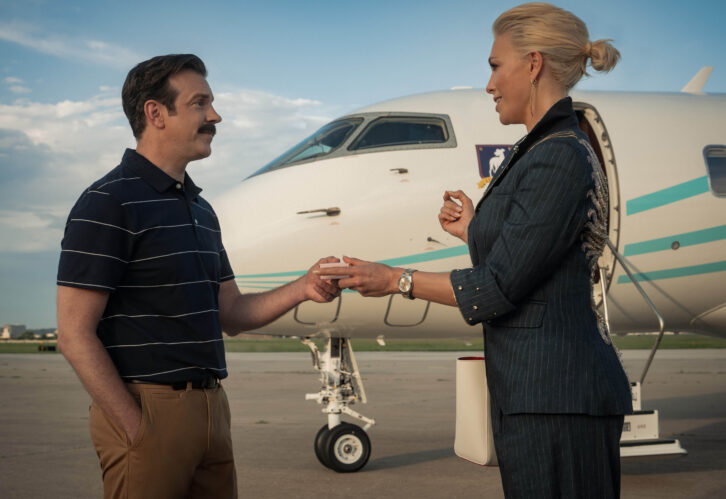
The difference was in the glass treatment. Gonzales added a warming filter and Bronze Glimmerglass, a choice she traces directly to Juno Temple’s character Keeley stepping out of a car looking like Dorothy in Kansas. The filtration was designed to feel “effervescent and dreamy, like a warm hug,” says the cinematographer. English faces the audience know and loves experiencing an American summer for the first time. Rebecca (Hannah Waddingham) in the bleachers in blistering sun. Blue skies, sparkling highlights, dust in low sun. That texture, she says, was pivotal to how Kansas should look.
Tungsten, mats, and a heightened naturalism
Outdoors, the Kansas City sun did much of the work: orange, purple, pink. Indoors, Gonzales reached for tungsten whenever she could—Maxi Brutes, nine-lights, small hard hits of sun—because its texture matched that low Midwestern light. Speed forced a lot of LED as well: LiteMat units from LiteGear, SkyPanels, Vortex panels. Soft sources everywhere.
Ted Lasso, she argues, only feels naturalistic. To look natural, it is almost overtly lit. David Rom designed the original series to be shot like a drama that happens to exist as a comedy, and Gonzales kept that principle in mind. In the grocery store, where Ted is an assistant manager slightly out of his element, she wanted a trace of discomfort: “a stranger in your own home”. When Rebecca tries on a glamorous outfit she would never normally wear, the lighting had to feel natural and a little movie-star.
Trust, lookbooks and when to go handheld
Autonomy was unusually high. Lowney was still prepping the Richmond block, so Gonzales arrived in Kansas first, built a lookbook from The Wizard of Oz, Casablanca, the locations and conversations with Sudeikis, then went straight into it. “It was a dream for a DP,” she says. “They trusted me and they wanted someone relatively unfamiliar with the full nitty-gritty. They wanted a new vision.”
The episode’s writing by Sarah Walker, Brendan Hunt, and Sudeikis is famously intentional. Gonzales tried to match that precision in every unit, filter and lens choice. She retained Rom’s single-camera mentality and close, tight eyelines, departing just enough for the established grammar to have greater impact when it returned.
Handheld is rare on the show. She used it twice. Once in the grocery-store break room, when Ted lectures a younger co-worker in a coaching scene that echoes the football changing room. The second time was in his childhood home, as he looks at his father’s accomplishments and questions whether he did the right thing before sliding into an anxiety attack. That passage needed the show’s original subjective language. “I feel like you have to depart a little bit to come back to those things and feel it as a viewer,” she says.
The airport, the diner and fighting your own taste
The biggest logistical headache was the airport: a sunset scene held across five or six hours that still had to cut together as one, continuous golden hour. “That is an almost impossible task,” Gonzales says. Done right, nobody questions it. The Casablanca rhyme is there if you look.
The first time the returning cast reunited was for the diner scene, with Ted placed at the edge of the bench so he could leave, while the Richmond family sat deeper in the booth, more at ease in the space than he was. The booths could not be moved. Two women had to be backlit when a DP’s instinct screamed for flattering front light. Story won.
“You’re really fighting your DP sensibility to nail story,” Gonzales says. “What’s not the right decision as a DP, but what’s the right decision as a viewer?”
The biggest pressure, she adds after thinking about it, was simply the scale of the show after a long break: making people connect with it again.
Restraint as the lesson
Gonzales comes out of comedy, TV series Pen15 changed the course of her career, but much of that work has been dark, stoner and absurdist. Ted Lasso asked for the opposite: restraint, familiarity and the sense that you are in the room with the characters.
She tried to switch off the part of her brain that waits for the “right” time of day or the prettiest position and follow the rhythm of the set instead. Trust with Lowney made that possible. “I couldn’t go off my gut of what I think it should look like, because it’s almost bigger than me. That was really lovely and very freeing. Everything needs a different approach.”
The set itself was a reunion of families: Richmond veterans, the Big Door Prize crew— producer Sarah Walker, first AD Townson Wells and the script supervisor—and a Kansas City unit making what she calls a love letter to the city.
“Everyone was really involved in different ways. It was a beautiful thing to feel that synergy, even though we’re from everywhere.” They laughed a lot, too.
This article originally appeared in the October/November issue of TVBEurope, available to download here.