Lawo has released details of its work to support a modernisation of RTL News’s Audio Control Room TR1 as part of the organisation’s continuing transition toward a HOME-based IP production environment.
Following RTL Deutschland’s decision to equip four audio control rooms with Lawo mc²56 consoles and the HOME platform, the upgrade aims to enable Audio Control Room TR1 to integrate into the existing infrastructure.
Centring the redesign around a Lawo mc²96 Grand Production Console, the broadcaster added a new monitoring environment, modernised signal infrastructure and full support for 5.1 surround sound production, allowing RTL and ntv to produce and deliver programmes in multichannel audio.
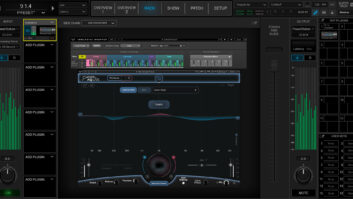
Additionally, functions handled by standalone hardware have been integrated into the platform, including auto-levelling, signal processing and routing. Controllable directly from the mc²96 surface, Waves plug-ins are fully integrated into the workflow, with only specialised applications such as CEDAR noise suppression and Waves SuperRack for advanced plug-in processing remaining.
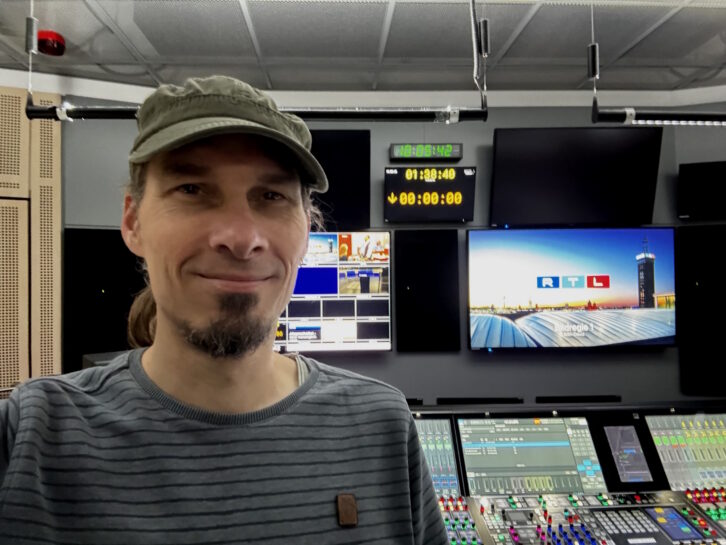
Gerhard Ruberg, head of audio at RTL News and project manager for the modernisation, said, “Our objective went far beyond replacing a mixing console. We wanted to create a platform that will continue to meet the demands of modern live production while laying the foundation for future IP-based operating models.”
Building on its longstanding relationship with Lawo, RTL selected the mc²96 for its primary audio control room, with a control surface designed for large-scale broadcast productions and support for native SMPTE ST 2110, AES67, RAVENNA and Dante workflows.
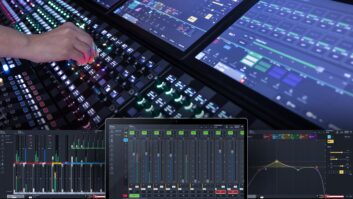
A large-format touchscreen features dedicated hardware controls, allowing operators to quickly access EQ, dynamics, monitoring, processing and routing functions. “In a news environment, our audio engineers often need to react instantly to changing conditions,” said Ruberg. “The mc²96 provides exactly the level of direct access and operational clarity we need to make fast decisions during live broadcasts.”
The system enables immediate on-air intervention during challenging conditions, such as impromptu interviews or difficult lavalier microphone placements. The system enables scalability, with some major sports productions requiring up to 600 concurrent audio signals, including intercom channels. Based on a redundant pair of A__UHD Cores, the mc²96’s processing provides extensive DSP resources and ample headroom, said Lawo. Processing capacity can be partitioned into multiple smaller DSP cores, maximising resource utilisation.
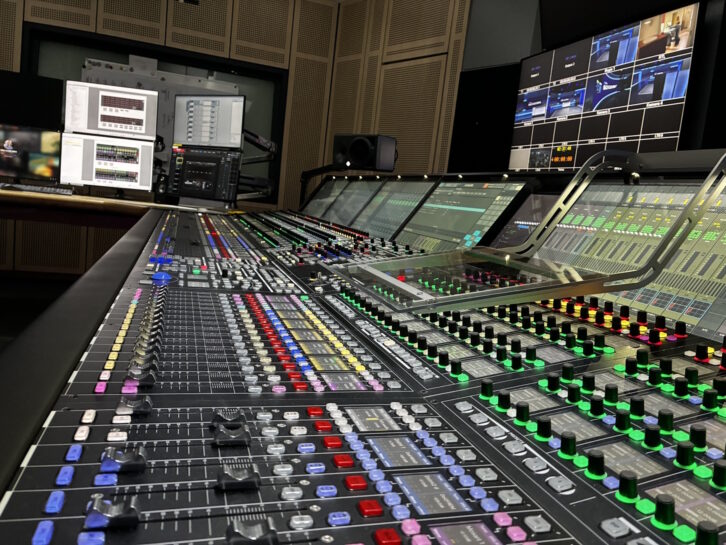
Migration was accomplished with no disruption to on-air operations. The new console was initially installed in Audio Control Room TR5, allowing testing and configuration under real-world conditions. Following several weeks of testing and training, the system was relocated to its permanent location. All regular broadcast operations have been running from the new facility since August.
Replacing the legacy baseband solution, a modern IP-based architecture was built around Lawo A__stage audio I/O devices, IP audio streams, and the Lawo HOME IP orchestration platform, providing “significantly greater operational flexibility,” said the company. Control rooms, studios and audio-processing resources can now be interconnected and allocated as needed, enhancing resilience and enabling rapid reassignment of alternative workstations if required.