Intrigue, time travel, forbidden romance and revenge in rapid-fire bite-sized portions: where Hollywood heavyweight-backed Quibi tried and failed during the pandemic despite funding and A-listers, the humble vertical format duanju, or microdrama, has generated billions worth of revenue in China over the last five years and is taking the world by storm.
ReelShort’s The Double Life of My Billionaire Husband or DramaBox’s My Secret Agent Husband successfully compete with free content platforms like YouTube or TikTok thanks to a unique formula combining a freemium tease model with low-cost production, little-known actors, high drama storylines and addictive cliffhangers that deliver regular dopamine hits, driving viewers to subscribe for more.
According to Omdia, microdramas generated $11 billion in global revenue in 2025, nearly twice that of free ad-supported streaming television (FAST) channels. Some 60 per cent of global microdrama revenue comes from subscription or transactional payments, often following a free introductory model, where the average revenue per user amounts to up to $80 per month.
China still accounts for 83 per cent of worldwide revenue, says Omdia. The US leads international markets, followed by Japan, South Korea, the UK, and Thailand. Other regions only account for 5 per cent of the current market share, but interest is growing rapidly. Out of France, Guillaume Sanjorge’s Les aventures avec ma voisine (Next Door Adventure) recently became the first original French production available on Asian vertical drama app Stardust TV, streaming in eight languages.
The French touch
StoryTV, a French microdrama production company set up by Adrien Cottinaud and Alexandre Perrin, recently moved into this space with titles like Mon mariage avec un mâle alpha (my wedding with an alpha male) and La belle et le SDF (Beauty and the Tramp) that are successful across the entire Francophone world, including Africa.
“Our workflow allows us to produce quickly, with very controlled costs, to compete with existing Chinese or Ukrainian actors in this field; the leaders are those who produce the most content,” says Perrin. “We have created over 50 series, drawing between 15 and 20 million monthly views on social media on a freemium subscription model. We produce content at a cost of under €2,000 a minute.”
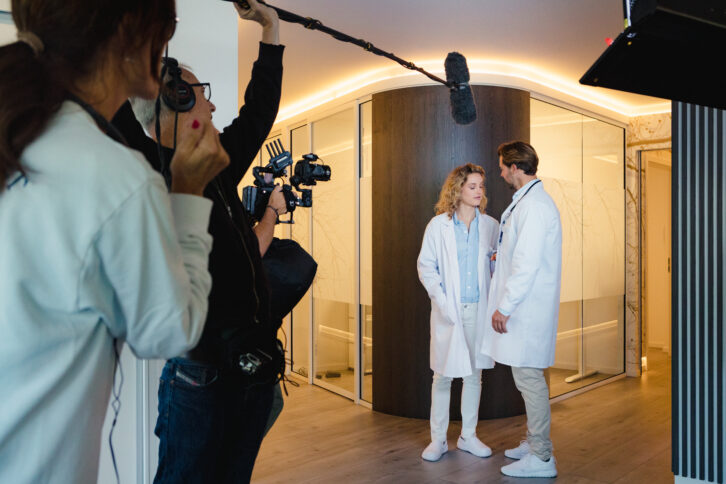
A 30-minute series involves 1.5 days of scriptwriting, two days of shooting and 2.5 days of post production. A typical shoot involves a Sony FX3, FX30 or FX6 camera with cinematic lens and a home-made tripod, a Steadicam stabiliser mount with a DJI Ronin for shooting stability, flexibility and fluidity, and Accsoon wireless video transmitters to bypass cabling. A timecode generator helps with syncing, while editing, colour grading and audio post production is done with DaVinci Resolve.
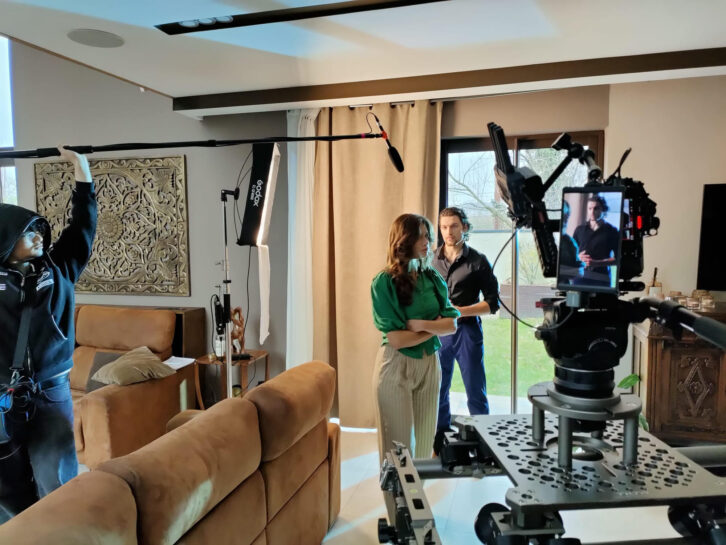
“We don’t re-invent the wheel, we focus on the stories and on a European style,” adds Perrin. “We are ahead in the French market and want to keep this spot because being first is easy, remaining first is harder.” Indeed, Paris-headquartered Mediawan Kids & Family recently announced plans to target the vertical space next year.
British scenes
London-based Sea Star Productions creates content for big microdrama platforms such as Reelshort, Dramabox, Goodshort and Shorten. It branched out of existing outfit Sea Star Rental, and therefore has access to high-quality, industry-standard broadcast equipment.
The vertical drama production company made 10 microdramas in the last nine months, including The Beauty and the Billionaire and Irresistible CEO’s Dark Desires. A typical project spans up to three weeks of pre-production, six days of shooting around 15 pages a day for a 55-60 episode series, followed by up to three weeks of post production and editing.
“To resonate with a microdrama audience, you must include sound effects at big moments like slaps, pushing and pulling,” says Bethany Thomson, creative lead at Sea Star Productions. “We don’t let the vertical format prevent us from including big stunts or shooting underwater, and people assume it’s AI-generated, but all our crew transfers their skills from feature films and high-end television to the vertical format.”
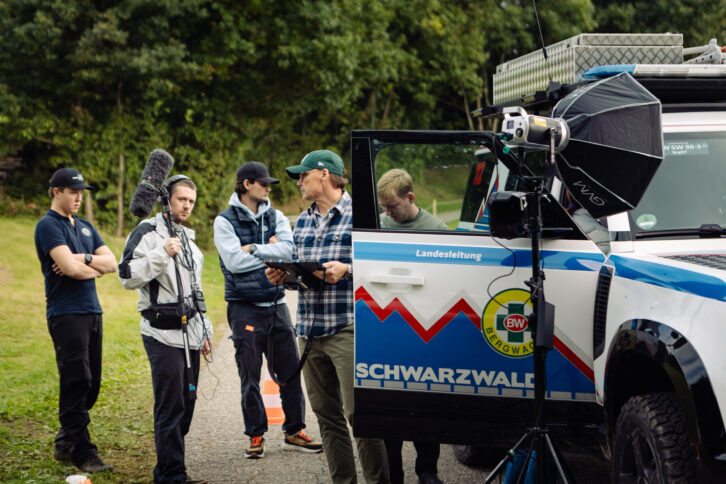
Sea Star Productions favours Arri Alexa Mini LFs, Sony FX 9 and Sony FX 6 cameras, with batteries and accessories. The sound setup is the same standard as for cinema and documentary work.
Thomson explains that major networks like the BBC and ITV are actively exploring the format. “Understanding your audience is the most important thing. A lot of bigger networks don’t understand what part of their IP will work for microdrama: you cannot just crop existing, successful television content to 9:16. You need to pick a character from your IP who can live online and develop into something new.”
Black Forest tableaux
Five years ago, Sebastian Weiland and his wife Nina Gwyn established Black Forest Studios in the heart of the eponymous German region, which hosts one of Europe’s first microdrama production hubs developing original series like Mountain Medical Klinik and Black Forest Royale. They bring with them decades of experience working in the fast-paced commercial production world of Los Angeles,
“We have built a dedicated workflow for high-quality, fast-turnaround vertical series, from concept to production to post and our own streaming app,” says Weiland. “The goal isn’t ‘TV on a phone’, it’s a format designed from the ground up for mobile attention and emotional immediacy, without sacrificing cinematic values. We want to lift microdrama to a higher quality level, story-wise and from a technical point of view, combining it with European locations and style.”
Vertical content changes everything: framing, pacing, colour workflow, and overall production rhythm. “A 9:16 framing demands close-up-driven scenes and stacked blocking for character positioning,” he adds. “Pre-built sets across seven studio spaces, a dedicated crew and AI-assisted workflows help with the speed of delivering 40-80 episodes per season.”
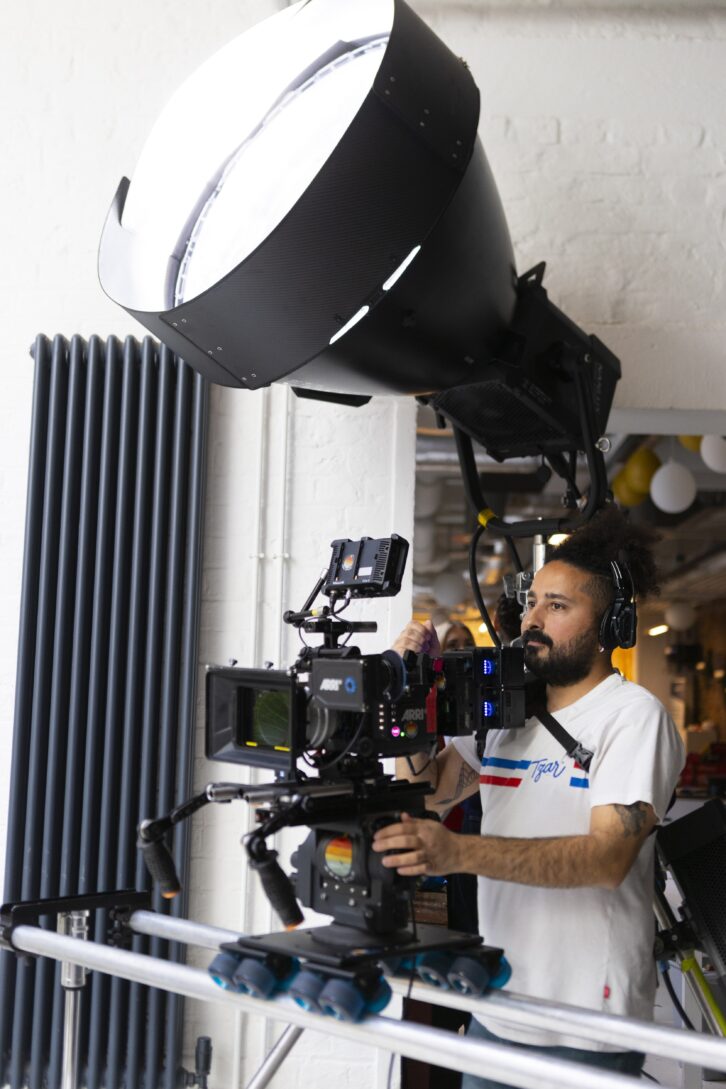
Weiland describes the DJI Ronin 4D camera as an amazing ‘run and gun’ one-man job tool for microdramas. Because mobile displays vary dramatically, grading happens in a colour-managed environment and is tested across multiple devices. To counter the exaggerated harshness of phone audio, Weiland mixes with controlled LUFS, soft EQ and intimate dialogue treatment. Delivery involves strict bitrates and QC to avoid banding on mobile HDR.
“A decade ago, it wouldn’t have been possible to make microdramas on that scale,” concludes Weiland. “Now, we’re shooting city aerials with drones and have used AI to create a helicopter crash scene over Rome. I wouldn’t say AI is ready for the big screen, but for microdrama it works.”
- This article first appeared in the January 2026 issue of TVBEurope, available to download here.