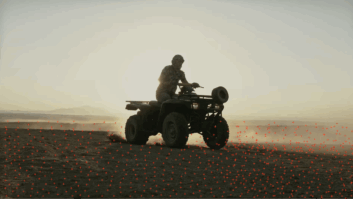
Proton Camera Innovations has announced the launch of a new micro PoV camera.
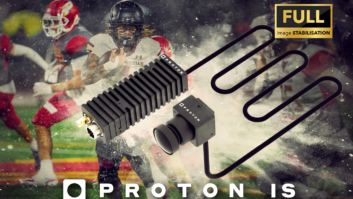
Featuring serialised connectivity via standard 50 Ohm coax cable, the Proton Flexy enables camera head extensions of up to 10 metres, allowing deployment in inaccessible or high-risk locations.
Built around a two-part architecture, the imaging head and ECU can be connected via cable runs of up to 10 metres, allowing the head to be placed while the processor and power supply remain safely accessible, said the company.
The head can be deployed in locations where a full camera unit could be at risk, such as inside a rally car, while the ECU and power supply are kept out of harm’s way. The design aims to allow productions to obtain perspectives that would otherwise be potentially costly, such as goal posts, car bumpers or crash helmets.
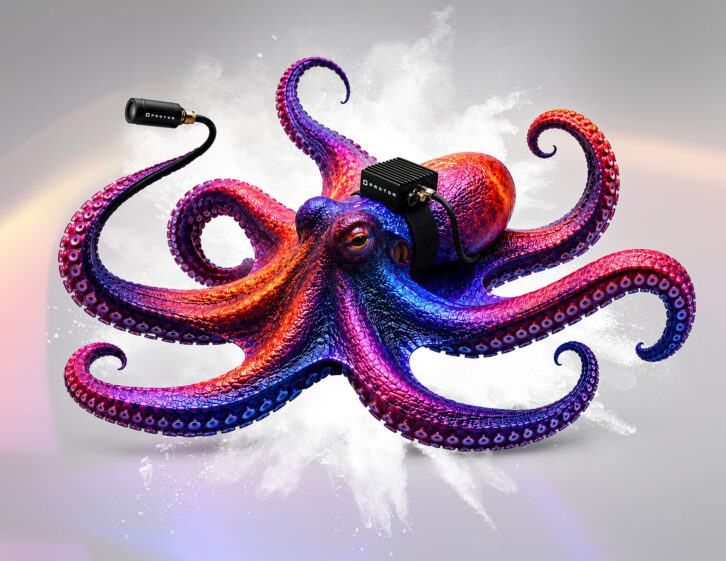
The camera head is available in two form factors: an IP-67-rated lipstick head with a diameter of 19mm and length of 34mm (including SMA connector) or a square head option measuring 19x19x24mm with integrated micro coax cable. Both options feature a 1/3-inch global shutter sensor with 12-bit dynamic range, providing 1080p imagery through Proton’s VEGA broadcast-grade image processor. Measuring 34x34x19mm, the ECI provides HD BNC for SDI output, Hirose HR10 connector for power and control, an SMA connector for the head and a 3.5mm stereo audio socket for external audio input. Power draw is 3W across a 6.5-25V range.
Commenting, Marko Hoepken, CEO and founder of Proton Camera Innovations, said: “So many of our customers have said to us: we love what a Proton cam can do, but it’s a shame that they’re too precious to us to risk in exactly the environments where they could deliver the best shots. So with the Flexy, we asked ourselves: what if the camera head could go anywhere, and where the risk of damage became a negligible concern?
“The answer is a system where the expensive electronics stay safe, the head is affordable and replaceable, and the cable can run up to 10 metres. For motorsport, for extreme sports, for any high-impact environment, this changes the economics of daring shots. You can now capture the crash without crashing your budget.”