YouTube has secured the rights to stream the Academy Awards globally from 2029-2033.
The possibility of Hollywood’s big night moving from traditional TV to a streaming service has long been mooted. I wrote about the Academy of Motion Picture Arts and Sciences (AMPAS) considering a streaming service back in 2018.
In the United States, NBC broadcast the first televised Oscars ceremony in 1953, before ABC took over in 1961. Apart from a brief return to NBC between 1971-1975, ABC has been the show’s home ever since.
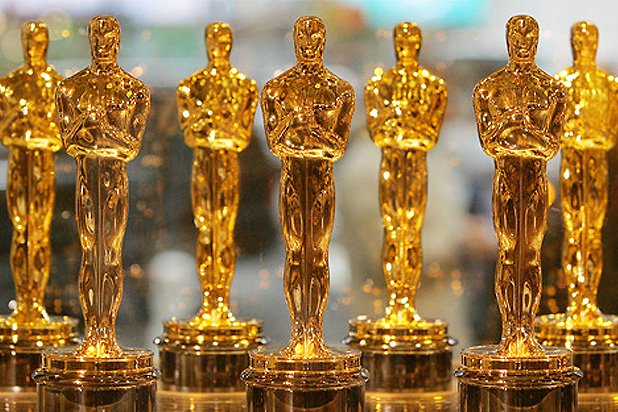
Here in the UK, the rights to the show were held by Sky for a significant period before moving to ITV in recent years.
That’s why, to me, this feels significant. Yes, the Oscars aren’t the first awards show to move to a streaming service. Netflix picked up the rights to the SAG Awards a few years ago. But this is the Oscars. Millions of us around the world tune in to see who’s going to take home the golden statuette, even though by the time the ceremony starts, awards season has been going on for so long that we know all the probable winners.
I haven’t missed an Oscars ceremony in about 20 years. My love for the show began back in my radio days when I would arrive in the newsroom early the following morning to edit clips for the breakfast show. That continued during my time working for an online news site, where I would stay up all night live-blogging the show. I’ve even co-hosted a live radio programme during Oscar night, appeared on TV to discuss the winners, and flown to New York for Oscar weekend just so I could be on the same continent (and get some sleep afterwards).
The Academy’s decision to move to YouTube reflects the direction of travel in the industry. Major events are moving to streaming services, we’re seeing that with sport. Netflix, Apple, Prime Video, Paramount+ have all paid huge sums of money to acquire rights that they obviously believe will drive subscribers to their services.
The Oscars/YouTube deal is slightly different though, in that YouTube will stream the Oscars for free to over 2 billion viewers around the world.
In its announcement, AMPAS said: “YouTube will help make the Oscars accessible to the Academy’s growing global audience through features such as closed captioning and audio tracks available in multiple languages.”
That intrigues me. AMPAS and YouTube must believe that the company has the capabilities to deliver on that promise. And if it doesn’t now, it has over three years to acquire or develop the technology it needs.
The other question I have is, in this social media-driven age, how will YouTube deal with latency? It’s that perennial problem, you can’t have some viewers seeing who’s won, or receiving news alerts or social media posts before others. Yes, there is latency in delivering a traditional broadcast feed globally, but if watching the Oscars via streaming means I’m learning the winners 90 seconds after everyone else, I’m not going to be happy. And that happens a lot when I’m streaming sport.
While there’s been no official announcement, I think I’d be right to assume YouTube is going to include adverts in the broadcast. In the US, Oscar night ads sell for millions of dollars. But that’s in the US. Does YouTube have the capability to deliver different ads to different markets? A streaming service doesn’t do ‘playout’, so who is going to monitor those ads and make sure that when the ceremony starts again in Los Angeles, viewers in London, Lisbon and Lagos aren’t stuck watching ads and missing the action?
We often talk of YouTube as a disruptor. Having won the rights to the Oscars, it’s arguably now a major part of the ‘broadcast’ landscape. I just wonder if it can handle it.