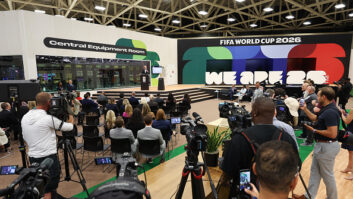
FIFA World Cup 2026 is the largest tournament in the competition’s history. Running from 11 June to 19 July 2026 across Canada, Mexico and the United States, it features 48 nations, 104 matches and 16 host cities. More than six million fans are expected to attend in person, while billions more are following across TV, streaming, mobile and social platforms.
This will be a defining World Cup for media, technology and connectivity. The football remains the centrepiece, but the tournament is now much more than a sporting event. It is a global platform for broadcasters, sponsors, brands, technology providers and host cities to showcase innovation, deepen fan engagement and reach audiences across every screen.
Three areas stand out: the FIFA International Broadcast Centre, Lenovo’s role as technology partner, and Verizon’s connectivity-led showcase.
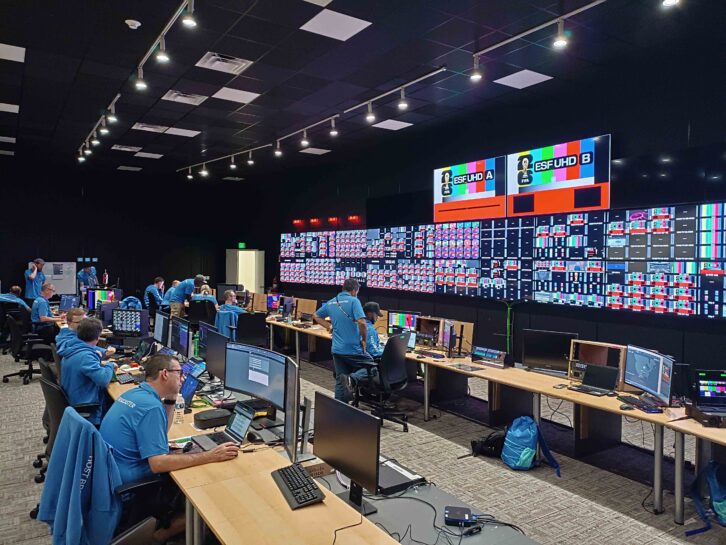
The International Broadcast Centre in Dallas is the nerve centre of the tournament. Based at the Kay Bailey Hutchison Convention Center, it supports broadcast operations across all 16 host cities and acts as the control layer for live production, global distribution, venue IPTV, data-rich storytelling and AI-enabled services. With more matches, more teams and a far larger geographic footprint, the production challenge is immense.
World Cup 2026 also underlines where sports broadcasting is heading. FIFA and Host Broadcast Services are moving towards a more hybrid production model, with fixed-venue production teams supported by centralised operations such as replay and camera shading. This reduces travel, lowers operational risk and creates a more scalable model for future global events.
Innovation is also a major feature. Premium coverage across all 104 matches is expected to include cable cams, Polecams, 360 cameras, cine-style cameras, digital-first devices and RefCam. AI-enabled 3D player avatars support semi-automated offside decisions, while AI-stabilised RefCam footage should give fans a more immersive and human view of the action. The broadcast feed is no longer just a feed; it is the raw material for highlights, social clips, alternate angles and digital storytelling.
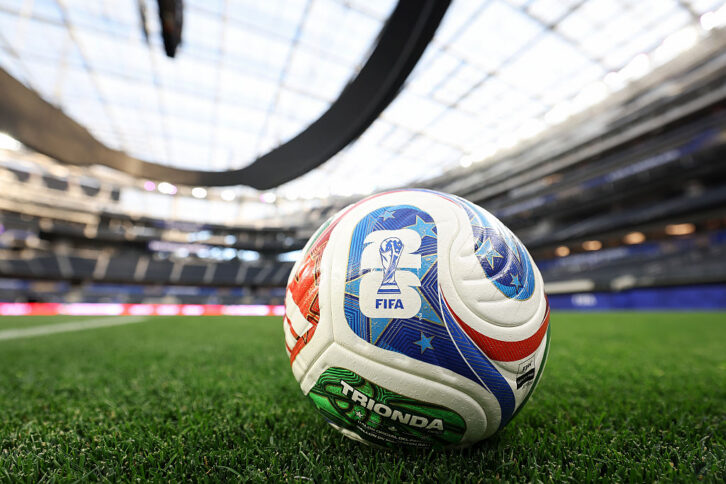
Lenovo’s role as FIFA’s Official Technology Partner is equally significant. This is the first World Cup with a single unified technology partner, giving Lenovo a platform to showcase its full stack across devices, edge computing, infrastructure, AI, services and smart venue operations. More than 17,000 Lenovo and Motorola devices are being deployed across venues and team-based camps, with support from more than 200 engineers.
The FIFA AI Pro platform aims to help coaches, analysts and teams interrogate match footage, player data, media coverage and highlights using natural-language queries. Meanwhile, Lenovo’s Intelligent Command Centre is designed to consolidate fragmented data across ticketing, transport, security, media, help desk, cameras, cybersecurity, commerce and venue systems. For an event of this scale, that unified operational view is critical to fan experience, resilience and public safety.
Verizon’s sponsorship shows how telecom’s role in sport has moved beyond branding. As Official Telecommunication Services Sponsor across Canada, Mexico and the United States, Verizon is bringing together consumer loyalty, enterprise services, network infrastructure, public safety and live-event technology.
The telco expects fans to use more than 50 terabytes of data per stadium per match and has added 5G spectrum, thousands of in-stadium antennas, small cells and temporary cell sites to increase capacity. Private 5G networks, fibre, Fixed Wireless Access, network slicing and Verizon Frontline support FIFA, broadcasters, businesses and emergency services.
Clearly, the FIFA World Cup 2026 is not only testing players and teams; it’s testing the entire technology, media and connectivity ecosystem behind the world’s biggest sporting event.