With almost 40 years in the broadcast industry under his belt, Thomas Riedel still finds plenty to keep him engaged and excited. Earlier this year, Riedel oversaw the biggest acquisition of his career as he became the new owner of ARRI.
In an industry defined by rapid turnover and the relentless march of innovation, Riedel remains focused on the unique, high-pressure nature of live production. “What excites me most is the possibility to do things that have not existed in that form before,” he says. “Technology can help redefine formats—how a race is covered, how a concert is experienced, how a show is produced, or how people collaborate across locations.
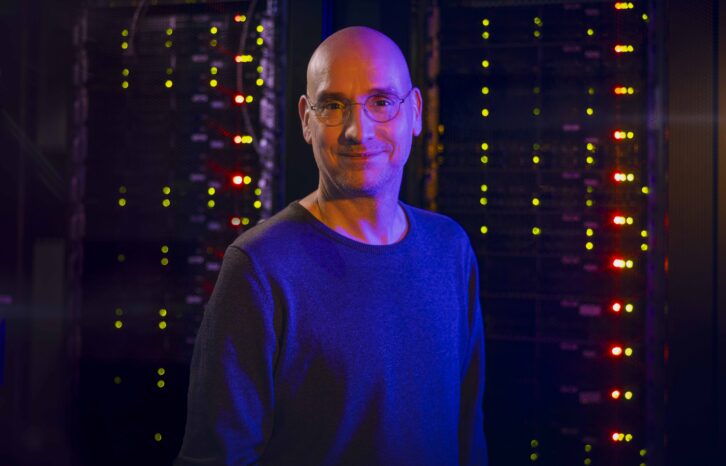
“For me, technology has never been an abstract thing. It is about helping people create moments and experiences that were not possible before. After almost 40 years, I still find that fascinating.”
During his career, Riedel has witnessed a series of major shifts in media and entertainment, from analogue to digital and from digital to IP, with each step profoundly changing the industry. But, he says, it’s the current pace of change in connectivity among audio, video, data and control that is the most interesting. “Customers are not simply asking for another product; they are asking for an environment in which many moving parts can work together reliably. Because requirements keep changing faster in these accelerated times, that environment has to be able to evolve.
“Riedel Communications has kept up because we were always close to real productions. We did not change because a trend report told us to. We changed because customers came with problems that could no longer be solved with isolated tools. That pushed us to think less in isolated boxes and more in connected systems that solve real production problems.”
Despite its international footprint, Riedel Communications’ headquarters has remained in the German city of Wuppertal. According to the owner, the city offers a “certain groundedness” that fits its culture. “We have built an international company from Wuppertal because customers cared about whether the technology worked, whether the people understood their production and whether we could deliver. They did not choose us because the address sounded glamorous.
“Today we are a global company, but the headquarters still gives us a centre of gravity. For me, staying connected to where you come from and working internationally are not a contradiction. In our case, they belong together.”
Asked if there’s one thing he wishes he could change during his career, Riedel reveals he was something of a naughty schoolboy. “I was not very interested in what happened in the classroom. My mind was somewhere else—organising events, setting up light and sound systems, learning by doing. That practical school was very important for me, and I would not want to lose it.
“But if I could change one thing, I would have used school more seriously to learn languages. Learning English after school was not easy, but it became essential. And if I had learned French and perhaps other languages properly at that time, I would benefit from that a lot today. In an international business, language is not only about communication. It also gives you a better understanding of people and cultures.”
Full circle
Riedel Communications originally launched in 1987, but it was the 1994 Winter Olympics in Lillehammer that helped put it into “a different league” of live production, says the owner. “There was a problem around communication for the ceremonies, and we had to deliver. That is exactly the kind of situation that shaped Riedel: no big theory, no second attempt, just a real production that needs a solution.” From then on, the company’s technology has been integral to countless major international events.
Fast forward to 2026, and the Lillehammer project is still paying dividends. “ARRI brought us into that project,” reveals Riedel. “Without ARRI and Lillehammer, Riedel—and my life—would probably not have developed in the same way. My first contact with ARRI goes back to renting their lights for school events as a teenager. Looking back now, as the owner of ARRI, it feels like a remarkable circle.”
During all this time, Riedel Communications has remained under sole ownership. Riedel explains that that decision is about taking responsibility. “Sometimes you need to invest in technology, people, or a customer relationship before the result is visible in the next quarter. That is much easier when you do not have to explain every decision through a short-term financial lens. Of course, independence also means you carry the risk yourself. But it keeps the responsibility concrete. The company has a culture, and that culture is part of why customers trust us. I would not want to lose that.
“Independence is not a romantic idea; it is a very practical advantage,” he explains. “It allows us to think long-term and still make decisions quickly. In our industry, that matters.
That philosophy hasn’t stopped Riedel Communications from being active in terms of acquisitions. In recent years, the company has brought SimplyLive and Embrionix under its footprint, as well as ARRI (although that continues to be run as a separate entity).
Expanding the portfolio is not about becoming bigger for the sake of it, says Riedel; instead, it’s about understanding changes happening in the production sector. “Customers do not really ask for isolated products anymore; they ask for solutions that make complex productions work. That is why additions to the portfolio must have a clear logic. SimplyLive, Embrionix and ARRI are very different companies, but the underlying question is similar: which building blocks help us make complex productions simpler, more robust and better? Growth is valuable when it adds substance. Otherwise, it just creates complexity.”
Read more in the September issue of TVBEurope, available to download here.