While many broadcasters and streamers are moving towards higher resolutions in terms of what viewers see, sound is being left behind, with the majority of TV programming still delivered, and heard, in stereo.
But Frank Foti, executive chairman at Telos Alliance, is on a mission to change that. Foti is the driving force behind Déjà Vu, upmixing technology that can take a piece of audio to the next level, turning it from stereo into 5.1 surround sound.
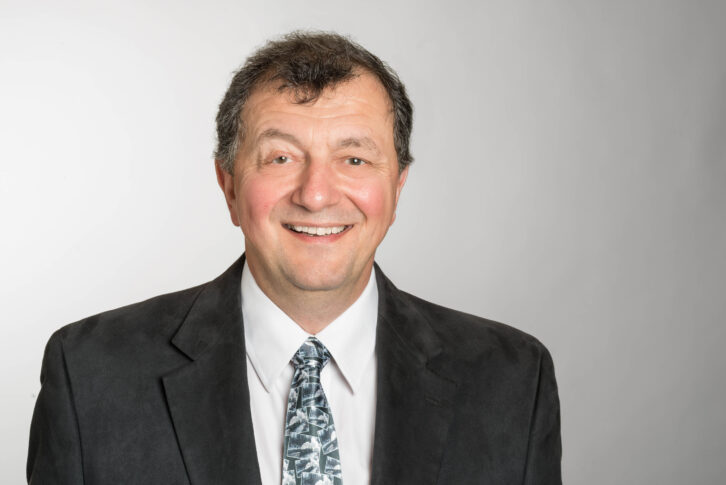
The idea for Déjà Vu began in 2002, during the early days of digital radio in the United States. Foti and his late partner, Steve Church, noticed that the transition to HD radio lacked the ‘wow factor’ that accompanied the advent of HD television. This prompted a question: Could they deliver discrete surround sound over the existing FM HD system?
Foti and Church discovered Fraunhofer’s MPEG surround technology, which enabled surround sound transmission, and created a way to do the same on FM in America.
However, at the time, there wasn’t much content available in surround sound. Foti realised that for broadcasters to fully embrace surround, all their content would need to be upmixed. That set him on a journey to develop a method for creating a true 5.1 surround presentation from stereo audio, without relying on “tricked-up” effects. “There are other upmix items out there, and they sort of work, but they use electronic tricks like phasing and time delay and reverb and things of that nature to create the surround effect,” he says. “I wanted more than that.”
The core idea was to generate a true centre channel from stereo audio. “When we listen in stereo, what comes to our ears, and what we feel is in the centre, is known as phantom centre,” Foti explains. “There is no centre channel. Déjà Vu creates the actual centre channel based on the mix that’s there. There’s no steering, it’s based on the actual mix. So from that, I’m able to then derive the other channels.”
Having created what he believed to be a breakthrough, Foti sought feedback from various musical experts. He was able to showcase Déjà Vu to music producer Gary Katz (of Steely Dan fame), who immediately recognised its potential. “Next thing I know, we’re on a plane to London, and Gary booked an afternoon at Abbey Road,” Foti says. There, they met with Hugh Padgham and Giles Martin, who both gave the technology the thumbs up. “If people who have Grammys and hit records to their credit say you’ve got something, well, I think we’ve got something!”
From music to films and sport
While initially focused on music, Foti and the team at Telos Alliance began to explore Déjà Vu’s potential beyond the music industry. “None of us, including myself, had ever really ventured into playing around with movies or television,” he says. Over the last year, the technology has been tested on older stereo films and sports broadcasts.
At NAB Show in April, Foti demonstrated Déjà Vu with clips from Monday Night Football. “The announcers were in the centre, the team chatter was left front, right front, the crowd was all around you, which would be what you want to have happen,” he explains. This proved Déjà Vu could be a tool for broadcasters and streamers to deliver a true 5.1 surround presentation from a stereo mix, making it sound as if everything was originally mic’d for surround. The same transformative effect applies to older stereo films, placing dialogue front and centre while immersing the viewer in ancillary effects.
Currently, Déjà Vu is available as a standalone application for Mac and Windows, and as a plugin in three different formats. It can also operate in the cloud, and an SDK is available for broadcasters or streaming services looking to incorporate the technology.
The future of immersive audio
Foti sees Déjà Vu as an alternative to Dolby Atmos, but it can also be used to augment Atmos. “With Atmos, to get the effect, you have to start with the multiple channels; it doesn’t create them. It’s basically a rendering system,” he explains. “Say you have some old film that’s only in stereo, Déjà Vu could render it into discrete 5.1 and then from that, use the multiple channels into the Atmos renderer, so you’re able to create an Atmos presentation.
“Also, we can take the 5.1 audio channels and route those to whatever surround encoder is going to be used in the television system. In many ways, it can serve multiple masters.”
The technology works with any encoder and doesn’t rely on data reduction to create its effects, operating in a “very linear fashion.” For the optimal experience, Foti says Déjà Vu is best enjoyed with speakers because of its multiple channels. However, it can work with headphones, and Foti has developed Déjà Phonic, a separate application that can render immersive audio for headphones, offering an even more three-dimensional effect.
Looking ahead, Frank believes the future of sound in TV and film will be driven by consumer demand and the ability to leverage existing home audio setups. “Something like Déjà Vu is perfect because you get a combination of wow factor and emotion,” he concludes. “You’re watching some wonderful scene in a movie, and the sound is just right, and it moves you to tears. At that moment, you’re not thinking, oh this is great because I heard something out of the left rear speaker. It comes about because of what you’re hearing. If we can serve that visually and audibly, we all win.”