AI changes anything it touches. The media industry is no exception. For years, producing content was a major constraint. Now things have changed: the bottleneck has moved, and getting someone to watch what you made has become the whole game, and that holds true in Europe as much as anywhere.

The music industry shows it best. Deezer has reported that fully AI-generated tracks now make up over half of daily uploads—around 90,000 a day at June’s peak—yet they account for just 1-3 per cent of actual listening. Most of the streams (85 per cent) they collected in 2025 were fraudulent. The same story is observable on Instagram: three or four clips in a row with generated visuals, music, and captions, just littering the content and competing for the same few seconds of attention. Supply has become infinite; demand hasn’t moved, and a lot of the value leaks into fraud.
Films are a different story, though. Generative tools help with effects, and I expect more indie productions to use tools such as Gemini Omni. But the more interesting changes are happening around cinema, in formats that were built with AI in mind from the start. The clearest example of this is vertical microdramas, and it is AI-enabled rather than AI-generated. Their in-app revenue grew from $3.8 billion in 2025 to a forecast of $7.8 billion this year. An episode runs about 90 seconds, and what people consume is the cliffhanger rather than a story. AI’s contribution isn’t the camera; it’s dubbing and volume, which let one title go out in 20 markets at once. And it’s just the tip of the iceberg—there are other cases too, like TikTok and Instagram AI music clips that probably wouldn’t exist without AI tools.
Where Europe has an edge
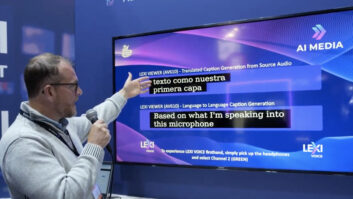
But let’s return to the European media landscape. The European Union has 24 official languages, which makes localisation a permanent cost line in a way it never is for US producers. That pressure has already produced successful European startups tackling the issue. Natural-sounding speech synthesis software ElevenLabs raised $500 million at an $11 billion valuation in February 2026 and has ElevenProductions aimed at studios and broadcasters. Colossyan, founded by Hungarians and with roots in Denmark and Budapest, is another notable European player in a quite similar space, focused on AI avatar video and multi-language training content.
Sometimes, European regulations open a new door for startups. Article 50 of the AI Act, which began applying on 2nd August, requires AI-generated content to carry machine-readable marking and deployers to disclose deepfakes. Artistic and fictional works get a lighter touch: disclosure must be made in a way that doesn’t spoil the viewing experience, so a narrative film won’t need a banner across the picture. It still needs disclosure, though. Penalties go up to €15 million or 3 per cent of global turnover.
Whether that is good or bad for the industry is debatable. Yet Europe is the first market where proving what is synthetic is a legal obligation rather than a virtue. Producers now need provenance records, watermarking, rights tracking, and audit trails. That is a home market for infrastructure startups that doesn’t exist anywhere else yet.
The licensing side is moving as well. By one industry count, 91 public AI content-licensing deals had been announced by June, against none in 2022. Cloudflare quietly bought the British startup Human Native in January, which tells me the plumbing is being consolidated before most people noticed it was a separate layer.
Other mediatech opportunities for startups
Beyond licensing and compliance, AI could also change what media experiences look like in the first place. I expect more “endless world” solutions like World Labs Marble or Project Genie, which generate navigable environments on the fly, to change how media is both produced and consumed. Combined with VR, they could give us new interactive experiences—films or content on the border of movie and video games—far beyond Black Mirror’s Bandersnatch.
Cultural venues look like a good fit for AI touch too. Museums and theatres could use the same AI tools to build immersive experiences. And there are plenty of opportunities in Europe to make the most of this.
AI has changed the buildable unit, and the team of three can ship what used to take 30, and someone who has worked in film for 10 years and knows exactly which workflow is broken can prototype a fix in about a week without hiring a developer. However, I believe startups without ‘AI’ in their pitch deck might be slightly undervalued. We shouldn’t count them out; I believe there are plenty of challenges that could be solved not only with AI-first startups.
Europe doesn’t own the largest platforms and probably won’t soon. But a European startup that builds around an acute problem still can end up with a product, AI-first or not, that the rest of the world turns out to need.
The industry is affected worldwide—a product built for one “European problem” can find its audience or clients almost anywhere. And Europe can’t sit this one out; if the European industry doesn’t move quickly, it will find itself well behind everyone else.