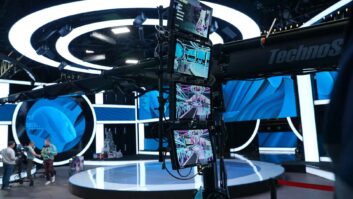
Where is virtual production delivering real value today—and where is it still overhyped?

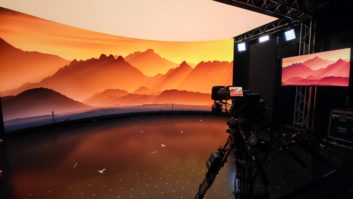
If we’re talking about the LED wall format of virtual production that many people initially think about, over the past few years permanent studios have dramatically reduced in size or shifted to a modular approach. There are a few contributing reasons for this: the typical usage for virtual production is mid-shots and close-ups, so larger walls become less of a necessity. A lower capex due to fewer but better panels then frees up more budget for the other essential tech required for the best results. And we’re seeing continued growth in the use of virtual production for filming with vehicles, so safety, environmental and insurance factors all play a part.
Is virtual production overhyped? I’m not sure it is. A lot of people have now had hands-on experience with the tech and know its pros and cons. If you use the Gartner Hype Cycle, I’d place it well down the plateau of productivity.
Beyond film and TV, which sectors are genuinely adopting virtual production—enterprise, live events, education—and what are the strongest use cases?
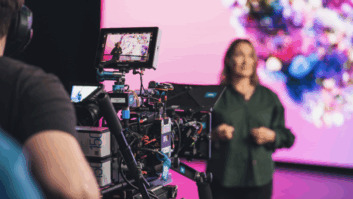
There’s a lot of interest from the enterprise sector; many organisations understand the importance of having an in-house, professional-grade production function for executive announcements, internal town halls, product demos, and training. They are well beyond using video conferencing or web-based broadcasting, but will also be conscious of the underlying cost of an under-utilised physical studio. Having the ability to refresh a studio set for a specific brand or content theme is a much more palatable pitch to budget owners. There’s also the benefit of duplicating a virtual set across international hubs, ensuring consistency and a strong corporate identity.
REGISTER NOW FOR THE AV AND BROADCAST SUMMIT
Livestreamed events are another great use case, as the environment can be controlled, no matter where you’re producing. Again, a virtual studio can be tailored to a specific event theme or include dynamic sponsor branding and inserts as part of the set. As there are no huge physical components, it can be set up in a compact space that doesn’t take up too much of the event’s footprint.
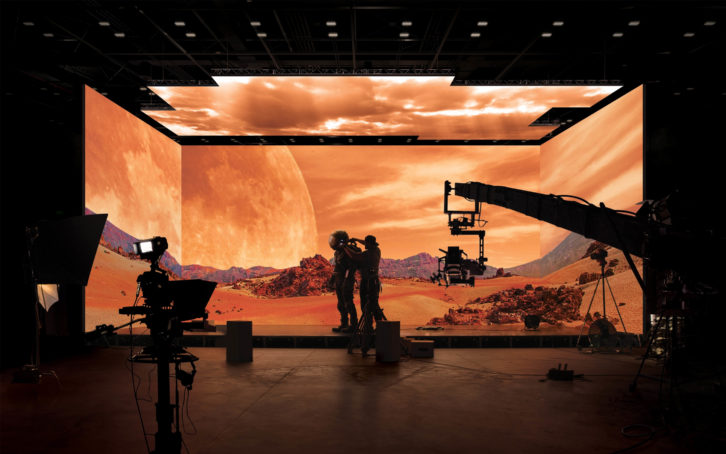
What are the biggest technical and workflow challenges when deploying or scaling virtual production—tracking, lighting, latency, content—and how are they being solved?
Virtual production requires multiple technical disciplines to converge and integrate within a very specific environment. In the main, most technical challenges have been solved, and we’re now able to use multiple cameras with a tested, robust workflow. More often than not, it now comes down to a price tag, which will always be balanced with compromise.
As we move out of high-end filmmaking environments and have virtual production setups in environments with a live audience, watching a show can be very discombobulating, as the image on the LED walls is to the camera’s perspective, not someone in the audience.
When it comes to content, it’s all down to the approach and the cost involved, but AI will reduce this considerably. And while it might not yet be considered ‘production quality’ and still has to navigate the IP challenges for high-end filmmaking, for a lot of other uses, it is a viable solution to speed up and reduce costs.
REGISTER NOW FOR THE AV AND BROADCAST SUMMIT
For a company considering investment, what’s the smartest way to start—full LED volume, hybrid approach, or something simpler—and why?
Ideally, understand what problem you need it to solve, then establish what kind of capex and running costs you’re going to need to look at to get there. Don’t forget to consider long-term utilisation and staffing forecasts as well.
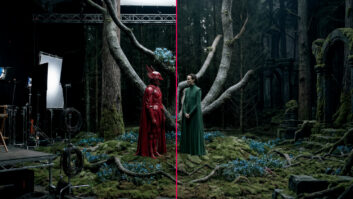
There is a solution to suit every budget; while LED wall volumes are impressive places to stand in, they are expensive. Greenscreen technology is solid and proven, but requires other considerations in terms of workflow. Camera tracking is an additional cost, but it will add dynamism to your production.
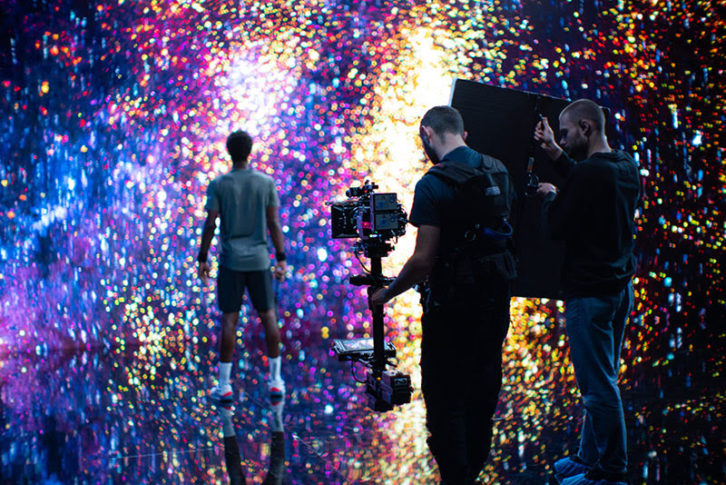
What does the commercial model actually look like—where is the ROI coming from, and how do you avoid an expensive underused asset?
Having an on-site studio is a considerable investment. Add in virtual production, and the costs will of course increase. However, the ability to create content consistently and at scale is key for a corporate marketing and communications engine. For organisations that have put content at their core, a virtual production studio is a no-brainer. But that strategy has to be in place first; you can’t just build a studio and expect the content to create itself, or to have a cohesive narrative. The internal mindset shift is required before you start speccing the tech.
What new skills are now essential—and how do you realistically build teams that can operate across real-time engines, AV systems and production workflows?
Focusing on experts in one of those fields who are keen to learn more is critical. From experience, from knowing nothing to being across all of the systems at a competent, but no means expert level, does take time and determination. Luckily, none of it is super new, and I now use Claude daily to help solve challenges and develop my knowledge further.