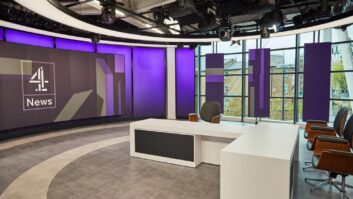
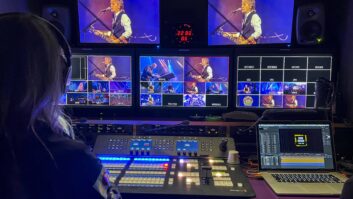
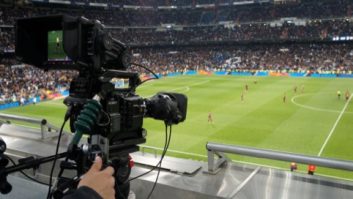
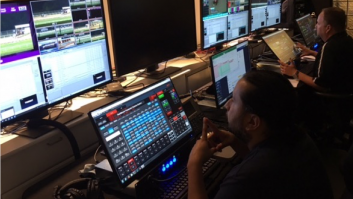
As sustainability takes an increasingly central role across the media and entertainment landscape, remote production is emerging as an essential solution to help organisations meet their environmental goals. The ability to manage studios and broadcasts from thousands of miles away is no longer just a technical achievement; it is a natural shift in how production is approached. By replacing physical travel and on-site operations with remote systems and digital workflows, broadcasters can significantly reduce emissions, accommodation needs and transport costs, while simplifying logistics and maintaining creative control.
The shift towards this model is being driven by a combination of environmental, economic and cultural factors. Traditional production methods consume vast amounts of energy and materials at every stage, and with corporate Environmental, Social and Governance commitments and new regulatory frameworks becoming more widespread, these impacts are under closer scrutiny than ever. At the same time, audiences and advertisers increasingly expect brands to demonstrate responsible, sustainable practices. In this climate, greener production models are no longer a box-ticking exercise; they are a practical way to improve efficiency, reduce costs and safeguard long-term competitiveness.
Operational efficiency: the new standard in media production
Remote production is not simply about relocating teams away from sets or studios. It is about rethinking entire workflows to achieve more with fewer resources. With content demand growing across streaming, broadcast and digital platforms, production teams face the challenge of increasing output without expanding budgets or their environmental footprint. This makes operational efficiency a crucial measure of success, driving the need for integrated systems and smarter tools.
Automation has become an essential part of this transformation. Automated tracking, centralised control of cameras and unified production systems allow smaller teams to deliver multiple outputs while maintaining high technical and creative standards. When these systems are properly integrated, duplication of effort is minimised and teams can operate at scale, even in complex multi-camera or multi-venue productions.
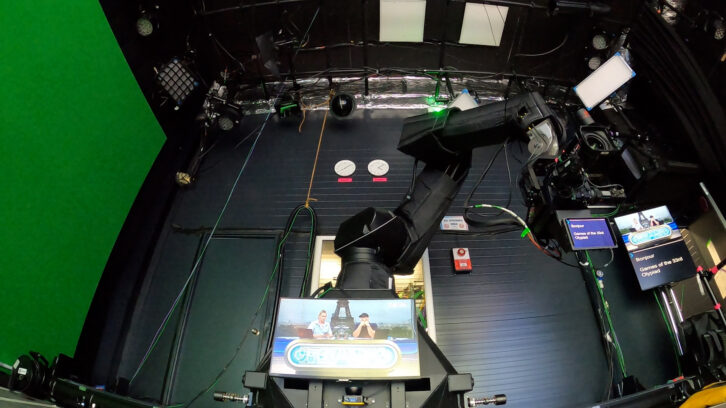
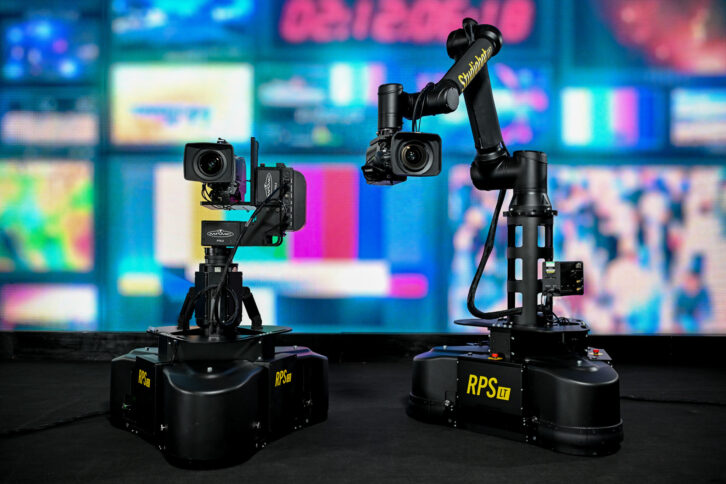
Technological advances are also redefining camera operations. Remote-controlled and robotic camera systems bring a level of precision and repeatability that reduces the risk of errors or reshoots, particularly in live environments where timing and accuracy are critical. Some studios are using robotic arms that can be easily reconfigured for different formats, enabling the same space to be used for live broadcasts, promotional content or advertising material. This flexibility ensures that facilities and equipment are used to their full potential rather than sitting idle between productions.
Smaller footprint, greater impact
Physical efficiency is another important advantage. Robotic and automated systems typically require less floor space, lighter rigging and simpler lighting setups. When equipment must be moved, compact and lightweight designs help cut freight emissions. While each individual saving may seem modest, the cumulative effect across multiple productions can be substantial.
Importantly, these improvements do not compromise quality. With thoughtful planning and the right technology, automation and remote workflows can maintain high creative standards while reducing environmental impact. The goal is not to eliminate skilled personnel but to allow them to work more efficiently from central hubs or home bases, reducing the need for travel and on-site presence.
Remote production models are inherently scalable. They make it possible to increase camera angles, extend event coverage or manage simultaneous productions without proportionally increasing staff or infrastructure. This scalability allows broadcasters to expand sustainably, even when working to tight deadlines or limited budgets.
Collaboration for real change
Achieving genuine progress requires collaboration across the entire ecosystem. When broadcasters, technology providers, facility operators and regulators align on shared sustainability objectives, the impact can be transformative. This is especially evident in virtual production environments, where coordination across lighting, robotics, graphics and control systems ensures that every component contributes to a cohesive and efficient workflow.
Artificial intelligence and machine learning are now enhancing these processes further. Automated camera switching, tracking and content management powered by AI enable leaner workflows that save time, energy and cost, while reducing the carbon footprint of every production.
Of course, remote production still requires careful implementation. Achieving the reliability and visual quality of traditional broadcast studios depends on precise system design and configuration. Yet the advantages are clear. By deploying local camera rigs that are operated remotely, broadcasters can drastically reduce travel and on-site crew requirements without sacrificing creative integrity.
Meeting sustainability goals takes deliberate effort and a clear strategy. Some broadcasters now assess environmental performance when selecting suppliers, while others make the business case through efficiency and cost savings. For those prepared to re-evaluate established practices, the path towards more sustainable, resilient and future-ready production is already taking shape.