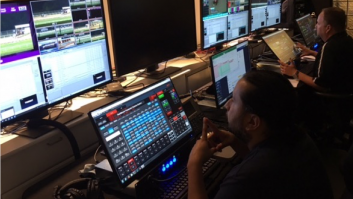
Over the past few years, remote production has moved from a stopgap measure to a core industry practice—powered by collaborative technologies and designed specifically for creative workflows.
Hybrid work has been steadily redefining production, changing how crews collaborate and how projects are delivered. Smaller on-set teams, virtual coordination, and cloud-connected post pipelines are now standard across the industry. According to 2024 data, 79.4 per cent of media and entertainment professionals identified the move from on-prem to cloud workflows as a top priority, a clear signal that the industry’s focus has shifted from adaptation to optimisation.
For many, the shift unlocked new efficiencies. Production teams found they could save costs, streamline schedules, and in some cases, boost productivity. Now, remote production has matured. Studios are integrating AI to automate routine tasks, virtual production is becoming more practical and accessible, and the technology supporting remote workflows has finally caught up to creative ambition, redefining how entire shoots are planned and executed.
Production management from across the globe
Starting from the shoot, teams are now spread worldwide. No longer do colourists, producers, directors, video technicians, and others need to be in the same place to complete a project successfully.
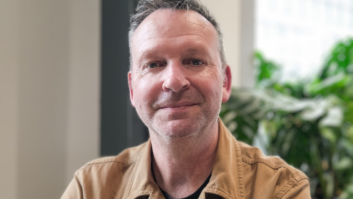
DoPs like Tim Wooster are now turning to tools such as RePro, a media collaboration and live-streaming platform that connects every stage of production, from on-set crews to executive decision-makers, enabling seamless remote collaboration when needed.
“On 11817 [due to be released by Netflix in 2026], the challenge was to match the Main Unit’s rich, detailed lighting as they moved between film and digital,” says Wooster. “RePro’s 10-bit stream allowed me to see exactly what they were doing—the subtle shadow detail, the texture in the blacks—without guesswork. It gave me the confidence to line up shots and lighting so our work cut together seamlessly.”
Global VFX from a UK studio
A growing number of global studios are collaborating across borders, a trend that has accelerated in recent years. Remote work has opened the door for production teams to source post-production and other creative services from a wider pool of international talent. Increasingly, VFX studios are being brought in to create digital humans, reducing both time and logistical challenges in production.
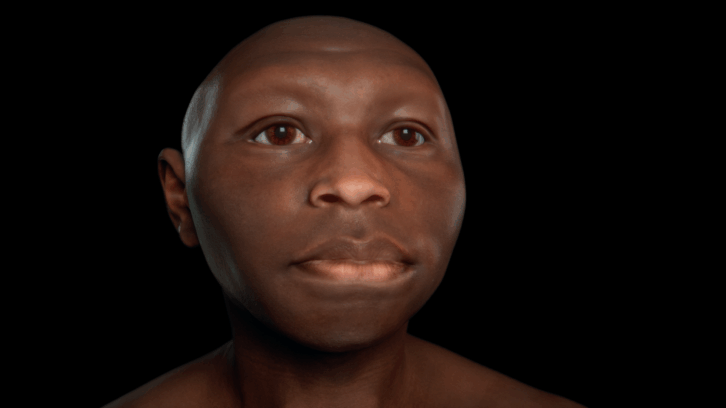
“For the recent BBC Studios docuseries, Human, the camera crew travelled to a difficult-to-access location without bringing actors on-set,” explains Emma Kolasinska, executive producer at Lux Aeterna. “Using scientific data, historical insight, and compositing, we created digital doubles that fit perfectly within the scene. It cut down costs for the production company and prevented actors from travelling to a remote location.”
Studio-grade rendering on- and off-prem
In the early stages of hybrid production, render times soared, and at-home hardware struggled to handle the volume of data required for high-end work. Bottlenecks quickly became a major challenge. Since then, studios and technology providers have developed scalable systems and cloud platforms designed to fully support remote and hybrid workflows.
“At first, we were limited to VM- or GPU-based cloud workstations,” says Robin Graham, co-founder of R3D, a stereoscopic conversion studio for film and episodic projects. “We were ready to create a platform from scratch, but when we found Orion, a containerised workstation solution that could dynamically allocate resources and scale as needed, it transformed how we approached remote work.”
By balancing GPU and CPU workloads automatically, the platform reduced bottlenecks and gave artists the freedom to focus on what matters most: delivering high-quality visuals without being constrained by technical infrastructure.
Truly integrating hybrid work in production
Remote production is now embedded in the way the industry works. Real-time collaboration, flexible rendering, and global connectivity have made distributed teams standard practice. What began as a short-term fix has evolved into a smarter, more sustainable model for creating content.
As technology advances, tools once considered experimental have become essential. AI is streamlining repetitive tasks, hybrid pipelines are accelerating delivery, and virtual production is driving new efficiencies in storytelling. The result is an industry that’s more agile, more connected, and ready for the next stage of decentralised production.