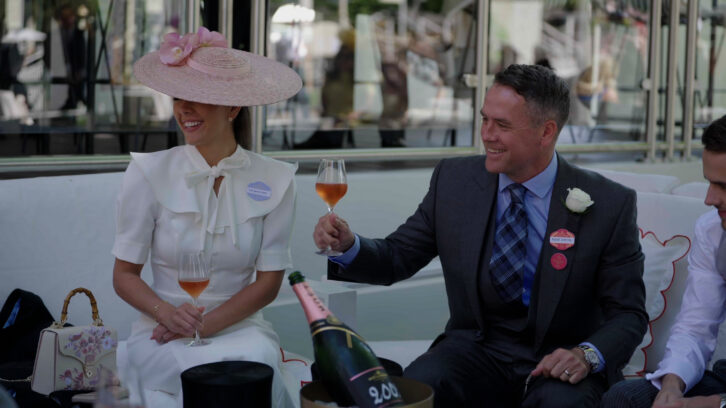
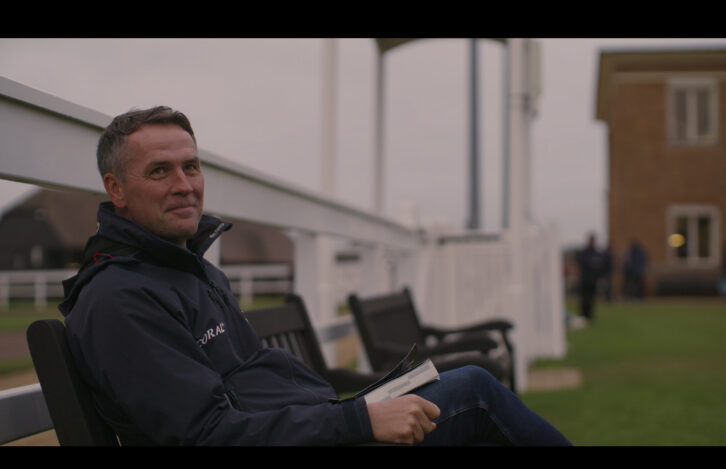
Meet the Owens is a new docuseries following former Liverpool and England striker Michael Owen and his family.
Produced by Whisper, the show follows a year in the life of Michael, his wife Louise, and their four children, Gemma, James, Emily, and Jessica, as they juggle a horse racing business while contending with a chaotic home life.
Ahead of the six-part series’ debut on Prime Video, TVBEurope spoke to Rebecca Hathway, production executive at Whisper, to hear about the show’s production and post production processes, and how the team turned a years worth of content into the series.
First of all, how did you pitch the show to get the Owen family on board?
When we first discussed the show with the Owens, they were open to the idea from the get-go, but they had one stipulation: they’re not actors, and if they were going to do it, they wanted it to feel completely authentic and real. As you can imagine, that was music to our ears. We agreed very early on that we wouldn’t try to manufacture moments or overly produce scenes. Our job was simply to follow the family, let life unfold and be there to capture it. That trust and openness really set the tone for the whole series, and you could say the rest is history!
How long did it take the family to get used to being on camera?
We were very conscious that some members of the family had more experience on camera than others, and that for Jessica, who is 16, this was completely new. Contributor welfare is hugely important to us, so a lot of thought went into making sure everyone felt comfortable from the outset. We started by filming more with the family members who were already used to being on camera, which gave everyone else time to get accustomed to having cameras in their home and, most importantly, to get to know our crew.
We deliberately kept the crew very small and consistent throughout filming. That familiarity really helps build trust and, as the family got to know everyone behind the cameras, you could see them relax more and more and just be themselves. In the end, it turned out they were all complete naturals. By the time we were properly into filming, we were treated like one of the family, which, for a documentary crew, is pretty much the dream.
How much time did you spend filming with them?
Our very first shoot with the Owens was back in March 2025, but things really picked up pace towards the end of that year. By March 2026, there were times when our series director Chris was spending more time with the Owens than he was in his own home!
Across the 18 months, I’d estimate we spent somewhere in the region of 1,000 hours filming with the family, so we really were given incredible access. We’re hugely grateful to the Owens for that. They opened up not only their home, but their lives to us, and when you stop and think about it, that’s an incredibly vulnerable thing to do.
That trust is ultimately what allowed us to make the series we did. There was very little off limits, and I think you really feel that on screen. It’s honest, funny, sometimes unexpected and, at points, incredibly moving.
How did you track the different storylines?
The beauty of making a docu-series alongside a sporting season is that you immediately have a natural backbone to the story. Following the Owens through the racing season gave us built-in jeopardy, highs, lows and a structure to the series, which we could then weave the more personal family stories around.
From a practical point of view, our series director kept in regular contact with the Owens and across their diaries, which meant we could plan ahead and make sure we were there when the action happened, as well as giving our production management team the small matter of securing access, permissions and working out how to get everyone and everything to the right place at the right time!
Of course, it wouldn’t be a documentary if everything went according to plan. There were plenty of last-minute phone calls, sudden changes and plans that needed turning around at incredible speed. That’s where an exceptional production management team really comes into its own. Carmen Butcher, our line producer, handled every curveball with an incredible no-sweat attitude, often working behind the scenes to make the seemingly impossible happen – if we were always in the right place when the action happened, it was very often because the team moved mountains to get us there.
How many cameras did you use and what kind were they?
Our main cameras were the Sony BURANO and Sony FX6. We chose them because they’re reliable, lightweight and flexible. You can shoot from the hip or the shoulder, which is exactly what you need on an observational documentary where you never quite know where the story is going to take you next.
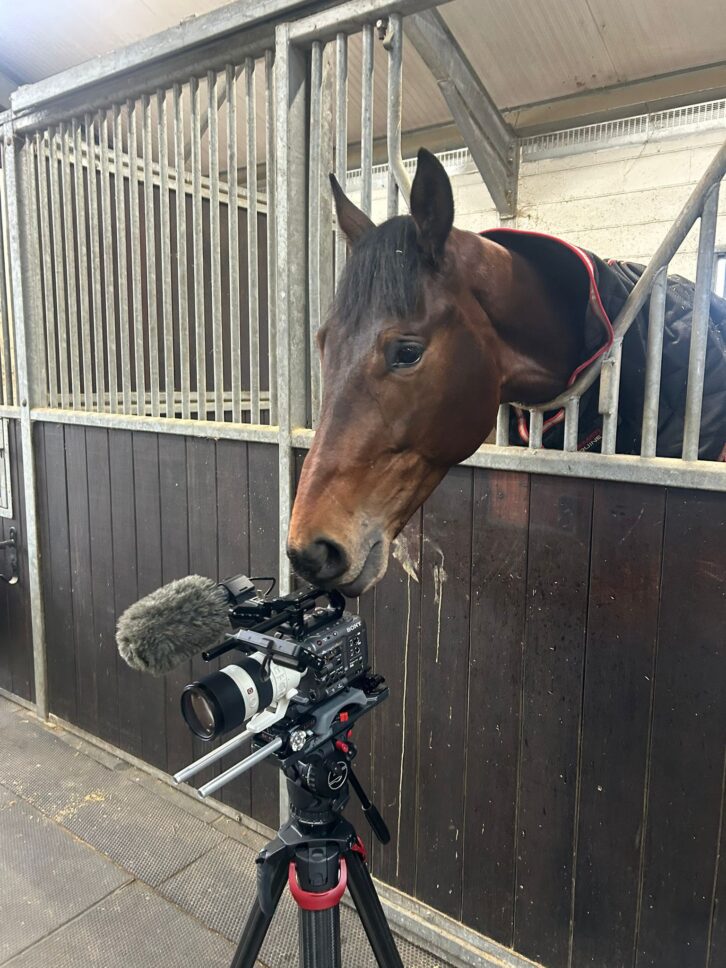
On most shoots, we had between two and three cameras. We deliberately kept the crew small and nimble, including using a shooting producer, which helped us capture those more intimate family moments without the house suddenly feeling like a film set.
Working with horses, however, is where things get a little trickier! You can’t simply strap a GoPro to a jockey and send them off at 40mph. Safety has to come first. Instead, we worked with specialist jockey cameras that could be safely mounted to a helmet or chest rig. They gave us an incredible additional point of view and brought a real sense of speed and immersion to the racing sequences, putting the audience much closer to the action.
We also filmed with drones and used a specialist tracking vehicle and camera arm to capture some of the beautiful sweeping shots alongside the horses. We really tried to use the technology available to us to push the visual ambition of the series, while never losing the intimacy that makes the family story work.
How was sound captured?
For our day-to-day filming, sound was primarily captured using a combination of boom microphones and radio lapel mics. We would usually mic up our contributors at the beginning of the filming day, which meant we could keep recording as events unfolded and capture those candid conversations and spontaneous moments that are so important in an observational documentary.
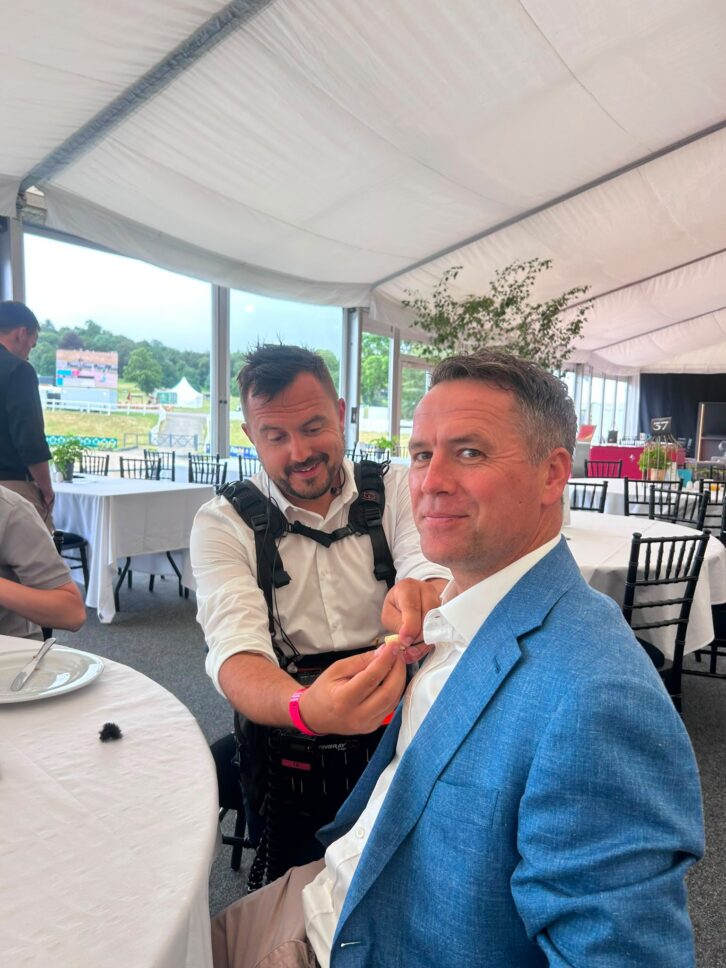 Things became slightly more complicated when horses entered the equation! Horses can be seriously spooked by a boom suddenly appearing above them, so – no booms in sight, thank you very much! We also couldn’t simply put a traditional radio mic pack on a jockey while they were riding. Having a hard radio pack attached to the body presents an obvious safety concern should they fall, so that wasn’t a risk we were prepared to take.
Capturing sound while the jockeys were actually on horseback therefore required a different approach. Our specialist jockey cameras had built-in microphones, which allowed us to capture the immediacy of the racing environment and some of the sound from the rider without introducing additional equipment that could compromise safety.
For more detailed conversations or interviews immediately after a race, we would wait until the jockey was safely away from the horse before bringing our usual sound equipment back in and having a proper chat.
It was a bit of a balancing act throughout, we wanted the audience to feel as close to the action as possible, but when you’re working around horses and jockeys, safety always dictates how far you can push the technology.
Did you shoot in HD or 4K?
We shot the series in UHD. We wanted Meet the Owens to feel cinematic and visually ambitious, particularly when capturing the scale, speed and beauty of the racing sequences and locations. UHD gave us the level of detail and image quality we wanted, while also giving the team greater flexibility in post-production. Ultimately, we wanted the series to look as good as the stories we were lucky enough to capture.
In what format is the show being released?
The series was shot and delivered in UHD/HDR, so there was no change in format between filming and the final programme. From the outset, we wanted the series to have a really rich, cinematic feel, and UHD/HDR allowed us to retain the detail, colour and dynamic range we captured on location, particularly across the racing sequences and beautiful countryside settings. Ultimately, what we captured in the field is reflected in the quality audiences will see on screen.
How long did the editing process take?
We spent our first week in the offline edit in October 2025, cutting together some of our initial rushes as a proof of concept and beginning to shape the early material for episode one. We then moved into the full-time edit from mid-December 2025, using Adobe Premiere Pro.
From that point onwards, filming and editing ran concurrently, which was really important editorially. Our series editor worked incredibly closely with our series firector throughout. The edit team needed to know what stories were developing on the ground, while our director needed to know what the episodes were beginning to need as they took shape in the edit. It became a constant conversation between the two.
Each episode had between 8–12 weeks in the offline edit, although, as is often the case with a documentary series, Episodes one and six had a little longer. Episode one was where we really established the tone, pace and visual language of Meet the Owens, while episode six had the job of bringing all of those stories together and giving the series a satisfying conclusion.
The biggest crunch came right at the end. We were still filming at the Goodwood Festival at the end of July, with picture lock just one week later. From there, we moved through the final post production process before delivering the completed series to Deluxe for the final part of the process, localisation, on 17 August 2026. Deluxe delivered the final series to Amazon on 26th August—just two days before transmission.
So yes, it was a tight one! But there’s something quite fitting about a series built around racing going right down to the wire.
How was the show colour graded?
The series was graded in DaVinci Resolve at Splice in Soho by their brilliant colourist, Adam Dolniak. He did a fantastic job of bringing the series to life in all its colourful glory, while still retaining the natural, authentic feel we wanted throughout. From the intimacy of the family home to the scale and spectacle of the racecourses and countryside, the grade really helped give the series its finished cinematic look.
How long did post production take?
We handled the conform in-house, with our assistant editor, John Gledhill, managing that workflow himself, which is no small undertaking on a series of this scale and with the volume of material we had. It was a huge task and he did a brilliant job of keeping everything moving smoothly into final post.
Final post production took roughly two weeks per episode at Splice. We staggered the episodes through post, starting with episode one in early June and continuing right through to episode six in August.
Because we were still filming the final episode at the end of July, the whole process effectively became a rolling production line. While one episode was being finished, another was being edited and we were still out filming material for the later episodes. By episode six, we really were right up against the clock, but the teams across production, edit and post worked brilliantly together to get us over the finish line.
What were the biggest challenges in filming the series?
If you’d asked me at the beginning of the series, I probably would have said our biggest challenge would be filming a family in their own home without feeling intrusive, while still capturing those organic, entertaining moments that make an observational documentary work. But the Owens were genuinely brilliant to work with. Getting the right balance with a small, talented and personable crew from the outset helped enormously, and before long it became a really well-oiled machine.
As it turned out, the horses were probably harder to film than the Owens! Thoroughbreds can be incredibly sensitive and easily spooked, so the welfare of both the horses and our crew always had to come first. That affected everything from where we could position cameras and sound equipment to how close we could get to the action. It meant constantly adapting our approach, and it’s where technology such as the specialist jockey cameras became invaluable, allowing us to get much closer to the racing without compromising safety.
From a production perspective, access was another big challenge. The Owens’ diary could change quickly, which sometimes meant approaching major locations with fairly ambitious requests and very little notice. Racecourses such as Ascot understandably have incredibly rigorous media and filming protocols, so gaining the level of access we wanted wasn’t always straightforward.
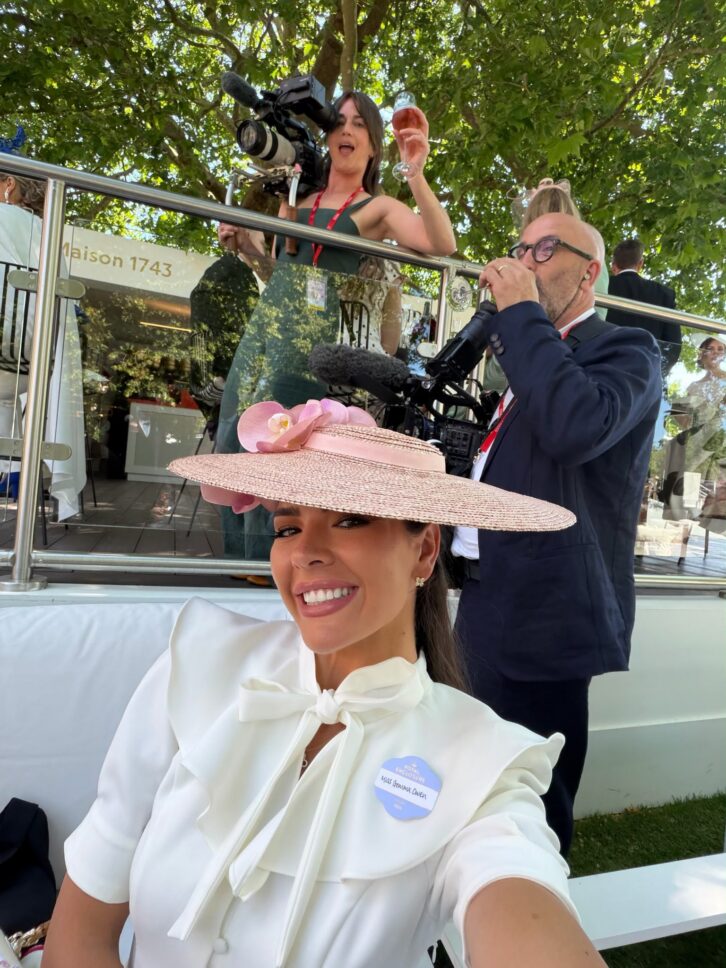 That’s where Whisper’s reputation and relationships really came into their own, alongside a brilliant amount of work behind the scenes from our production management and legal teams. They navigated permissions, access and logistics, often against the clock, and ultimately found a way to make it happen!
What’s your favourite moment in the series?
I really loved watching Gemma’s journey training to become a jockey throughout the series. Watching her throw herself into something so difficult with such determination was genuinely impressive. She’s fiercely tough, resilient and very honest about the things she finds challenging, and I think there’s something quite powerful about seeing that side of her, perhaps in a way audiences haven’t necessarily seen before. I loved that we were able to show Gemma as strong, vocal and ambitious, but also vulnerable at times. For me, that combination is far more interesting and real than presenting strength as never finding something difficult.
I did also really laugh the first time I saw Michael talking about his Orca obsession. That just really cracked me up. He has a lot of funny moments. Too many to list. You’ll have to give it a watch and let us know your favourite!