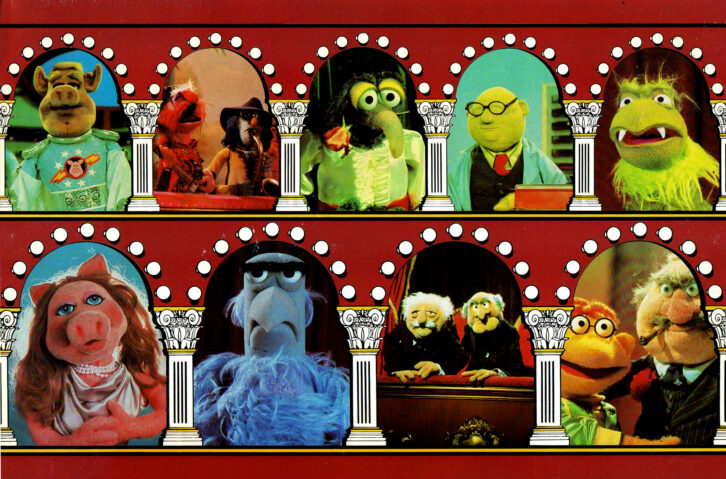
On 5th September 1976, ITV aired the first episode of what would become a worldwide cultural phenomenon. The Muppet Show was the brainchild of Jim Henson, brought to the screen by UK broadcasting legend Lew Grade for ATV, then part of ITV.
By December of that year, the show had 14 million viewers tuning in on a Sunday evening to watch the antics of Kermit, Miss Piggy, Fozzie Bear and the rest of the gang. Just a month later, over 100 countries had either acquired the series or were in talks to buy it. By The Muppet Show’s third season in 1978, it had a weekly worldwide audience of 235 million viewers.
While the show itself only lasted five series, its impact on popular culture continues today. Over the years, the Muppets have been animated, appeared on the big screen, and attempted to recreate some of that first show’s magic for the streaming era, alas not yet successfully.
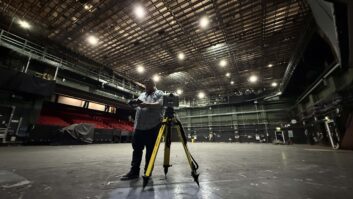
The Muppet Show was filmed at ATV’s studios in Borehamwood, about 14 miles north of London. “I think Lew Grade said Studio D was one of the most profitable TV stages in the whole of the UK,” says Howard Berry from the University of Hertfordshire, who has spent 16 years documenting behind-the-scenes work at ATV Studios. “I could well believe it considering the programmes that were made in that studio. But The Muppet Show must be the major contributor to that, with the fact that it was sold worldwide in so many countries.”
A significant portion of the production team were British, including camera operator Jeremy Hoare, who says no-one gave a puppet show with guest stars a chance when the idea was first discussed. “The Americans had been telling Jim Henson for 20 years that it would never work. And then he did a Julie Andrews episode on Sesame Street, and I think it must have been Julie who got Jim to meet Lew Grade. Lew gave Jim a studio for a couple of days to make a pilot, and that’s how it started.”
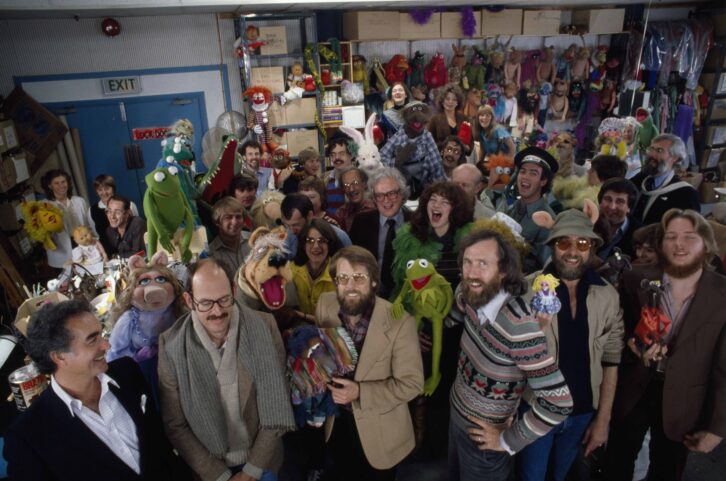
ATV had four studio crews working on the show, with each being rotated and swapped over the course of filming. “Everybody in the camera department worked on the show,” explains Hoare, “there were four crews of seven people each, so there were 28 people who worked on it in the camera team alone.”
Each week, the Muppeteers would gather for an episode read-through on Sunday, when they would meet that week’s guest host for the first time. On Monday, a sound recording would take place with the show’s orchestra, and then taping would take place on Thursday and Friday. “The camera crew was only in for two days,” explains Hoare. “We would go in and record some bits one day and some bits the next, and if there were dance routines with guest stars like Raquel Welch or Elton John, then there’d be one day with big production numbers, and the second day would be with the Swedish Chef, and things like that.”
As the show became more popular, Henson and co were able to book bigger stars, particularly from America. However, this would sometimes lead to problems when it came to filming, reveals Berry. “A lot of the American guests wanted to improvise, but found out the show actually was very heavily scripted and there wasn’t room for improvisation in that kind of way.”
On and off camera
The Muppet Show initially used EMI 2001 cameras to film, which Hoare describes as “the very best cameras ever made for TV”.
“The balance, the tubes, the lens was integral in the body of the camera, so the ice block, as it was called, the prism, which split the light into four beams, was at the back, which made the balance of the camera really good. Then the Americans wanted better quality, so we went to the Philips LDK 5, which had a very conventional camera body with the lens stuck on the front, as all cameras are today. They weren’t nearly as nice to operate.”
Filming on The Muppet Show was particularly tricky for Hoare and the camera team because of how it was filmed. The Muppeteers would operate the characters with their hands above their heads while standing up. “The cameras had to be on Vinten pedestals,” he explains. “We had high hats, which were like three legs and then the head, and then the camera, so the viewfinder was really high up. It was tiring on the neck. You needed plenty of stamina.”
But despite all the hard work, the team knew how to celebrate once the show was in the can. Hoare remembers Henson hosting a party on a boat on the Thames during series one. “We hadn’t done the last show; it was going to be a couple of days later, and the guest star was Candice Bergen. We all went down to the Thames and got on this boat, and one by one, we all lined up and danced with Candice, and she was highly amused, but quite flattered, I think, that we all took the time and trouble to do it. It made a lovely atmosphere in the studio a couple of days later.
“On the back of the boat, there was a big sign saying The Muppet Show, but nobody knew what it meant, because it hadn’t gone out yet. If the party had been a year later, it would have been inundated.”
The production team’s social activities even helped inspire a character seen in The Muppet Show’s final episode in 1981. The writers would often visit a restaurant named Signor Baffi’s in Borehamwood, where, according to Berry, the owner wasn’t great at getting lunch out on time. “They knew that if they were going to eat there, lunch would be about two hours long because he was just kind of bewildered by being able to do service.”
This ineptitude inspired the sketch, Signor Baffi and His Flashing Knives of Death, which Berry describes as his favourite Muppet skit. “I think Fozzie was involved as his assistant who’s meant to stand still whilst the knives get thrown. The problem was that the character version of Signor Baffi had a problem with his eyesight.”
Read more in the September issue of TVBEurope, available to download here.