Over the last couple of years, Globecast has been going through a major transformation. Why did you feel the need for that, and how has it gone?
Building on decades of experience with some of the most demanding customers worldwide, Globecast has fundamentally reshaped its transport, connectivity and transmission activities. Two major trends drove this shift. First, budget pressure across the broadcast ecosystem pushed the industry toward more flexible, pay-as-you-use models. We responded by virtualising part of our infrastructure, giving customers the agility to scale for both ad hoc and permanent broadcasting needs, and building hybrid cloud environments to deliver true “as-a-service” solutions. Second, audiences and content have become far more fragmented—from mobile to connected TV—making the technical ecosystem increasingly complex. This pushed us to rethink and optimise our own operations first, then our customers’. The result is Content Exchange, our unified media transport platform. This transformation wasn’t optional: it was the only way to stay agile in a fast-changing market.

What would you say have been the big drivers of change in the way media is delivered over the last couple of years?
Several drivers have reshaped how media is delivered. Regulation is one: in the US, the FCC’s decision to reallocate C-band spectrum will reduce broadcasters’ access to satellite capacity, pushing many to look for alternatives—and Globecast to help support that shift. Content diversity is another major driver: audiences now expect immediacy across an ever-wider range of formats, from major sporting events to fast-moving creator content. For broadcasters, digital platforms and rights owners, this means delivering content instantly, handling multiple formats, and maximising both audience reach and monetisation opportunities. Naturally, operational efficiency has become a prerequisite rather than a nice-to-have: without it, none of the above is sustainable in a market that keeps accelerating.
What are the main challenges you’re hearing from customers, and how is Globecast helping them meet those challenges?
There’s no one-size-fits-all answer, but customer pain points tend to fall into the same categories: a technical ecosystem that keeps getting more complex, a growing number of vendors to manage, and less time to focus on what really matters—creating content and building new revenue streams. What they’re really asking for is simplicity: help managing complexity, improving operational efficiency, and finding new ways to monetise their content. That’s exactly where we come in. We take on the complexity of broadcast operations so customers can concentrate on editorial value and growth. Content Exchange offers a single pane of glass, bringing satellite, fibre, IP and hybrid cloud routing together under one unique, intelligent interface, with real-time monitoring, ad-insertion signalling and localised rights management built in.
What industry trends have you been tracking?
We’ve taken a pragmatic approach, focusing on technologies and partners that support MooM (Media Orchestration and Operations Management) our new cloud-native SaaS platform. MooM combines our hybrid Cloud Solution-as-a-Service portfolio with smarter operational intelligence, which is why we’re particularly interested in software-defined infrastructure that makes it easier to bring solutions like remote production, playout, media asset management and OTT together within Content Exchange. AI is also high on our agenda, especially its potential to make operations more proactive: helping us meet service commitments, spot issues before they escalate with observability, and resolve incidents automatically with unified AIOPs and self-healing remediation rather than reactively. It’s a topic we’re actively exploring with several partners, and one we expect to shape the next generation of media operations.
You’ve introduced Content Exchange to unify all hybrid transport routing under a single pane of glass. Why is that important?
Again, it’s all about our capability to manage the complexity. If we take the example of content rights management, Content Exchange answers the specific concerns and objectives of each actor in the value chain :
- For Rights Owners (Leagues and Federations) who need complete control over active incoming contribution signals, instant taker provisioning, real-time license validation and granular rights-aware routing by region, platform, or audience segment.
- For Rights Holders (Broadcasters and Affiliates) who need instantaneous visibility into metadata catalogue of available content. Rights holders can manage their localised taker accounts, view live stream health and configure downstream signal parameters.
- For Takers and Local Affiliates who’re looking forward self-service autonomy to access, preview and pull authorised live feeds or file-based media transactions in real-time, with platform response times of less than 5 seconds.
What kind of end-users is it aimed at, and why did you choose those genres in particular?
Content Exchange serves a broad range of customers—from sports federations and event organisers to broadcasters, telcos and media companies with multiple business units—covering everything from one-off events to permanent broadcasting services. We’ve focused particularly on sport and live events because that’s where the pressure is highest: rights are complex, audiences expect content instantly across multiple territories and formats simultaneously, and there’s little room for error. In practice, Content Exchange becomes the shared operational console for everyone involved: rights owners, rights holders, takers, affiliates, and the teams managing bookings and feeds, giving each of them the visibility and control they need.
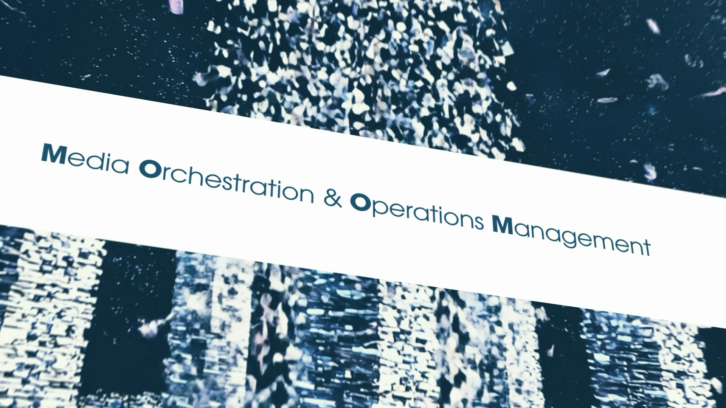
At IBC2026, Globecast unveiled the Media Orchestration & Operations Management Platform. What is it, and how will it help customers?
MooM is designed to take the complexity of multi-cloud operations off our customers’ hands. It works across AWS, OCI, and on-premise or private cloud infrastructure, automatically choosing the most efficient way to process each stream, whether that means transcoding in the cloud, routing elsewhere, or keeping it on-premise, based on real-time cost and performance data. That means real, auditable savings for our clients. MooM also moves us from a reactive, ‘break-fix’ approach to proactive, outcome-based service commitments. It continuously monitors performance and automatically resolves common issues—such as restarting a frozen playout or rerouting a stream—without manual intervention. And when something more complex comes up, our expert engineers are on hand through a structured escalation process, ensuring fast, accountable resolution, whatever the vendor or system involved.
How was IBC2026 for you?
IBC2026 was a great edition for us. We had genuinely qualified conversations, and the feedback on MooM’s soft launch was very encouraging. It was also a chance to show that Content Exchange has moved from concept to reality, it’s now live and delivering results for customers. We left with strong momentum: a solid pipeline of new opportunities building on the deployments we’ve already delivered since Content Exchange launched at IBC2025. Overall, it confirmed we’re heading in the right direction and that our approach to simplifying media operations is resonating with the market.
Learn more about Globecast’s MooM here: https://www.globecast.com/