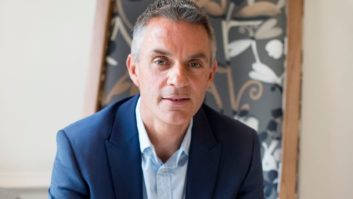
The UK media industry has been reacting to last night’s shock news that Tim Davie is to step down from his role as BBC director-general.
Both Davie and BBC News CEO Deborah Turness announced their resignations following the broadcast of an episode of Panorama that edited a speech by US President Donald Trump.
In a statement, Davie said he had been reflecting “on the very intense personal and professional demands of managing this role over many years in these febrile times, combined with the fact that I want to give a successor time to help shape the Charter plans they will be delivering.”
Davie added that he will work with the BBC’s board to “allow for an orderly transition to a successor over the coming months.”
Caretta Research co-founder and media analyst Robert Ambrose agrees that giving the new director-general as much time as possible ahead of the Charter renewal is “absolutely the best approach”.
“The BBC was already facing a massive challenge in Charter Renewal and funding model, as the licence fee becomes harder to sustain without any obvious or easy replacement—a problem shared by most other public broadcasters,” Ambrose tells TVBEurope.
“The problem here is that one of the primary justifications for public-service media—having a reliable, authoritative, impartial news source, has been undermined. I don’t think anyone wants to see the BBC disappear. For every Panorama disaster, there’s a Celebrity Traitors finale pulling in 12 million viewers.
“But the size, budget, scope and governance of the institution are all to play for, and this means the BBC starts the negotiations with a much weaker hand, with the added complexity of political uncertainty in the UK.”
Looking to the future, Ambrose says he won’t speculate on Davie’s successor, but suggests with rumours of discussions around merging the BBC and Channel 4, Alex Mahon would be “an interesting candidate. And Carolyn McCall may be looking for a new job soon if Comcast ends up buying ITV.”
“I think it’s vital that the new DG is not an insider,” he adds. “They need to bring experience of the wider global media market (aka ‘the real world’), along with a whole galaxy of other skills, from news and editorial policy to programme making to acute political skills both internally and externally.
“Equally, it needs someone who understands how the role of a public broadcaster is different from Netflix. Most importantly, an outside perspective on the best way to fund and utilise budgets will be crucial, as whatever happens, the BBC is certain to be facing a declining income and pressure to cut services.”
Reacting to the news, the UK’s media and entertainment union Bectu, said the BBC is facing a “critical moment” as it heads into a Charter renewal process.
“It is essential that this post is quickly filled with someone similarly committed to public service broadcasting who can champion the BBC’s mission, values, and political independence,” added Bectu.
“The BBC is a central pillar of our cultural ecosystem, the new director-general will have a huge role not only in leading the Corporation and its many talented staff, but in driving forward the wider creative industries which benefit from a strong and bold BBC.”