Please explain what your Accelerator project is in as much detail as possible.
Smart Stories is defining the Story Object Model, an open standard that lets a story carry its editorial context across every tool in the chain, from newsgathering to transmission. Today the rundown, MAM, graphics and planning systems each hold a fragment of the story. None holds it together. MOS connected those systems operationally, and I say that as someone who worked on MOS. It was never designed to connect them editorially, and nothing since has.
That gap matters more now because agentic systems are arriving at every point in the chain. An agent that does not understand what a story is will confidently do the wrong thing with it.
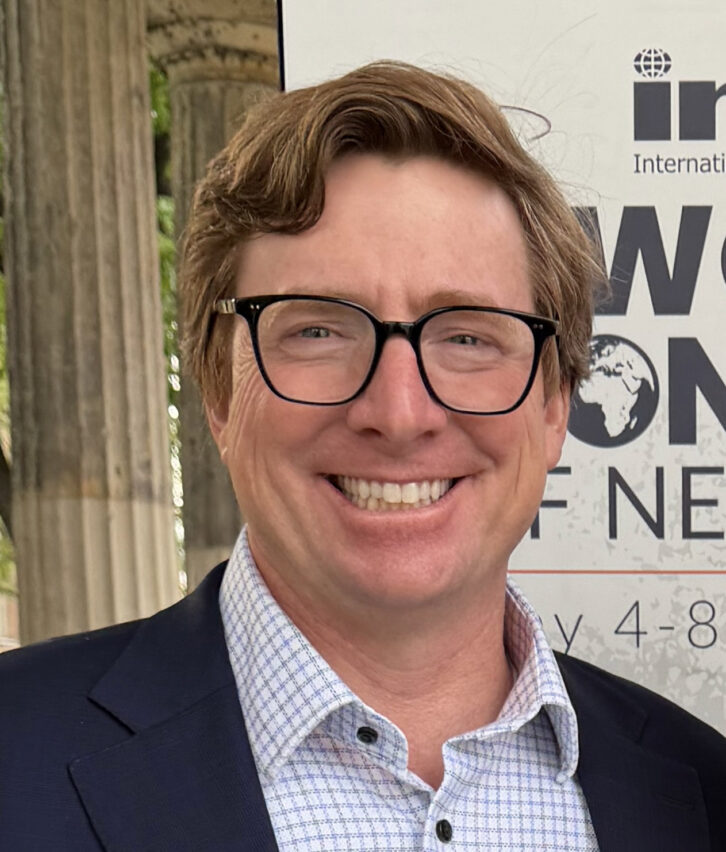
HyperContent sits where the story meets the audience. By the time a story reaches a feed, a landing page or an AI answer, most of what the newsroom knew about it has been stripped away. Someone rebuilds it by hand, or the story goes out in one shape for everyone. Missing context becomes missing revenue.
Our role is to show what becomes possible when that context survives the journey: one story, shaped for each audience and each surface, editorial voice intact. And to help define what the standard must carry to make that work. Brand, audience, provenance, rights.
REGISTER FOR IBC2026
Who is involved in the project?
We are the startup in the room, though I did not arrive as one. I was deeply involved in MOS during my years at the Associated Press, and I first got involved in this work as CTO of Arc XP at The Washington Post. Seeing what became possible once a story could carry its context through every tool that touches it is a large part of why I left to found HyperContent.
The project is led by Associated Press, NBCUniversal, ITN, and the BBC. Organisations of that weight are putting editorial and engineering time behind an open standard rather than behind their own stacks. That is why this has a chance to matter.
On our side, it is both founders, not a delegated team. Angel Todorov, our CTO, and me. Between us we spent two decades building the systems at the heart of thousands of newsrooms, so some of the workflows this project connects are workflows we helped build.
Why do you believe the project is important to the media industry?
Three reasons: reach, trust and choice.
First, reach. Broadcasters make content the open web cannot match, but audiences now spend their time in feeds, video and with the people they follow. Agentic workflows are the first realistic way to close that gap at newsroom scale. If story context can travel through the chain, one story reaches far more of those audiences without a second newsroom to staff it. That is not a cost saving. It is a larger audience for work you have already paid for.
Second, trust, and this is the one I care most about. Broadcasters monetise premium stories that are accurate, sourced and theirs. Agentic systems that generate content put that at risk. Systems that reshape content the newsroom already stands behind do not, as long as they carry the context that says what the story is and who is accountable for it. Reach without trust destroys the asset you are trying to amplify.
Third, choice. Without an open standard, every broadcaster ends up inside a vendor stack that decides what shape a story can take. Composition beats the monolith. An open Story Object Model lets broadcasters choose their tools and keep the reach that comes with them.
What’s been the biggest challenge you’ve faced as part of your project?
Meeting the real world where it is. Agentic systems look good on a blank sheet. The hard part is connecting them to the systems newsrooms already run, with years of integrations and habits attached, without asking anyone to rip anything out.
The deeper challenge is human judgment. Most of what makes journalism trustworthy is never written down: which fact leads, what gets held, whose voice carries the story, what the brand will not say. An agentic pipeline optimises that away quietly, and leaves you output that is technically correct and editorially wrong.
Keeping those decisions load bearing rather than decorative is the real work. Human editorial control is not a constraint on this project. It is the requirement the model has to be good enough to represent.
REGISTER FOR IBC2026
Why did you want to be part of this year’s IBC Accelerator programme?
A standard is not something anyone gets to declare. It becomes real when broadcasters, established vendors and newer companies build against it together, find where it breaks, and solve the details in the open. The Accelerator is one of the few places in this industry where that happens against a deadline, with working code at the end.
We did not have to go looking for this problem. We spent two decades inside it before writing a line of code. Building alongside the champions in the hackathon clarified what the standard must carry faster than months of meetings could. MOS taught me that a standard succeeds where it gets the specifics right and stays open enough for uses nobody has imagined yet. Startups are where those innovative uses come from.
What can IBC Show attendees expect to see from you in Amsterdam?
Working software on real content, as part of the Incubator demonstrations.
Our piece is what happens once the story context is portable. We take a story object and show it becoming the experiences a broadcaster’s audiences actually use: in the feed, on the landing page, inside the article and across the site. Same story, different shape. Editorial voice unchanged. Provenance retained.
We will also show what happens when the thing asking is not a person. An agent arriving with a query is an audience too, with a context, a surface and a format it can use. The same story object answers it.
Bring us one of your own stories. We will show you the other 20 shapes it should have been in.
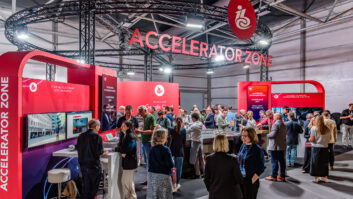
See all of this year’s projects at the IBC Accelerator Zone in Hall 14.