A report from Ampere Analysis claims that extending the licence fee to cover on-demand streaming could give the BBC an extra £1.6 billion per year by 2032.
According to the analysts, extending the licence fee could “future-proof the BBC for the times ahead”.
The research’s key points include:
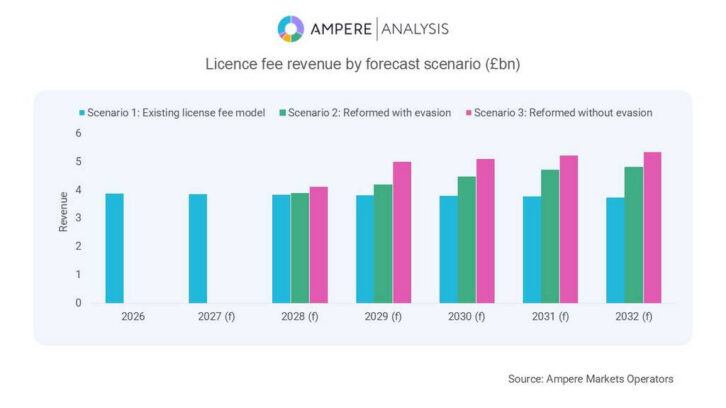
- A reformed licence fee would be close to universal. In Q3 2026, Ampere’s consumer survey found that 99 per cent of UK internet users watched linear channels or used on-demand and streaming services monthly. With perfect enforcement, extending the licence fee to these services would raise £1.6bn in extra revenue for the BBC, based on the current licence fee (which rises with inflation annually).
- If evasion rates remain similar to today’s, extending the licence could still generate an extra £1bn in revenue by 2032. The most optimistic scenario assumes that new enforcement methods will eliminate evasion.
- Alternatively, a widened licence fee with perfect enforcement could allow its price to be reduced to £150 in 2028. This would be a reduction of 17 per cent from the £180 fee that households currently pay for a colour licence.
- According to the BBC, licence fee income fell 24 per cent in real terms between 2017 and 2025. Reforming the current system would reverse this trend. Under the existing model, Ampere forecasts that licence fee revenue will drop further from roughly £3.9 billion in 2026 to £3.8 billion by 2032. That is a small fall in cash terms, but a larger one in real terms given inflation, which has hit the production sector particularly hard. Both extension scenarios would more than reverse that decline, giving the BBC a more stable base from which to invest in content through the next charter period.
“Widening the remit of the licence fee at current prices would significantly increase the BBC’s funding, strengthening its long-term financial position and ability to compete with local and global rivals,” said Sam Khoury, senior analyst at Ampere Analysis.
“Alternatively, in the context of ongoing cost of living pressures in the UK, the government could opt to reduce the price of the licence fee payable by the extended pool of consumers. Coupled with a reformed enforcement mechanism that effectively reduces evasion, this would still improve the BBC’s financial outlook relative to the status quo.”