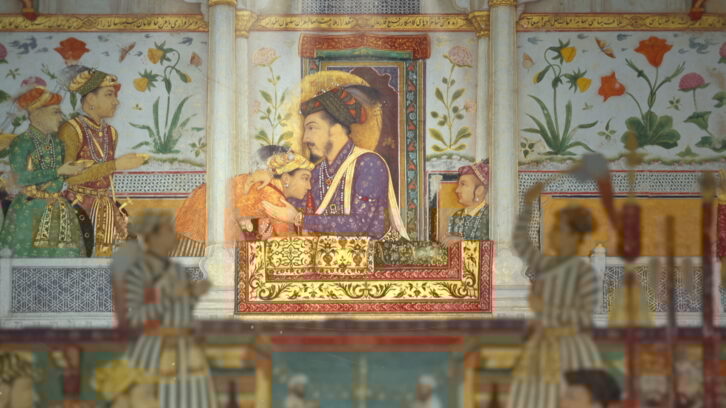
Empire with David Olusoga traces the story of the British Empire from its origins under Elizabeth I to its demise in the 20th Century and examines how its legacy continues today.
Commissioned by the BBC, the 3×60 documentary was series directed by Francis Welch and produced by Voltage TV and Hillgate Films. With cinematography by Steve Robinson and editing by Dilesh Korya, colour was delivered by Michael Lansdell.
Doghouse Post, having previously collaborated with the same creative team on the award-winning documentary Union with David Olusoga focused on refining the creative process, aided by a preexisting shorthand, and streamlining the technical pipeline for editorial and picture finishing.
Editor Dilesh Korya was keen to use DaVinci Resolve Studio for his next collaboration with the production team on Empire with David Olusoga. Beyond wanting to align with finishing, it came down to how well the platform handled complex sequences. “He works across all the major NLE platforms but has been impressed with how responsive Resolve is when dealing with complex longform timelines,” explains Fred Tay, Doghouse’s creative director.
Keeping colour consistent
Early preproduction conversations ensured that production and post were aligned on the visual approach before a single frame was shot. “Thanks to those early conversations, and an ongoing dialogue through the edit, we entered the finishing process with a clear sense of what we were aiming to achieve,” says Michael Lansdell, colourist at Doghouse Post.
The team aimed for a look that was thoughtful and consistent, without veering into overly cinematic or stylised territory. “The goal was always to keep it naturalistic but polished,” Lansdell adds. “You want it to feel crafted, but never like the grade is fighting for attention.”
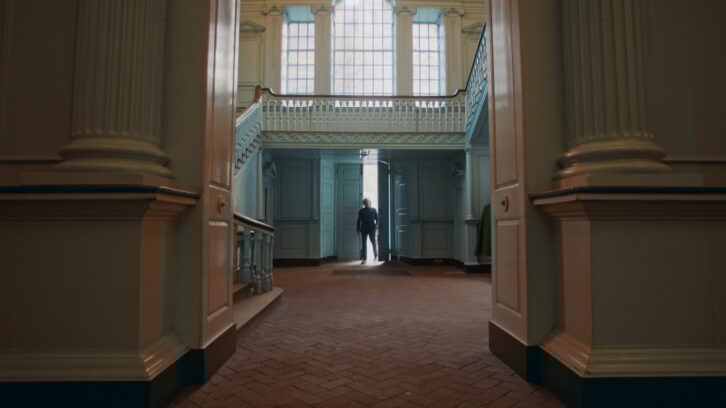
That philosophy carried through to specific grading decisions. A recurring example was the treatment of Olusoga’s distinctive blue suit. “It’s something of a signature for him, so we made sure the hue and saturation held up across a range of setups and lighting conditions. It sounds like a small thing, but it matters when you’re trying to keep the look coherent across episodes,” continues Lansdell.
“Although the offline edit was carried out using proxy media, the timeline could carry forward seamlessly into grade and online,” explains edit assistant, Neave Irvine. “For example, offlines that edit outside of DaVinci Resolve require us to export AAFs or XMLs and relink to native media once imported. However, already being in DaVinci Resolve allowed us to simply copy the offline timeline and relink the media to the native files without the roundtrip. This also ensured that things such as flips and flops, resizes and keyframing all stayed in place and didn’t require any redoing as part of the conform process. This meant the process of getting everything from offline to grade and online was dramatically sped up.”
DaVinci Resolve Studio’s colour management was used to normalise across camera formats, mapping to Rec 709 for editorial, and to DaVinci Resolve Studio’s intermediate colour space for grading, before final delivery in Rec 709. “Knowing that we were starting from the same baseline in the grade as we had in the edit meant there were no surprises for us, or for production,” says Lansdell. “But we still got to do all the critical image processing in Resolve’s proprietary wide gamut container, so no information was lost. And we carry that unclipped colour space advantage right through to online.”

In one instance, a power line visible in a repeated interview setup was flagged during the online. Rather than sending it out for compositing, the online editor used DaVinci Resolve Studio’s toolset to fix it directly in the Colour page, applying the correction across all relevant shots. “No rendering needed. If we’d done that shot by shot in VFX, it would’ve taken hours. Instead, it was handled in minutes,” says Adrian Rigby, Empire’s online editor. “And if anything more complicated that can’t be handled with those tools does crop up, having the Fusion compositing system built in means we can sort it out there.”
“That kind of flexibility and integration proved just as valuable when it came to delivery,” adds Lansdell.
Versioning without drama
With grading and online managed within the same project, the transition into delivery, particularly versioning for international markets, was seamless.
“It’s common in factual content for tweaks to the international version to prompt a rethink in the main cut,” says Rigby. “Because we were working inside one system, we could respond quickly and accurately across all versions.”
The existing relationship between the client and the post team also helped maintain speed and consistency. “We’d already worked together on Union, Olusoga’s previous series, so the trust was there. Once we’d agreed on the look, we could keep things moving,” explains Lansdell. “Although Empire marked the first time Doghouse delivered a project with picture managed entirely within Resolve (from offline edit through to final delivery), the team has long used Resolve for grading, and it now serves as the backbone of picture finishing across multiple genres.”
“That shift started with the demands of natural history,” continues Lansdell. “But now we use DaVinci Resolve on almost everything, from complex factual projects like Empire to long running factual entertainment like Antiques Roadshow.”
DaVinci Resolve Studio also played a central role in Mammals, Doghouse’s largest project to date for the BBC. “However, it was with Empire where we really saw the benefit of running the whole post process in one environment. The team’s willingness to embrace that made a big difference,” concludes Tay.
Empire with David Olusoga is available to watch on BBC iPlayer.